
5 ranges to choose from
-
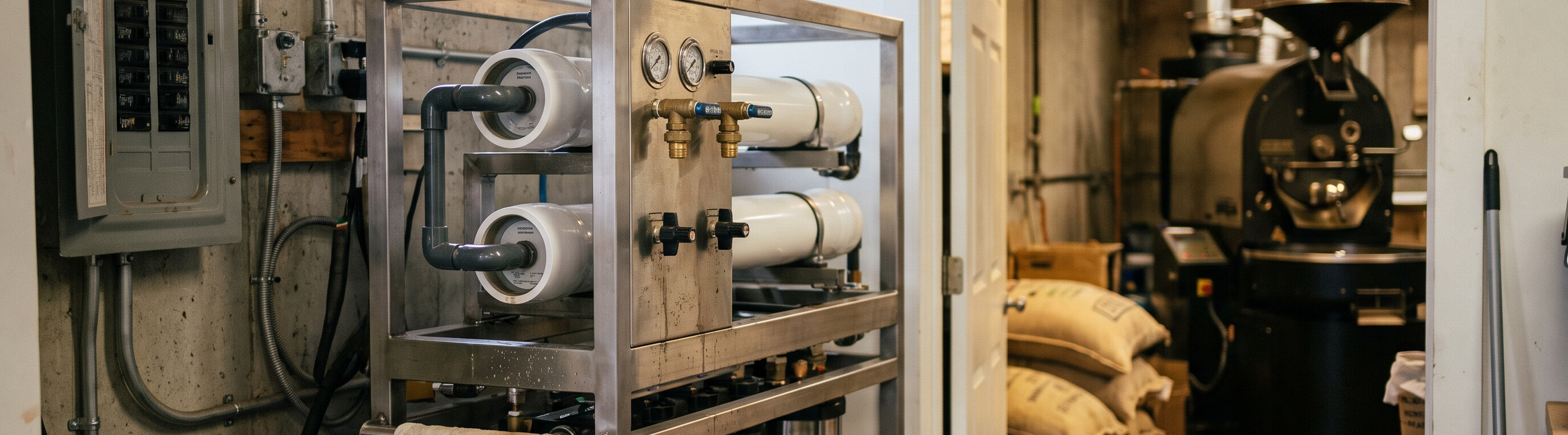
Reverse Osmosis 100–1200 GPD
AMPAC USA designs and manufactures high-quality Commercial Reverse Osmosis Systems to reduce impurities and total dissolved solids (scale-causing salts and minerals) from water sources.
- Models
- 10
- Output
- 100 – 1,200 GPD
-
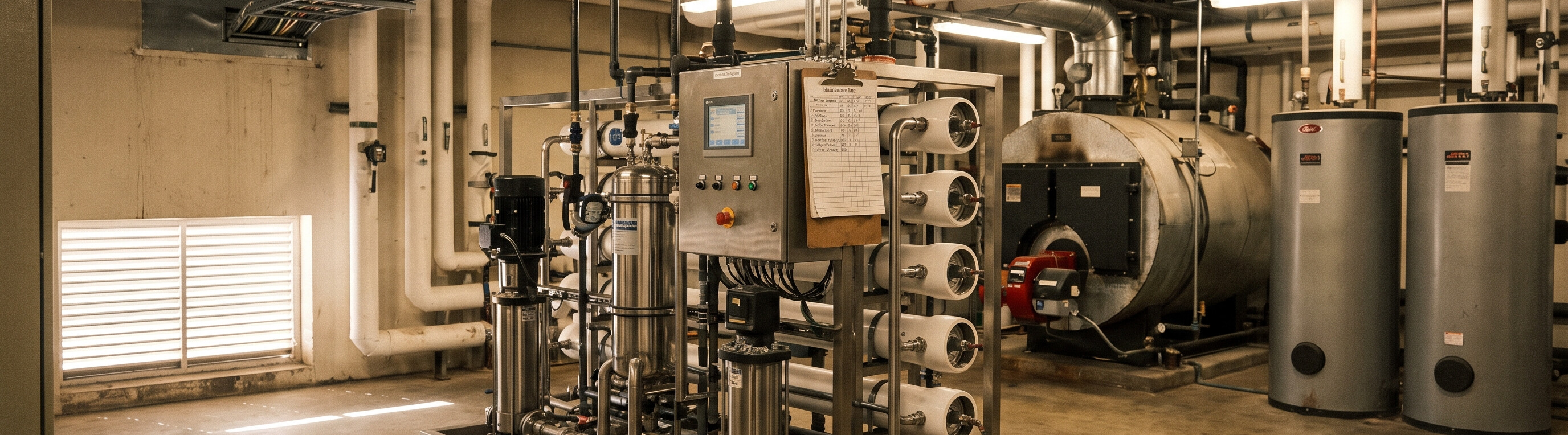
1500 GPD to 10,000 GPD Reverse Osmosis Systems
AMPAC USA designs develop and manufacture Commercial Reverse Osmosis Systems for commercial and light industrial applications.
- Models
- 7
- Output
- 1,500 – 10,000 GPD
-
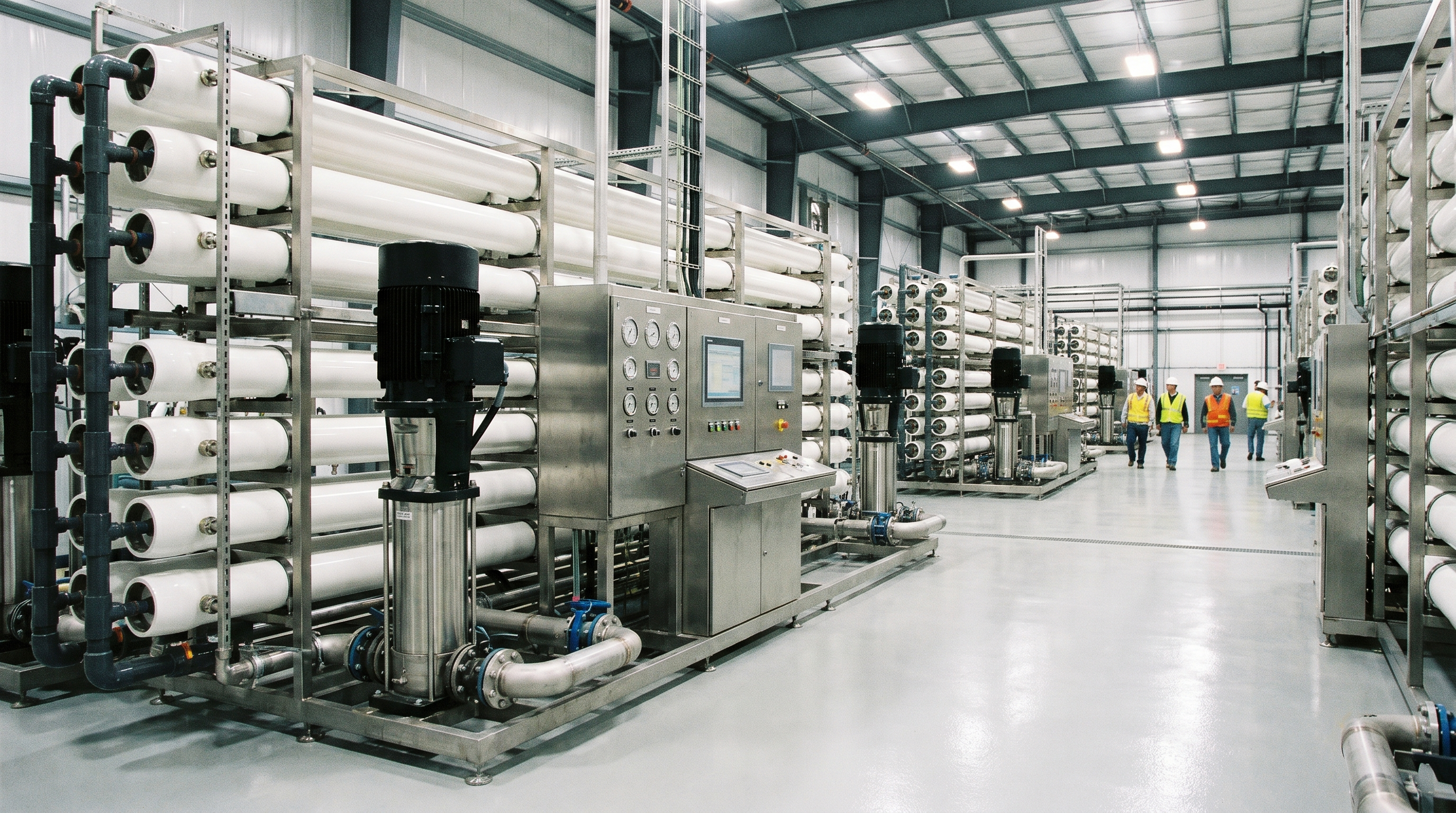
Brackish Water Reverse Osmosis
The AMPAC USA Brackish Water Reverse Osmosis LX™ Series Turnkey Reverse Osmosis, are custom-built according to end-user water conditions and requirements, the LX™ Series offers Fully Automated, Fully
- Models
- 11
- Output
- 1,500 – 20,000 GPD
-
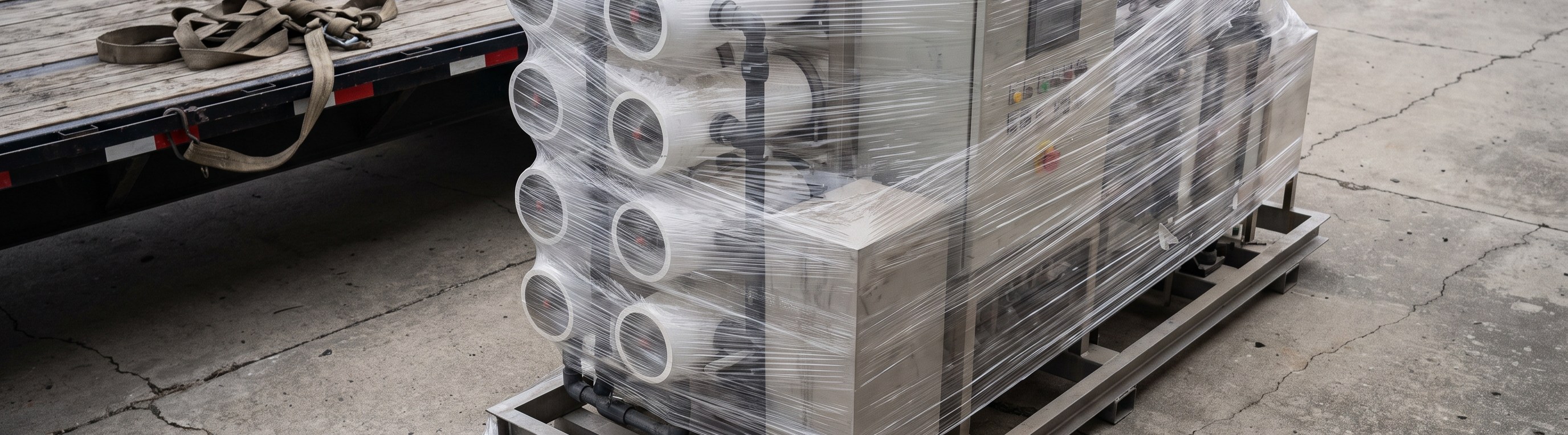
Packaged Reverse Osmosis
AMPAC USA packaged reverse osmosis systems are pre-engineered, skid-mounted water treatment units ready for rapid deployment with minimal site preparation.
- Models
- 19
- Output
- 1,500 – 100,000 GPD
-
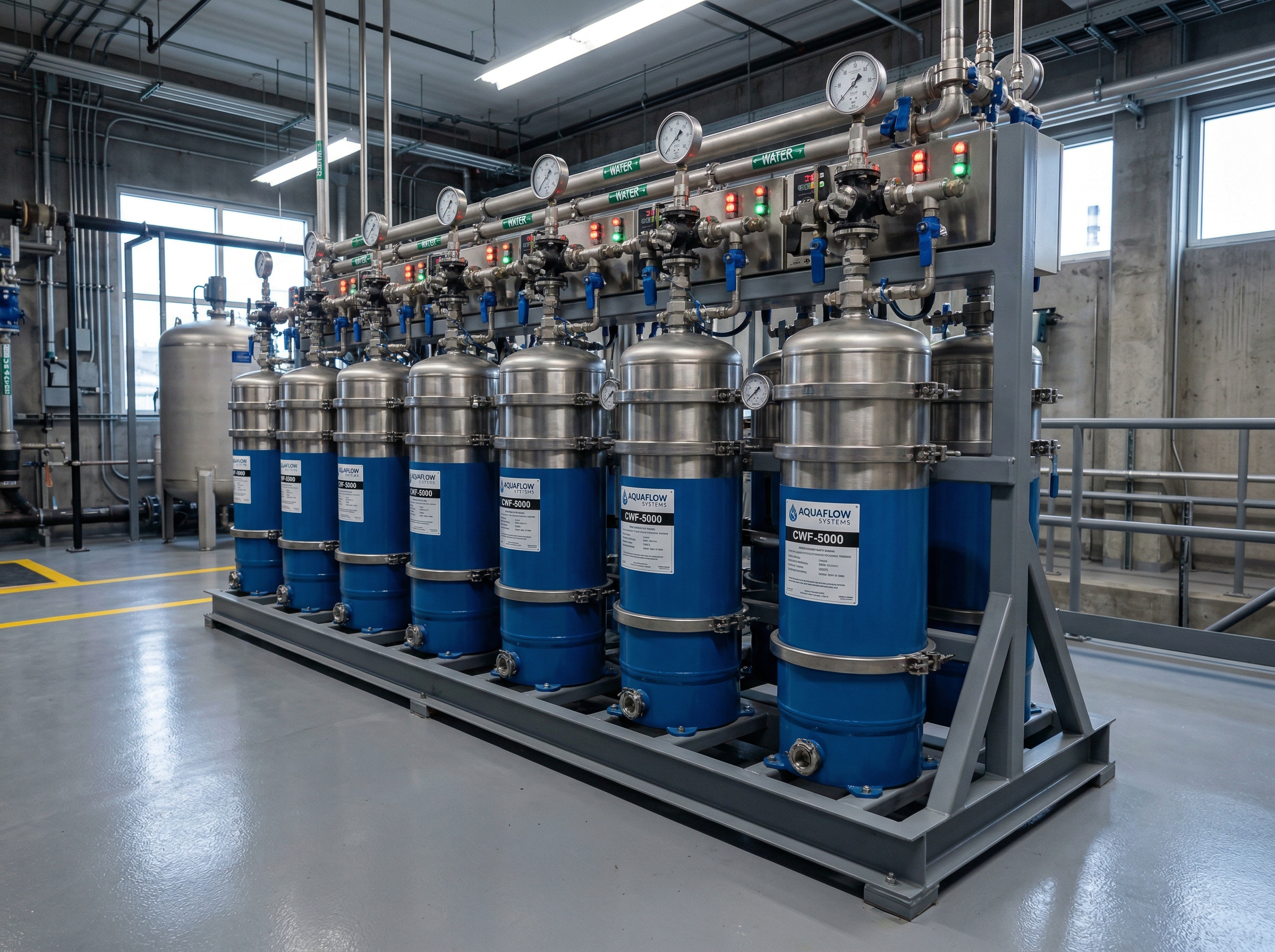
Commercial Water Filters
AMPAC USA commercial water filters serve restaurants, hotels, offices, schools, car washes, and commercial food service operations requiring high-capacity water purification for drinking water, ice machines, coffee equipment, steam ovens, and food preparation.
- Models
- 6
About Commercial Reverse Osmosis Systems
Sizing a system? Send your flow rate and a feed-water analysis, and an AMPAC engineer will work out the configuration with you.
Commercial Reverse Osmosis Systems: Industrial-Grade Water Purification
AMPAC USA commercial reverse osmosis systems deliver consistent, high-purity water for restaurants, hotels, car washes, laboratories, medical facilities, and light manufacturing. Engineered and manufactured at AMPAC's Woods Cross, Utah facility, each system ships pre-assembled and factory-tested for rapid commissioning.
Estimate your system specs before you call
Our free RO System Calculators cover sizing, recovery/rejection rate, antiscalant dosing, and operating cost — get real numbers in minutes.
Who Needs a Commercial RO System?
- Food service: Eliminate scale and chlorine taste from ice machines, steam ovens, and espresso equipment. Reduces equipment maintenance costs.
- Car wash and laundry: Spot-free rinse water below 10 TDS. Eliminates drying agents and reduces soap consumption 20-30%.
- Dental and medical: Purified water suited for autoclaves, dental chairs, and lab equipment.
- Greenhouses and aquaculture: Precisely controlled mineral levels for sensitive crops and fish.
Commercial RO Performance Specs
| Parameter | Value |
|---|---|
| Capacity range | 200 GPD to 8,000 GPD (single unit) |
| TDS rejection rate | 96-99% (FILMTEC membranes) |
| Feed pressure required | 40-80 PSI (booster pump included 200 GPD+) |
| Power supply | 110V/60Hz standard; 220V available |
| Recovery rate | 50-75% (adjustable) |
| Pre-filtration | 5-micron sediment + carbon block included |
Why Choose AMPAC Commercial RO?
AMPAC systems use FILMTEC (Dow) membranes rated for 3-5 year life under normal conditions. All units include digital TDS monitoring, automatic flush cycles, and a parts warranty. Our Woods Cross, Utah facility services units nationally with replacement membranes available from stock.
Commercial water purification systems, sized to your site
A commercial reverse osmosis water filtration system is usually a short train of stages rather than a single machine: pre-filtration to protect the membranes, softening or antiscalant where hardness is a problem, the RO membranes themselves, then polishing or disinfection if the application needs it. The US EPA describes RO as a process that can remove many inorganics, dissolved solids, radionuclides and synthetic organic chemicals, and that works on a mixture of contaminants at once instead of one at a time.
That is why we size a commercial system from your feed water analysis and your daily demand, not from the model list. Tell us both and we match a unit, from the 1,000 GPD system up to the 4,400 GPD turnkey system, or we step you up to industrial reverse osmosis when the load outgrows this range. Request a quote and an engineer will come back with a recommendation.
Source: U.S. Environmental Protection Agency, Overview of Drinking Water Treatment Technologies, updated March 23, 2026.
Commercial Reverse Osmosis Systems By Capacity
Commercial systems are chosen by daily demand first. The models below are the current line-up, and the gaps between them are usually closed by configuration rather than by a different chassis.
| Model | SKU | Rated output |
|---|---|---|
| Commercial Reverse Osmosis 100 GPD 380 LPD | APRO100 | 100 GPD |
| Commercial Reverse Osmosis 300 GPD 1135 LPD | APRO300 | 300 GPD |
| Commercial Reverse Osmosis 400 GPD 1500 LPD | APRO400 | 400 GPD |
| Commercial Reverse Osmosis 1000 GPD 3780 LPD | APRO1000 | 1,000 GPD |
| Commercial Reverse Osmosis 1200 GPD 4500 LPD | APRO1200 | 1,200 GPD |
| Commercial Turnkey Reverse Osmosis 2,200 GPD 8.3m3/Day | AP2200-LX | 2,200 GPD |
| Commercial Turnkey Reverse Osmosis 4,400 GPD 16.7m3/Day | AP4400-LX | 4,400 GPD |
| Commercial Reverse Osmosis 4500 GPD 17,000 LPD | APRO4500 | 4,500 GPD |
| Commercial Reverse Osmosis 8000 GPD 30,000 LPD | APRO8000 | 8,000 GPD |
Listed capacities run from 100 to 8,000 GPD across 19 systems in this section. Peak draw matters more than daily average: a restaurant and a laundry can use the same volume and still need different storage and pump sizing. Request a quote.
Larger plant-scale builds are listed under industrial reverse osmosis systems.
How to size a commercial RO system
Start with peak daily demand, not peak flow. An RO system produces water at a steady rate through the day and stores it, so a restaurant drawing 400 gallons across a six hour service does not need a 400 gallon per hour machine. It needs a unit that makes 400 gallons over 24 hours and a tank big enough to cover the rush.
The four numbers that decide the model
- Daily volume. Total gallons used in 24 hours, including cleaning and any equipment on a separate line.
- Feed water analysis. TDS, hardness, iron, silica and chlorine. This sets pretreatment and the achievable recovery, and it is the number most often skipped.
- Required purity. Coffee and ice have different targets from boiler feed or laboratory water. Tighter targets can mean a second pass or a polishing stage.
- Feed temperature. Membrane output falls by roughly 2 to 3 percent for every degree Celsius below 25. A system sized on summer water can come up short in January, so cold-month temperature is the one to size against.
Recovery, and what goes down the drain
A commercial system recovers 50 to 75 percent of its feed on typical municipal or well water. The rest leaves as concentrate. At 60 percent recovery, producing 300 gallons of permeate needs about 500 gallons of feed, and that matters both for the water bill and for any site on a metered sewer.
Sizing against AMPAC's range
| Typical site | Indicative daily demand | Range to look at |
|---|---|---|
| Coffee shop, small cafe | 100 to 300 gallons | 100 to 300 GPD |
| Restaurant, small bakery | 300 to 800 gallons | 300 to 800 GPD |
| Hotel, larger kitchen, small lab | 800 to 2,000 gallons | 1,000 to 3,000 GPD |
| Microbrewery, car wash, clinic | 2,000 to 10,000 gallons | 3,000 to 10,000 GPD |
| Process water, boiler feed, bottling | 10,000 gallons and up | industrial range |
These are starting points for a conversation, not a specification. Two sites with the same daily volume need different machines when their feed water differs. Send a water analysis and your daily volume and an AMPAC engineer will size it properly. Request a quote.