
Models
-
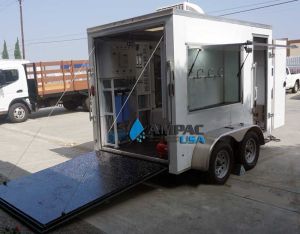
TR-3000
Mobile Trailer Reverse Osmosis
3,000 GPD 11.4 m³/hr
View specifications -
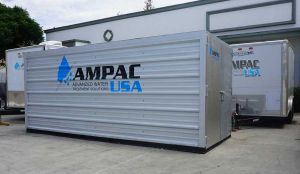
AP20K-LX-C
Emergency Portable Reverse Osmosis
20,000 GPD 3.18 m³/hr
View specifications -
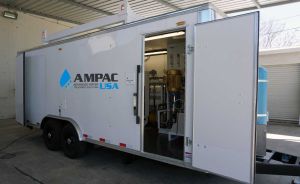
TR-40K
Mobile Trailer Reverse Osmosis
40,000 GPD 6.3 m³/hr
View specifications -
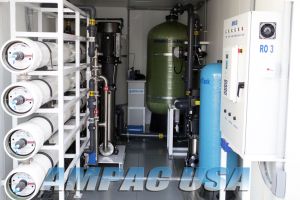
BWRO80K-LX
Mobile Turnkey Reverse Osmosis Water Purification
80,000 GPD 12.6 m³/hr
View specifications -
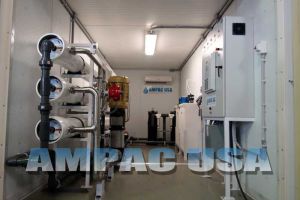
ROWPU100K-LX
ROWPU Industrial Turnkey Reverse Osmosis
100,000 GPD 15.8 m³/hr
View specifications -
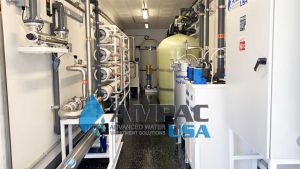
SW80K-LXC
Mobile Seawater Desalination Watermaker SW80K-LXC
View specifications -
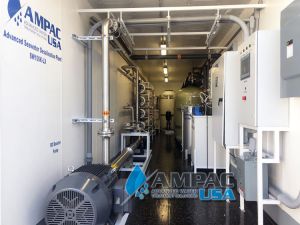
SW100K-LXC
Mobile Seawater Desalination Plant
SW100K-LXC
View specifications -

SW100K-LX
Mobile Seawater Desalination Watermaker System
SW100K-LX
View specifications
Need an output between two models, or a different feed water? Send us your numbers
About Mobile Reverse Osmosis Systems
Sizing a system? Send your flow rate and a feed-water analysis, and an AMPAC engineer will work out the configuration with you.
AMPAC USA designs and manufactures mobile reverse osmosis systems, mobile water treatment units, and trailer-mounted water purification equipment for deployment anywhere in the world. Whether for disaster relief, military operations, or humanitarian missions, our mobile reverse osmosis system solutions deliver safe, clean water from any water source - fast.
Mobile Reverse Osmosis & Water Treatment Systems
Our mobile water treatment systems are engineered for fast deployment and ease of operation. Each mobile reverse osmosis plant is designed to be commissioned by an average user with minimal technical skills - no specialist required. Systems are available in a wide range of flow rates and configurations to suit any mission requirement.
Applications
- Disaster response - floods, earthquakes, hurricanes, wildfires
- Military & defense - field-deployable RO systems and trailer mounted reverse osmosis units
- Humanitarian aid - emergency water supply for displaced populations
- Remote sites - mining, construction, oil & gas field operations
- Commercial water purification plant applications for temporary or permanent installations
Mobile Reverse Osmosis System Configurations
We offer multiple deployment formats to match your operational requirements:
- Trailer mounted reverse osmosis unit - road-deployable, self-contained RO trailer for sale with generator, pre-filtration, and storage
- Containerized reverse osmosis system - 20ft or 40ft ISO container housing complete RO system, pumps, and controls
- Skid-mounted mobile RO - compact skid for rapid airlift deployment
- Mobile reverse osmosis water purification units - standalone units for fresh, brackish, or seawater
Technology & Performance
Every mobile reverse osmosis RO system by AMPAC USA incorporates high-rejection membranes, multi-stage pre-filtration, and automatic controls. Our water filter systems remove heavy metals, bacteria, viruses, dissolved solids, and other contaminants to produce clean water that meets WHO and EPA standards. Key specs:
- Wide range of output: 500 GPD to 500,000 GPD+
- High recovery rate: up to 75% water recovery
- Handles diverse water sources: rivers, lakes, brackish groundwater, seawater
- The system filters water through multiple stages before RO membrane treatment
- Cost effectiveness: low energy consumption with energy recovery options
AMPAC USA has supplied mobile water treatment systems and water purification systems to military, NGOs, and government agencies across more than 100 countries for over 30 years. Contact us for system specifications, pricing, and custom configurations for your mobile reverse osmosis plant requirements.
AMPAC USA delivers the full range of water purification systems for mobile and containerized deployment. Our mobile reverse osmosis system and mobile reverse osmosis plant units are engineered for rapid deployment to remote, emergency, or industrial locations. Each mobile reverse osmosis ro unit is a self-contained containerized reverse osmosis system that provides clean water from brackish, river, or seawater sources — it filters water to drinking standards by removing heavy metals, bacteria, viruses, and dissolved solids. Our water filter systems deliver superior cost effectiveness and high system recovery rate compared to conventional treatment. Available as trailer-mounted mobile reverse osmosis water purification units, skid-mounted systems, or fully containerized packages — a wide range of capacities from 500 to over 100,000 GPD. Each ro system includes pre-treatment, high-pressure pump, membrane arrays, and post-treatment for safe drinking water delivery anywhere it's needed. Eliminates the need for bottled water in remote areas.
Need something more permanent? See our containerized RO systems or read about our California manufacturing facility.
Frequently Asked Questions
What is a mobile water treatment plant and how is it different from a fixed system?
A mobile water treatment plant is a complete RO or multi-barrier treatment system mounted on a road-legal trailer or in a standard 20 or 40-foot shipping container. Unlike fixed systems that require engineered foundations, electrical infrastructure, and building construction, mobile plants arrive fully pre-plumbed and wired. Site preparation is typically limited to leveling, source water access, and power connection.
What capacity range do your mobile treatment plants cover?
Trailer-mounted systems range from 5,000 to 50,000 GPD. Containerized plants in 20-foot units produce 20,000-50,000 GPD, while 40-foot container systems scale to 100,000 GPD and above. Capacity is determined by membrane array size, feed pump capacity, and pre-treatment equipment. Multiple units can be deployed in parallel for larger demands.
What water sources can a mobile treatment plant handle?
Mobile plants are configured for specific source water types. River and lake water systems include coagulation, settling, and multimedia filtration before RO. Brackish groundwater systems may need only cartridge filtration and antiscalant before the RO stage. Seawater systems require high-pressure pumps and energy recovery devices. Source water analysis before deployment determines the required pre-treatment train.
How much site preparation is required before deploying a mobile plant?
Minimal site preparation is required. A level gravel or paved area large enough to park the trailer or position the container is sufficient. You need access to a source water intake point within hose distance (typically 50-200 feet), a discharge point for concentrate, and power (generator provided or shore power connection). Most sites are operational within half a day of the unit arriving.
What power is required to run a mobile water treatment plant?
Power requirements depend on capacity. A 10,000 GPD trailer system typically requires 5-10 kW. A 50,000 GPD containerized plant may require 25-40 kW. Systems can include an integrated diesel generator sized for the load. If grid power is available, systems are configured for 208-480V three-phase input. Fuel consumption for generator-powered operation is typically 1-3 gallons per hour depending on plant size.
What permeate water quality do mobile RO systems produce?
Mobile RO systems treating brackish water (up to 5,000 ppm TDS feed) typically produce permeate at less than 100 ppm TDS with 97-99% salt rejection. Systems treating seawater achieve permeate below 500 ppm TDS. UV disinfection post-RO provides a biological barrier for potable water applications. Water quality meets EPA drinking water standards and can be verified with onboard TDS and UV intensity monitors.