
2 ranges to choose from
-
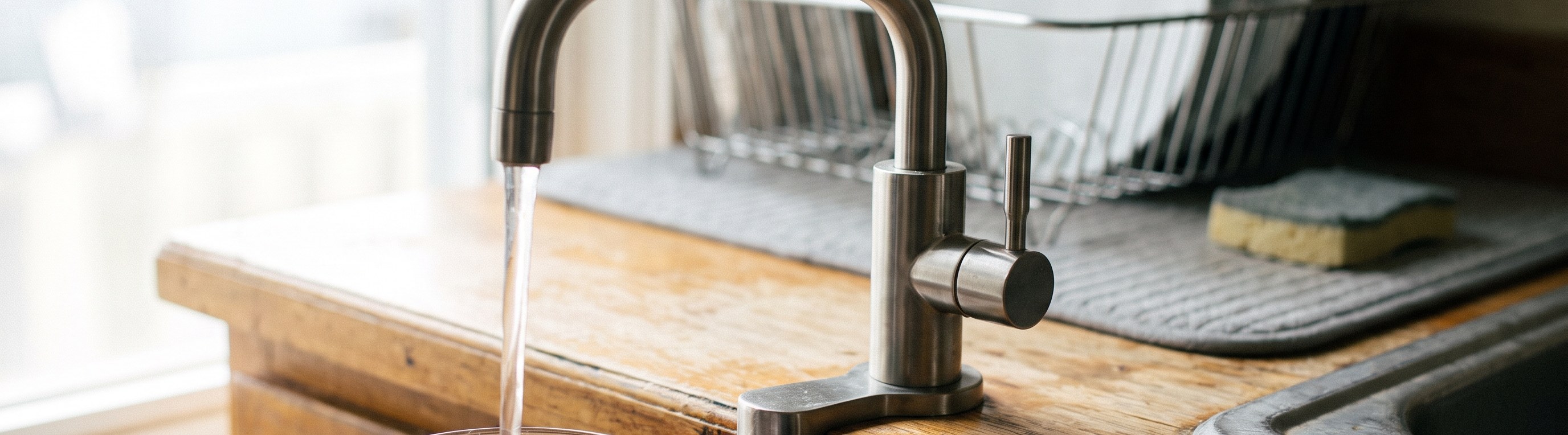
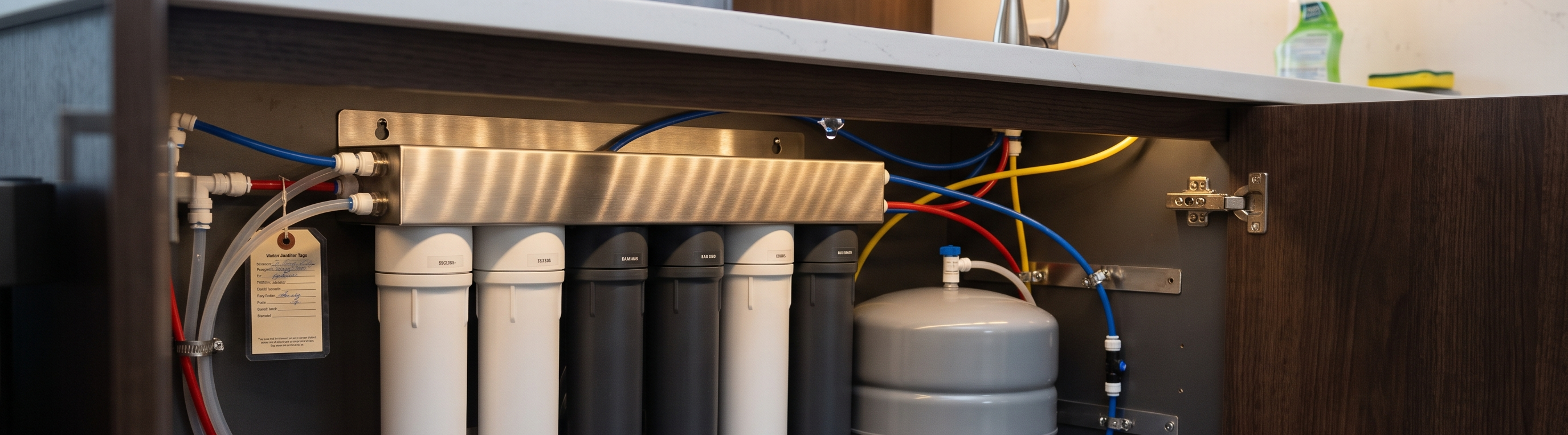
Under Sink Reverse Osmosis Systems (Under Sink RO)
AMPAC USA offers a complete range of under sink reverse osmosis systems — from compact tankless RO units to multi-stage under sink RO system configurations for residential and light commercial use.
- Models
- 4
-
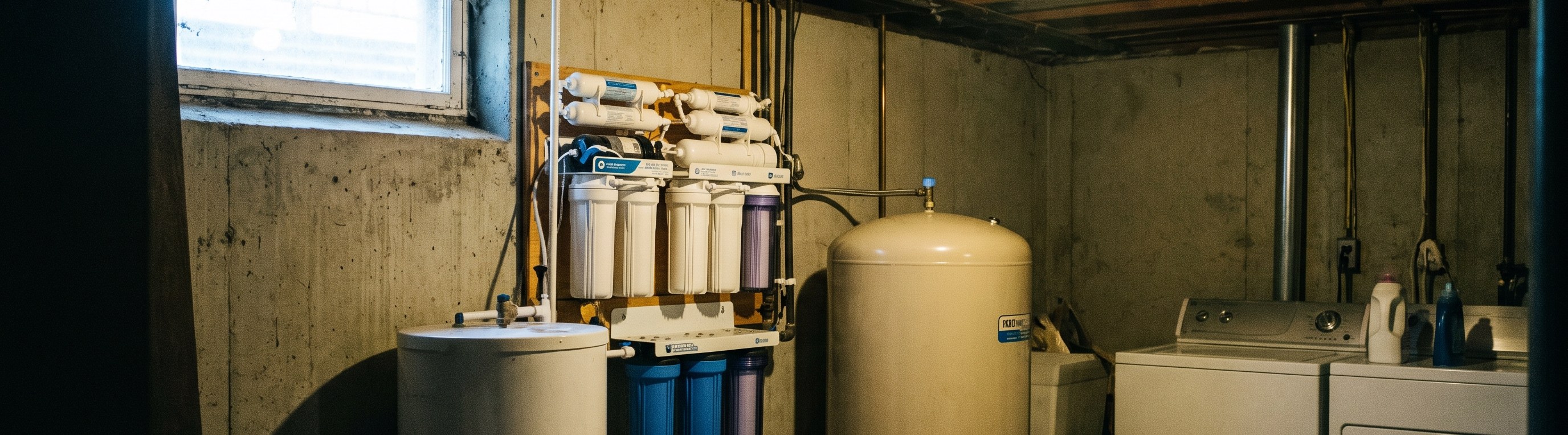
Whole House Reverse Osmosis Systems
A whole house reverse osmosis system — also called a point-of-entry (POE) RO system — treats all the water entering a building before it reaches any fixture.
- Models
- 7
- Output
- 100 – 3,000 GPD
About Reverse Osmosis Water Filtration Systems
Sizing a system? Send your flow rate and a feed-water analysis, and an AMPAC engineer will work out the configuration with you.
Reverse osmosis water filtration removes 95 to 99 percent of dissolved contaminants including fluoride, nitrates, lead, arsenic, chlorine, chloramines, and total dissolved solids, through membrane separation with no chemicals beyond routine filter changes. AMPAC USA builds residential RO systems from 50 to 150 GPD in under-sink and countertop configurations, using high-rejection TFC membranes and multi-stage pre-filtration to protect the membrane and improve taste. Installation connects to the cold-water line under the sink with a dedicated drinking-water faucet, and filter swaps take about five minutes without tools. Alkaline remineralization is available if you prefer slightly higher-pH water. Call (909) 548-4900 to match a system to your water test results.
Frequently Asked Questions
What does a residential under-sink RO system remove?
AMPAC USA under-sink RO systems reduce TDS by 95 to 98 percent, removing lead, arsenic, fluoride, nitrates, chlorine, chloramines, heavy metals, and dissolved salts. The RO membrane is the primary barrier, supported by sediment and carbon pre-filters that extend membrane life.
How many gallons per day does a residential RO system produce?
AMPAC USA residential RO units produce 50 to 100 gallons per day depending on the model and incoming water pressure. A storage tank, typically 3 to 4 gallons, holds purified water between uses. Production slows in cold water below 55 degrees Fahrenheit.
What is the difference between a 4-stage and a 7-stage RO system?
A 4-stage system includes sediment, carbon pre-filter, RO membrane, and post-carbon polish. A 7-stage system adds stages such as a second carbon block, remineralization filter, alkaline filter, or UV lamp. More stages address specific concerns but also mean more cartridges to replace annually.
How often do I replace filters in a residential RO system?
Pre-filters (sediment and carbon) replace every 6 to 12 months. The RO membrane lasts 2 to 3 years under normal conditions. Post-carbon polish replaces every 12 months. Harder or more contaminated source water shortens these intervals. A TDS meter helps confirm when membrane output degrades.
What water pressure does an under-sink RO system require?
Optimal feed pressure is 60 to 80 PSI. Systems will operate at 40 PSI but produce water more slowly. Below 40 PSI, a booster pump is recommended. High incoming TDS also reduces production rate. Most municipal water supplies fall within the acceptable pressure range without modification.