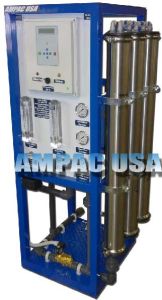
Commercial Reverse Osmosis Systems

Commercial Reverse Osmosis Systems

Commercial Reverse Osmosis Systems Built for Continuous Operation

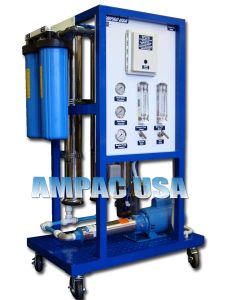
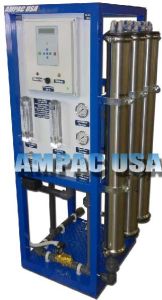
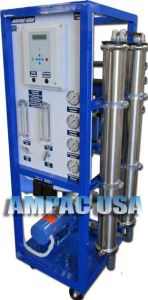
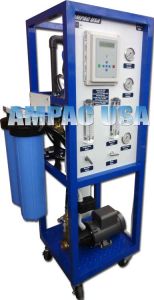
AMPAC USA commercial reverse osmosis systems remove dissolved solids, salts, heavy metals, and biological contaminants from source water — consistently, at scale, around the clock. Systems range from 100 GPD for light commercial use up to 250,000 GPD in a single module, with typical TDS rejection rates above 99%. Welded aluminum frames with powder-coat finish and stainless steel pressure vessels keep these units running in demanding environments. Restaurants, breweries, dialysis centers, car washes, food processors, and municipal utilities all operate AMPAC systems where water quality failures aren't an option.

1981Manufacturing Since
99%+Typical TDS Rejection
250KGPD Max Single Module
50+Countries Served

System Capacity Reference Guide

TierFlow RateTypical Applications
Light Commercial100–1,200 GPDRestaurants, coffee shops, offices, small retail
Commercial1,500–10,000 GPDHotels, car washes, breweries, food processing facilities
Industrial10,000–250,000 GPDManufacturing, municipal water treatment, dialysis centers, power plants

What Sets AMPAC RO Systems Apart

Membrane Technology

High-rejection spiral-wound RO membranes rated for continuous operation at 150 PSI. TDS rejection runs 98–99.5% depending on source water chemistry. We specify the right membrane for your feedwater — not a generic default.

System Construction

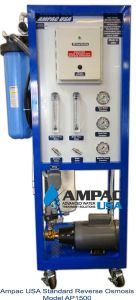
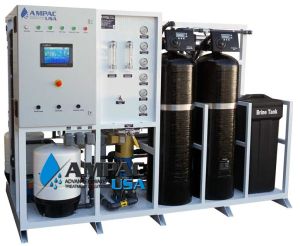
Powder-coated welded aluminum frames standard. 316 stainless steel pressure vessels available for aggressive source water. Pre-filtration (sediment + carbon stages) included standard. Post-filtration options — UV, re-mineralization, DI polishing — configured at the factory before shipping.

Controls & Monitoring

Auto flush cycles, low-pressure shutoff, and TDS monitoring ports on permeate and concentrate lines. Larger industrial units support SCADA integration via 4–20 mA outputs or Modbus TCP for remote monitoring and alarm routing into existing facility control systems.

Industries We Serve

Commercial RO requirements vary sharply by industry. A brewery needs consistent low-mineral water to control mash chemistry; a dialysis clinic needs purified water meeting AAMI/ISO standards; a car wash wants low-TDS rinse water to eliminate spotting. AMPAC systems are specified for the application, not adapted from a catalog.

Restaurants & Food ServiceConsistent feed water for cooking, ice production, and beverage quality
Breweries & WineriesControlled mineral profiles for recipe accuracy and batch consistency
Hotels & HospitalityHigh-volume purified water for kitchens, laundry, and guest services
Car WashesSpot-free rinse systems requiring sub-10 ppm TDS output
Pharmaceutical & BiotechUSP-grade purified water pre-treatment for WFI or clean steam systems
Dialysis & MedicalAAMI-compliant water purification for hemodialysis applications
Municipal Water TreatmentBrackish groundwater treatment and potable water production at community scale
Industrial ManufacturingBoiler feed, process water, parts washing, and cooling tower makeup

About Commercial Reverse Osmosis Systems

How Commercial RO Works

Reverse osmosis forces pressurized feedwater through a semi-permeable membrane that passes water molecules while blocking dissolved solids, salts, heavy metals, and biological contaminants above roughly 0.0001 microns. The membrane rejects 97–99.5% of total dissolved solids. Rejected concentrate exits to drain; purified permeate flows to your use point or storage tank.

What a Commercial RO System Removes

Commercial RO removes chlorides, nitrates, sulfates, fluoride, arsenic, lead, chromium, dissolved organic compounds, bacteria, and viruses. It does not remove dissolved gases (CO₂, H₂S) or low-molecular-weight volatile organics without carbon pre-treatment. For ultra-pure requirements, RO is paired with deionization (DI) polishing or electrodeionization (EDI) as a post-treatment stage.

Recovery Rate and System Sizing

A typical commercial RO system recovers 50–75% of feedwater as purified permeate — the rest exits as concentrate. Higher recovery is achievable with recirculation and antiscalant dosing but requires careful engineering. Correct sizing accounts for peak demand, daily volume, feedwater quality, and recovery rate — not just a single GPD number. AMPAC USA engineers systems to your actual operating parameters, not catalog defaults.

Pre-Treatment and Post-Treatment

Sediment and carbon pre-filtration is standard on all AMPAC commercial RO systems — it protects the membrane from particulate damage and chlorine attack. For high-hardness feedwater, softening or antiscalant injection prevents calcium carbonate scaling. Post-treatment options include UV disinfection, re-mineralization, CO₂ removal, and DI polishing, depending on application.

Quick Reference

TDS Rejection97–99.5%
Typical Recovery50–75%
Operating Pressure100–225 PSI
Capacity Range100–250,000 GPD
Membrane Life2–5 Years
Standard Pre-TreatmentSediment + Carbon
Frame MaterialWelded Aluminum
Pressure VesselsSS 316 Available
Manufactured InUSA Since 1981
Warranty1-Year Standard

Common Questions About Commercial RO Systems

How long does a commercial RO membrane last?

Most commercial RO membranes last 2–5 years under normal operating conditions. Actual lifespan depends on feedwater quality, operating pressure, and how consistently the system is flushed and maintained. High SDI feedwater, chlorine exposure, or running a system beyond its design capacity all shorten membrane life. With proper pre-filtration and regular flush cycles, 3–4 years is a realistic target for most applications.

What's the difference between commercial and industrial RO?

The line is mostly capacity and construction complexity. Commercial systems — roughly 1,500 to 10,000 GPD — typically run as single-pass skid-mounted units with straightforward controls. Industrial systems above 10,000 GPD often involve multi-stage arrays, high-pressure pumping with VFDs, automated chemical dosing, and centralized control panels. The underlying membrane technology is the same; the engineering around it scales to match demand and uptime requirements.

Do I need a water softener before a commercial RO system?

It depends on your feedwater hardness and the system's recovery rate. Hard water above roughly 10–12 grains per gallon can cause calcium carbonate scaling on the membrane, reducing output and shortening service life. A softener eliminates that risk entirely. In some cases, antiscalant chemical dosing is a viable alternative. We recommend a feedwater analysis before specifying pre-treatment — softening isn't always necessary, but skipping it on hard water is a common and expensive mistake.

What maintenance does a commercial RO system require?

Routine maintenance covers three areas: pre-filter cartridge changes every 3–6 months depending on feedwater turbidity, periodic membrane cleaning (CIP) when normalized permeate flow drops more than 10–15% from baseline, and annual inspection of O-rings, pressure vessel end-caps, and high-pressure pump seals. Systems with automatic flush cycles require less frequent manual attention.

Can AMPAC USA size a system for my specific application?

Yes. Sizing a commercial RO system correctly requires knowing your daily volume requirement, peak flow demand, feedwater TDS and chemistry, available supply pressure, and the quality target for your application. AMPAC USA's engineering team has been doing this since 1981. Send us a recent water analysis and your flow requirements, and we'll specify a system — including pre-treatment and post-treatment — matched to what you actually need.

Ready to Spec Your System?

Our engineers can configure the right commercial RO system for your application — from a 500 GPD restaurant unit to a 100,000 GPD municipal skid. Send us your water analysis and flow requirements to get started.