
Membrane Bio-Reactor (MBR) Is Custom-Built
Membrane Bio-Reactor (MBR) requires advanced, engineered-to-order equipment built around your exact water conditions, flow rate, and site requirements — that’s why we don’t list generic units online. Request a quote and one of our engineers will call you to walk through your application and build a solution designed specifically for it.
Frequently Asked Questions
What is a Membrane Bioreactor (MBR) and how does it work?
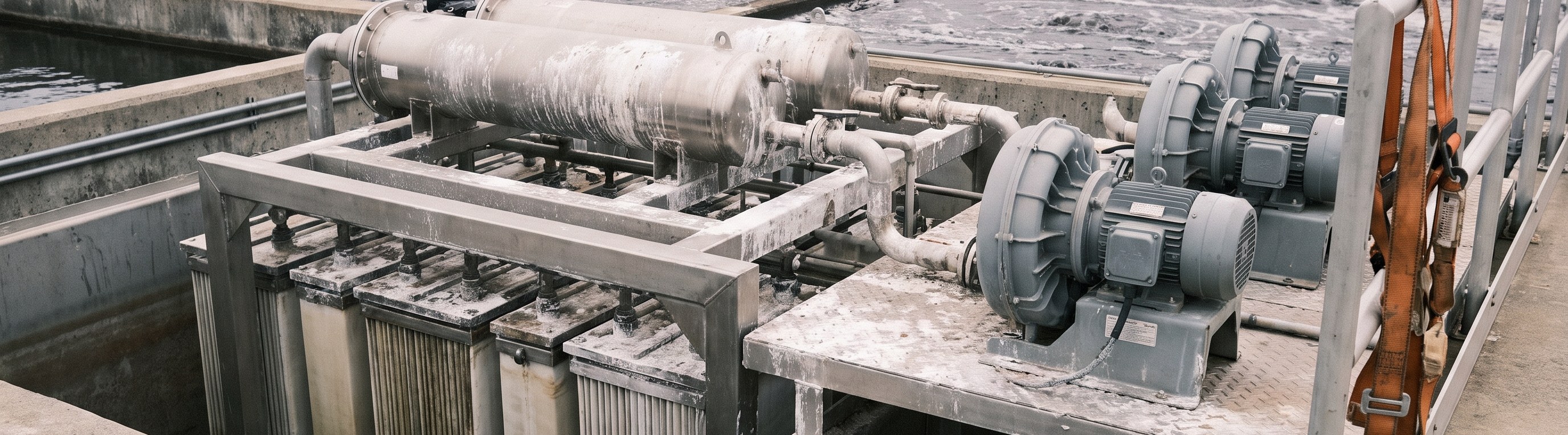
An MBR combines an activated sludge biological treatment process with ultrafiltration membrane separation in a single system. Microorganisms in the bioreactor tank consume organic waste, and the UF membranes (pore size 0.04-0.4 micron) filter out all suspended solids and bacteria from the treated water. The result is high-quality effluent without the need for a secondary clarifier, which is required in conventional activated sludge plants.
What effluent quality does an MBR system produce?
MBR systems consistently produce effluent with BOD below 5 mg/L, TSS below 5 mg/L, turbidity below 0.5 NTU, and total coliform below 2.2 MPN/100mL. This quality meets or exceeds Title 22 unrestricted reuse standards in California and equivalent standards in most states. With UV disinfection post-MBR, the water is suitable for toilet flushing, irrigation, cooling tower makeup, and many industrial process water applications.
What is the footprint advantage of MBR over conventional wastewater treatment?
MBR systems require 30-50% less footprint than conventional activated sludge plants because they eliminate the secondary clarifier and tertiary filtration stages. Higher mixed liquor suspended solids (MLSS) concentrations of 8,000-15,000 mg/L in the bioreactor (versus 2,000-4,000 mg/L in conventional systems) mean smaller bioreactor tank volumes. This advantage is significant for hotels, resorts, and industrial facilities with limited space.
What industries and applications are best suited to MBR systems?
MBR systems excel in applications where space is constrained, high-quality effluent is required for reuse, or variable flow rates challenge conventional systems. Common applications include resort and hotel wastewater treatment, food and beverage processing wastewater, hospital and healthcare facility effluent, remote community wastewater management, and industrial facilities under strict discharge permit conditions. Landfill leachate treatment is another growing MBR application.
How often do MBR membranes need cleaning or replacement?
MBR membranes are cleaned in two ways: relaxation and backpulsing during normal operation (every 10-15 minutes), and chemical cleaning in-place (CIP) every 3-12 months depending on fouling rate. Membranes typically last 7-10 years before replacement is needed. Proper MLSS management, dissolved oxygen control, and avoiding hydraulic shock loads significantly extend membrane life and maintain system performance.
What is the energy consumption of an MBR system compared to conventional treatment?
MBR systems consume more energy than conventional activated sludge primarily due to membrane aeration (coarse bubble air scour to prevent fouling) and membrane permeation pumping. Typical energy consumption is 0.8-1.5 kWh per 1,000 gallons treated, compared to 0.5-0.8 kWh for conventional secondary treatment. The higher energy cost is offset by reduced chemical use, eliminated clarifier, and the reuse value of high-quality effluent.