

Models
-
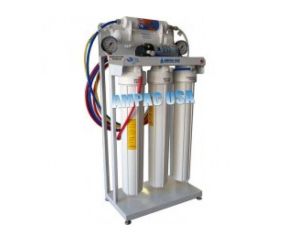
APRO100
Commercial Reverse Osmosis
100 GPD 380 LPD
View specifications -
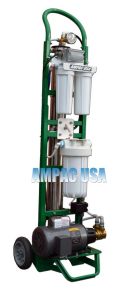
TR-1500
Mobile Reverse Osmosis
1,500 GPD TR-1500
View specifications -
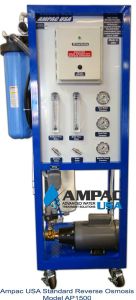
AP1500
Commercial Reverse Osmosis
1,500 GPD 5670 LPD
View specifications -
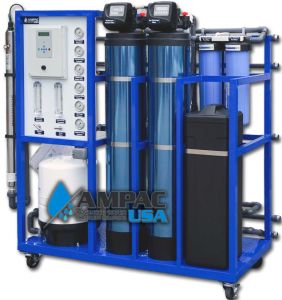
AP1500-LX
Commercial Turnkey Reverse Osmosis
1,500 GPD 5.7 m³/Day
View specifications -
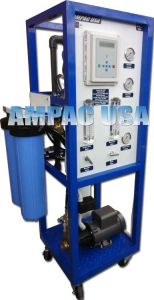
AP2200
Commercial Reverse Osmosis
2,200 GPD 8300 LPD
View specifications -
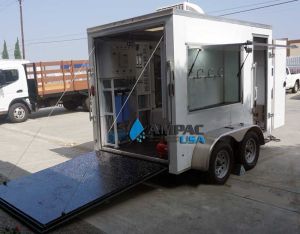
TR-3000
Mobile Trailer Reverse Osmosis
3,000 GPD 11.4 m³/hr
View specifications -
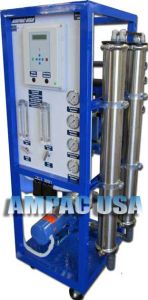
APRO3000
Commercial Reverse Osmosis
3,000 GPD 11,350 LPD
View specifications -
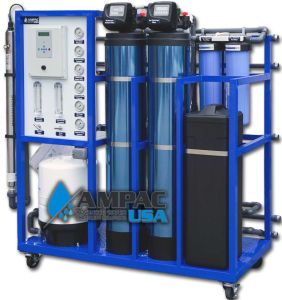
AP4400-LX
Commercial Turnkey Reverse Osmosis
4,400 GPD 16.7 m³/Day
View specifications -
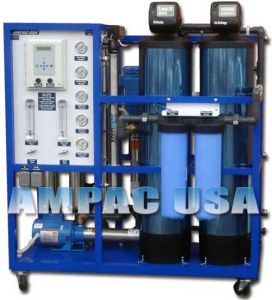
AP6000-LX
Commercial Turnkey Reverse Osmosis
6,000 GPD 22.7 m³/Day
View specifications -
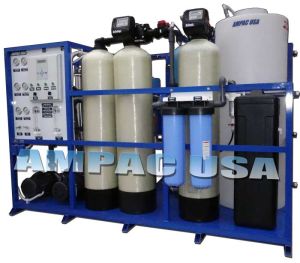
AP6000-SM-LX
Industrial Reverse Osmosis
6,000 GPD 22.7 m³/Day
View specifications -
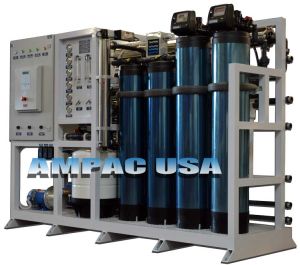
AP8000-LX-1
Industrial Reverse Osmosis
8,000 GPD 30.2 m³/Day
View specifications -
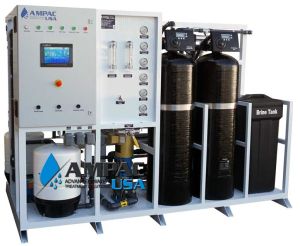
AP10K-LX
Industrial Reverse Osmosis
10,000 GPD 1.6 m³/hr
View specifications -
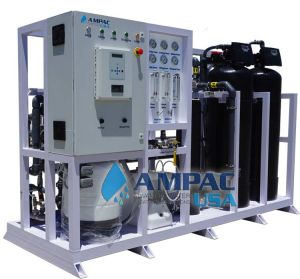
AP12K-LX
Industrial Reverse Osmosis
12,000 GPD 1.9 m³/hr
View specifications -
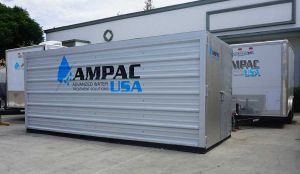
AP20K-LX-C
Emergency Portable Reverse Osmosis
20,000 GPD 3.18 m³/hr
View specifications -
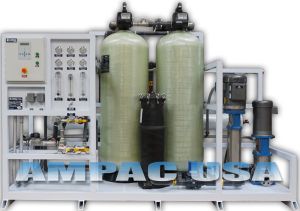
AP20K-LX
Industrial Reverse Osmosis
20,000 GPD 3.18 m³/hr
View specifications -
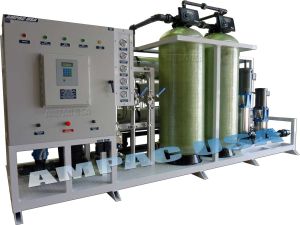
AP25K-LX
Industrial Reverse Osmosis
25,000 GPD 4.0 m³/hr
View specifications -
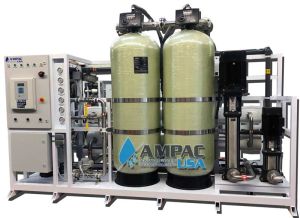
AP30K-LX
Industrial Reverse Osmosis
30,000 GPD 4.75 m³/hr
View specifications -
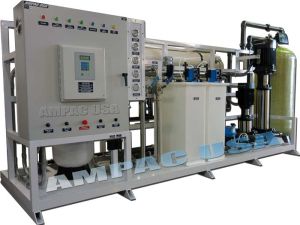
AP40K-LX
Industrial Reverse Osmosis
40,000 GPD 6.30 m³/hr
View specifications -
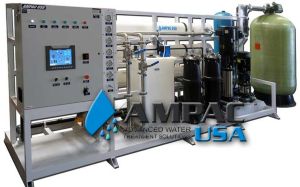
AP60K-LX
Industrial Reverse Osmosis
60,000 GPD 9.5 m³/hr
View specifications -
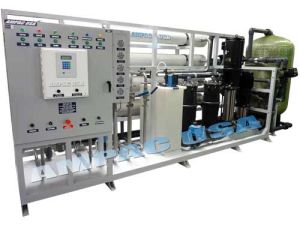
AP80K-LX
Industrial Reverse Osmosis
80,000 GPD 12.6 m³/hr
View specifications -
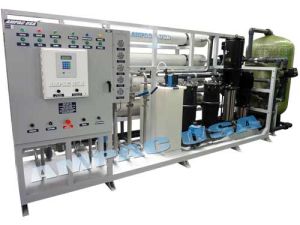
AP100K-LX
Industrial Reverse Osmosis
100,000 GPD 15.8 m³/hr
View specifications -
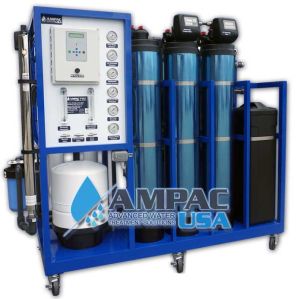
AP3000-LX-ALK
Alkaline Water Reverse Osmosis AP3000-LX-ALK
View specifications -
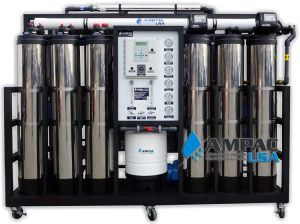
AP4000-SM
Super Water Store Reverse Osmosis AP4000-SM
View specifications -
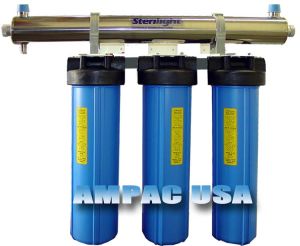
BB4-20
Quad Whole House BB UV
View specifications -
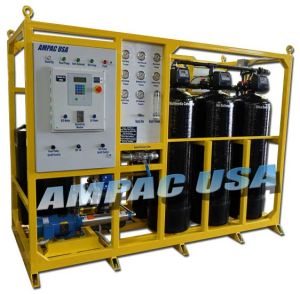
SWRO10K-C1D2
Off-Shore Sea Water Desalination Watermaker SW10K-C1D2
View specifications -
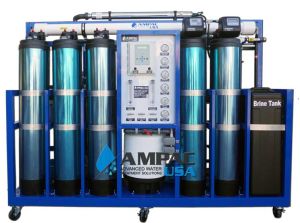
AP3000-SM
Super Water Store Reverse Osmosis AP3000-SM
View specifications -
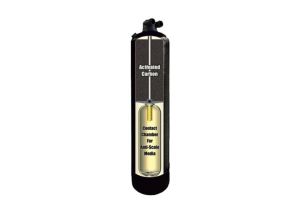
AP2500S
Ampac USA No-Salt E-Treat Water Conditioner
View specifications -
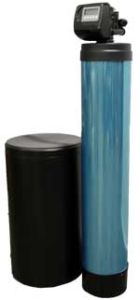
AP2000S
Ion Exchange Water Softener AP2000S
View specifications
Need an output between two models, or a different feed water? Send us your numbers
About Water Treatment Technologies
Sizing a system? Send your flow rate and a feed-water analysis, and an AMPAC engineer will work out the configuration with you.
AMPAC USA engineers water treatment systems using reverse osmosis, ultrafiltration, UV disinfection, ozone oxidation, and electrodeionization (EDI) — each suited to different contaminants and purity requirements. Reverse osmosis remains the most versatile technology, achieving 95–99% rejection of dissolved salts and organics across residential, commercial, and industrial applications, while EDI and mixed-bed DI deliver ultra-pure water for electronics and pharmaceutical use. Most AMPAC systems combine two or more of these technologies in sequence to meet a specific water quality target. Contact us at (909) 548-4900 for application engineering support.
For effluent and process water at plant scale, see industrial wastewater treatment plants.
Frequently Asked Questions
What are the main water treatment technologies available today?
The primary water treatment technologies include: Reverse Osmosis (RO) removes up to 99% of dissolved solids; Ultrafiltration (UF) removes particles and bacteria to 0.01 micron; Nanofiltration (NF) provides selective ion removal ideal for softening; Ion Exchange (IX) targets specific ions like hardness or nitrates; UV Disinfection destroys microorganisms without chemicals; Electrodeionization (EDI) produces ultrapure water without chemical regeneration; and Forward Osmosis (FO) is an emerging technology for challenging feed waters.
How do I choose the right water treatment technology for my application?
Technology selection depends on feed water quality (TDS, contaminants, turbidity), required product water quality, flow rate, energy budget, chemical handling constraints, and footprint. AMPAC conducts a water quality analysis and application review to recommend the optimal combination of technologies. Most industrial and commercial applications use a multi-stage approach combining pre-filtration, RO, and polishing.
What is the difference between reverse osmosis and nanofiltration?
RO membranes reject virtually all dissolved salts (95-99%+ rejection), making them ideal for desalination and ultrapure water production. Nanofiltration membranes are more selective, rejecting divalent ions (calcium, magnesium, sulfate) at 85-95% while passing more monovalent ions (sodium, chloride). Nanofiltration is used for softening, color removal, and partial desalination where full TDS reduction is not required.
What is electrodeionization (EDI) and when is it used?
EDI is a continuous ion exchange process using ion exchange membranes and an electric field to remove trace ions from RO-pretreated water, producing high-purity water (10-18 megaohm-centimeter) without chemical regeneration. EDI is used in pharmaceutical manufacturing, semiconductor fabrication, and power generation where ultra-high purity water is required at consistent quality around the clock.
How is smart monitoring being applied to water treatment?
Modern water treatment systems increasingly incorporate IoT sensors, real-time monitoring dashboards, and predictive analytics. AMPAC smart-enabled systems track TDS, pressure, flow rate, pH, and membrane performance in real time, alerting operators to maintenance needs before failures occur. Remote monitoring reduces operator costs and enables proactive management of distributed systems.