

Models
-
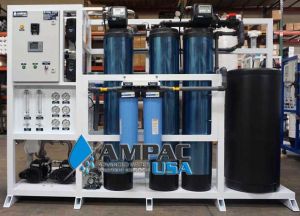
APRO-DI15
APRO-DI15 High Purity Water Treatment & Lab Pure Water System
Ampac USA's Pre-Engineered Laboratory Water Systems are designed to serve as the centralized, purified water source for a variety of academic, medical, and other research laboratory facilities.
View specifications -
WFI-HP80
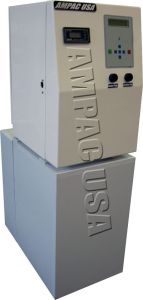
WFI-HP80
The AMPAC USA WFI-HP80 is a sophisticated water treatment system specifically engineered to produce exceptionally high purity water, meeting the stringent demands of biopharmaceutical applications.
View specifications -
WFI-HP160
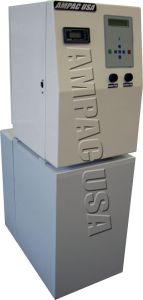
WFI-HP160
The AMPAC USA WFI-HP160 Biopharmaceutical High Purity Water Reverse Osmosis system is engineered to produce ultra-pure water specifically meeting the stringent requirements of the biopharmaceutical industry.
View specifications
Need an output between two models, or a different feed water? Send us your numbers
About Reagent Grade Laboratory Water Systems
Sizing a system? Send your flow rate and a feed-water analysis, and an AMPAC engineer will work out the configuration with you.
Ampac USA design and manufacture ultrapure water purification systems that meets Reagent Grade Laboratory Water type I, II & III Water.
AMPAC USA laboratory water purification systems produce reagent-grade, ultra-pure water meeting ASTM, CLSI, and ISO standards for laboratory applications. Our lab water purification systems deliver consistent laboratory water purification performance for analytical, clinical, and research workflows requiring type 1 water purity (resistivity ≥18.2 MΩ·cm). High quality lab water is critical for accurate assay results, instrument calibration, and reagent preparation. Contact AMPAC USA for a complete laboratory water purification system recommendation for your lab.
AMPAC USA laboratory water purification systems are engineered to meet the most demanding laboratory applications - from clinical diagnostics to pharmaceutical manufacturing. Our lab water purification systems deliver high quality laboratory water purification including type 1 water (ultrapure), Type 2 (analytical), and Type 3 (general use) grades. Each system removes organic contaminants, particulates, bacteria, and dissolved solids to produce ultra-pure lab water purification systems output compliant with ASTM, CLSI, and ISO standards. Contact AMPAC USA for the right laboratory water purification systems configuration for your lab.
Our laboratory water purification systems combine reverse osmosis with ion exchange polishing and other purification technologies to deliver consistently high quality water and purified water output that meets ASTM Type I specifications.
Frequently Asked Questions
What defines reagent-grade laboratory water and how does it differ from filtered tap water?
Reagent-grade laboratory water meets ASTM Type I specifications: resistivity at 18 megohm-cm at 25 degrees C, TOC below 10 parts per billion, sodium and chloride below 1 ppb, silica below 3 ppb, and bacteria below 1 CFU/mL. Filtered tap water, even after carbon filtration, typically measures 0.01 to 0.1 megohm-cm with TOC in the hundreds of ppb. The difference determines whether downstream analytical results are valid.
What purification stages produce ASTM Type I water from tap or well water?
The standard production train is RO (removes 95 to 99 percent of ions and organics), followed by electrodeionization or mixed-bed DI polishing (brings resistivity to 18 megohm-cm), then UV photooxidation at 185 nm wavelength (reduces TOC by oxidizing organic compounds), and a final 0.2-micron membrane filter (removes particles and bacteria). Each stage is verified by inline monitoring before the dispensing point.
What laboratory applications require ASTM Type I reagent-grade water specifically?
HPLC mobile phase preparation, mass spectrometry sample dilution, mammalian cell culture media preparation, molecular biology including PCR and gel electrophoresis, trace metal analysis by ICP-MS, and standard solution preparation for analytical reference all require Type I water. Using lower-grade water in these applications introduces background contamination that invalidates results or damages sensitive instrument columns and nebulizers.
How is TOC monitored in a reagent-grade water system?
Inline TOC monitors use UV oxidation and conductivity measurement to report TOC in real time, typically displaying results in parts per billion. Good systems alarm and close the product valve if TOC rises above the set point, preventing off-spec water from reaching the application point. Calibration against certified TOC standards is performed quarterly or per laboratory SOP requirements.
How long can Type I water be stored before use?
Type I water should not be stored. It degrades almost immediately upon contact with the atmosphere: CO2 dissolves and drops resistivity, containers leach organic compounds and ions, and bacteria colonize within hours in ambient conditions. The correct approach is to produce Type I water at point of use on demand, or to store it for no more than 30 minutes in a closed, clean container made of PFA or borosilicate glass.
What is the typical system footprint for a laboratory reagent-grade water unit?
Benchtop units producing 1 to 10 liters per hour for low-volume labs occupy roughly 12 by 18 inches of bench space. Higher-output systems producing 1 to 5 GPH for multi-user labs mount under the bench or on a wall bracket, with a small polishing point-of-use tap at the dispensing location. Feed water connects to a standard lab water line, and drain connects to a sink drain.