

Models
-
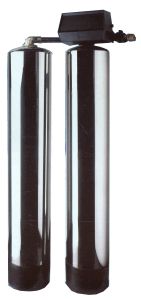
AP3000S
Ion Exchange Twin Alternating Water Softener AP3000S
The AMPAC USA AP3000S Ion Exchange Twin Alternating Water Softener removes calcium and magnesium, the minerals responsible for limescale, from household and commercial water supplies.
View specifications -
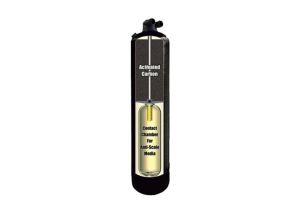
AP2500S
Ampac USA No-Salt E-Treat Water Conditioner
The Ampac USA No-Salt E-Treat Water Conditioner, model AP2500S, prevents hard water scale in pipes and appliances without salt-based regeneration.
View specifications -
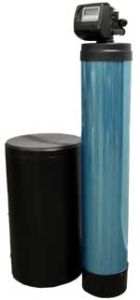
AP2000S
Ion Exchange Water Softener AP2000S
The AMPAC USA AP2000S Ion Exchange Water Softener treats hard water in residential and light commercial settings.
View specifications -
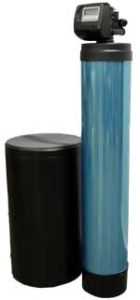
AP1500S
Ion Exchange Water Softener AP1500S
The AMPAC USA Ion Exchange Water Softener AP1500S tackles hard water through ion exchange, a process that removes the calcium and magnesium minerals responsible for water hardness.
View specifications -
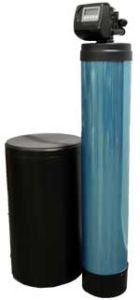
AP1000S
Ion Exchange Water Softener AP1000S
The AMPAC USA AP1000S Ion Exchange Water Softener is designed to reduce water hardness and prevent lime scale damage in homes and businesses.
View specifications -
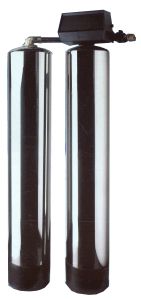
AP8000S
Dual Alternating Ion Exchange Water Softener Model AP8000S
The AMPAC USA Dual Alternating Ion Exchange Water Softener Model AP8000S is built to eliminate hard water in residential, commercial, and industrial applications.
View specifications
Need an output between two models, or a different feed water? Send us your numbers
About Residential Water Softeners & Conditioners
Sizing a system? Send your flow rate and a feed-water analysis, and an AMPAC engineer will work out the configuration with you.
Need a bulk/commercial system? See our commercial & industrial water softeners page for restaurants, hotels, and factories.
Water softeners remove hardness minerals, calcium and magnesium, by ion exchange, and they're sized in grains per gallon to match your water's hardness (1 grain equals 17.1 ppm). AMPAC USA builds its softeners at its Woods Cross, Utah facility on legendary Clack control valves, sized to your household's usage so the unit regenerates only when needed, which cuts salt use and running cost. Sizing matters: an undersized softener regenerates too often and sends extra salt down the drain. Beyond residential units, AMPAC manufactures commercial and industrial softeners for boilers, cooling towers, hospitals, laundries, food-processing plants, car washes, and apartment buildings. Call (909) 548-4900 to size the right softener for your water.
Learn more on our dedicated commercial & industrial water softeners page.
For help choosing between pellets, crystals, and block salt, see our guide to water softener salt.
Frequently Asked Questions
What is the difference between a water softener and a salt-free conditioner?
Water softeners use ion exchange to physically remove calcium and magnesium, replacing them with sodium. Salt-free conditioners change the structure of hardness minerals so they resist scaling but do not remove them. Softeners are best for severe hardness; conditioners suit those avoiding added sodium.
What grain capacity do I need for my home?
Capacity depends on household size and water hardness. A family of four with 15 GPG hardness typically needs a 32,000 to 48,000 grain system. AMPAC USA offers units from 24,000 to 80,000 grains. Larger capacity means longer cycles between regeneration, which saves salt and water.
Will a water softener protect my RO membrane?
Yes. Hard water causes calcium scaling on RO membranes, which reduces flow and shortens membrane life. Installing a softener upstream of your RO system is one of the most effective ways to extend membrane replacement intervals and maintain stable TDS rejection.
How often does a water softener need to regenerate?
Metered systems regenerate based on actual water use, typically every 7 to 14 days for an average household. Timed units regenerate on a fixed schedule regardless of consumption. Metered regeneration uses less salt and water overall, making it the more efficient choice for most homes.
Can I install a water softener myself?
Basic installation is manageable for a confident DIYer with plumbing experience. You need a bypass valve, drain line, and access to an electrical outlet for the control head. Most AMPAC USA softeners include installation instructions. Complex setups, such as homes on a well, may benefit from professional installation.