


Models
-
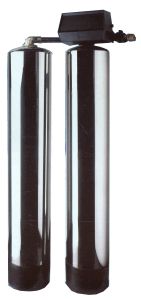
AP3000S
Ion Exchange Twin Alternating Water Softener AP3000S
The AMPAC USA AP3000S Ion Exchange Twin Alternating Water Softener removes calcium and magnesium, the minerals responsible for limescale, from household and commercial water supplies.
View specifications -
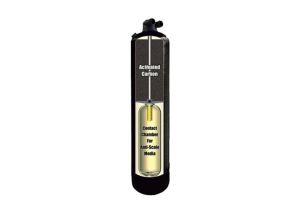
AP2500S
Ampac USA No-Salt E-Treat Water Conditioner
The Ampac USA No-Salt E-Treat Water Conditioner, model AP2500S, prevents hard water scale in pipes and appliances without salt-based regeneration.
View specifications -
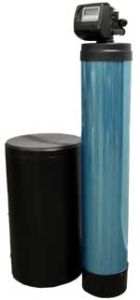
AP2000S
Ion Exchange Water Softener AP2000S
The AMPAC USA AP2000S Ion Exchange Water Softener treats hard water in residential and light commercial settings.
View specifications -
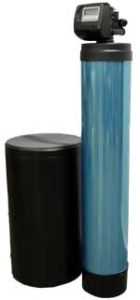
AP1500S
Ion Exchange Water Softener AP1500S
The AMPAC USA Ion Exchange Water Softener AP1500S tackles hard water through ion exchange, a process that removes the calcium and magnesium minerals responsible for water hardness.
View specifications -
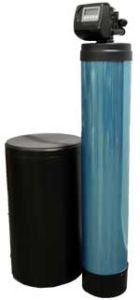
AP1000S
Ion Exchange Water Softener AP1000S
The AMPAC USA AP1000S Ion Exchange Water Softener is designed to reduce water hardness and prevent lime scale damage in homes and businesses.
View specifications -
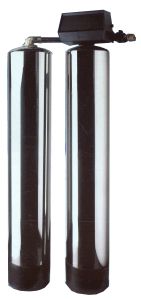
AP8000S
Dual Alternating Ion Exchange Water Softener Model AP8000S
The AMPAC USA Dual Alternating Ion Exchange Water Softener Model AP8000S is built to eliminate hard water in residential, commercial, and industrial applications.
View specifications
Need an output between two models, or a different feed water? Send us your numbers
About Commercial Water Softeners
Sizing a system? Send your flow rate and a feed-water analysis, and an AMPAC engineer will work out the configuration with you.
AMPAC USA commercial water softeners are sized for the kind of daily volume a residential unit was never built to handle. Hotels, restaurants, breweries, car washes, and manufacturing plants all fight the same enemy: hard water that scales up boilers, cooling towers, and every piece of equipment downstream of the meter. A softener built for a single-family home just can't keep pace with that.
The lineup runs on ion exchange: swap calcium and magnesium for sodium as water moves through a resin bed. Simple mechanism, reliable results. The AP1000S handles 32,000 grains; the AP1500S steps up to 48,000, both built around a Clack WS1 digital valve for precise regeneration timing. Need soft water with zero interruption? The AP3000S solves that with twin 10-inch by 54-inch tanks on a Fleck 9000 valve, so one tank regenerates while the other stays in service. The AP8000S goes further for the heaviest commercial and industrial loads: dual alternating 18-inch by 65-inch tanks, 8 cubic feet of high-capacity cation resin in each one. Hotels, restaurants, and manufacturing facilities run this model to stop scale buildup in boilers and cooling towers before it starts.
Not every site can put a brine tank in the mechanical room. That's where the AP2500S No-Salt E-Treat Conditioner comes in. It conditions hardness minerals instead of stripping them out of the water, so there's no backwash cycle and nothing to discharge, a fit for properties with water-use restrictions or no easy drain access.
Every softener in this lineup also removes iron up to 3 parts per million. That's not a throwaway spec (reddish staining on fixtures and linens usually rides in with the hardness minerals, not some separate problem needing its own filter).
Sizing a commercial softener from your hardness number
Start with a hardness result from your water supplier or a lab. USGS classifies water as soft up to 60 mg/L as calcium carbonate, moderately hard from 61 to 120, hard from 121 to 180 and very hard above 180. Many labs report grains per gallon instead, and Penn State Extension notes that one grain per gallon is about 17 mg/L.
| Class | mg/L as calcium carbonate | Grains per gallon (approx.) |
|---|---|---|
| Soft | 0 to 60 | Up to 3.5 |
| Moderately hard | 61 to 120 | 3.5 to 7 |
| Hard | 121 to 180 | 7 to 10.5 |
| Very hard | Above 180 | Above 10.5 |
The rest is arithmetic. Multiply hardness in grains per gallon by the gallons you use each day to get the grains the softener has to remove. A property using 5,000 gallons a day at 15 grains per gallon has 75,000 grains to remove daily. A 48,000 grain tank would regenerate more than once a day at that load, which is why high-demand sites use twin or dual units such as the AP3000S twin alternating softener or the AP8000S dual alternating softener, where one tank serves while the other regenerates.
Regeneration uses water too. EPA's WaterSense program notes that a typical softener uses 20 to 70 gallons per regeneration cycle, and some larger systems up to 200 gallons, so size the unit to the load and do not oversize it. For smaller loads, see the AP1000S, AP1500S and AP2000S softeners, or request a quote with your hardness, iron and daily volume.
Sources: USGS, Hardness of Water; Penn State Extension, Water Softening; US EPA WaterSense, Water: The Hard Facts (May 2026).
AMPAC USA has manufactured water treatment equipment for over 30 years. Tell us your flow rate, hardness reading in grains per gallon, and what you're protecting (boiler, cooling tower, dish machine, laundry), and we'll size the right unit instead of guessing off a chart. Call (909) 548-4900 or request a quote below.