

Models
-
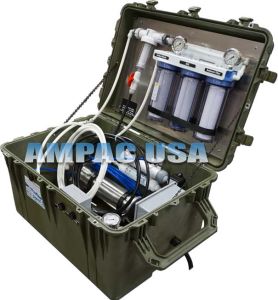
EP-500
Emergency Portable Brackish Water Reverse Osmosis
500 GPD EP-500
View specifications -
TR-1500
Mobile Reverse Osmosis
1,500 GPD TR-1500
View specifications -
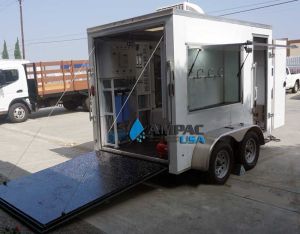
TR-3000
Mobile Trailer Reverse Osmosis
3,000 GPD 11.4 m³/hr
View specifications -
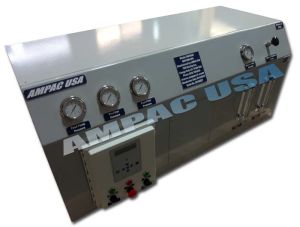
ROWPU-SW4500
ROWPU SW4500 (/17000LPD)
4,500 GPD
View specifications -
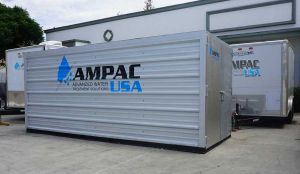
AP20K-LX-C
Emergency Portable Reverse Osmosis
20,000 GPD 3.18 m³/hr
View specifications -
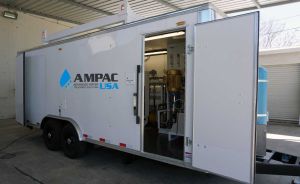
TR-40K
Mobile Trailer Reverse Osmosis
40,000 GPD 6.3 m³/hr
View specifications -
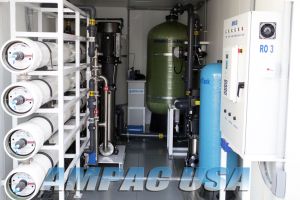
BWRO80K-LX
Mobile Turnkey Reverse Osmosis Water Purification
80,000 GPD 12.6 m³/hr
View specifications -
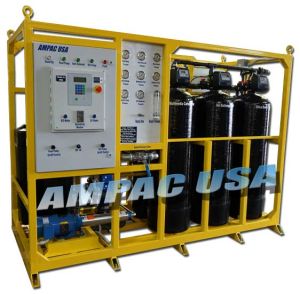
SWRO10K-C1D2
Off-Shore Sea Water Desalination Watermaker SW10K-C1D2
View specifications -
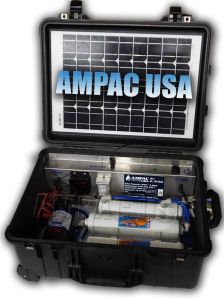
JB-1
Portable Water Filtration System
Solar Power Water Filter
View specifications
Need an output between two models, or a different feed water? Send us your numbers
About Disaster Relief Water Purification Systems
Sizing a system? Send your flow rate and a feed-water analysis, and an AMPAC engineer will work out the configuration with you.
When a natural disaster cuts off a community's water supply, the window to prevent a secondary public health crisis is short. Contaminated floodwater, damaged infrastructure, and overwhelmed distribution systems leave populations dependent on whatever water purification capacity can be deployed quickly. A system that produces 10,000 GPD of safe drinking water in the first 48 hours saves lives. One that takes weeks to procure and commission does not.
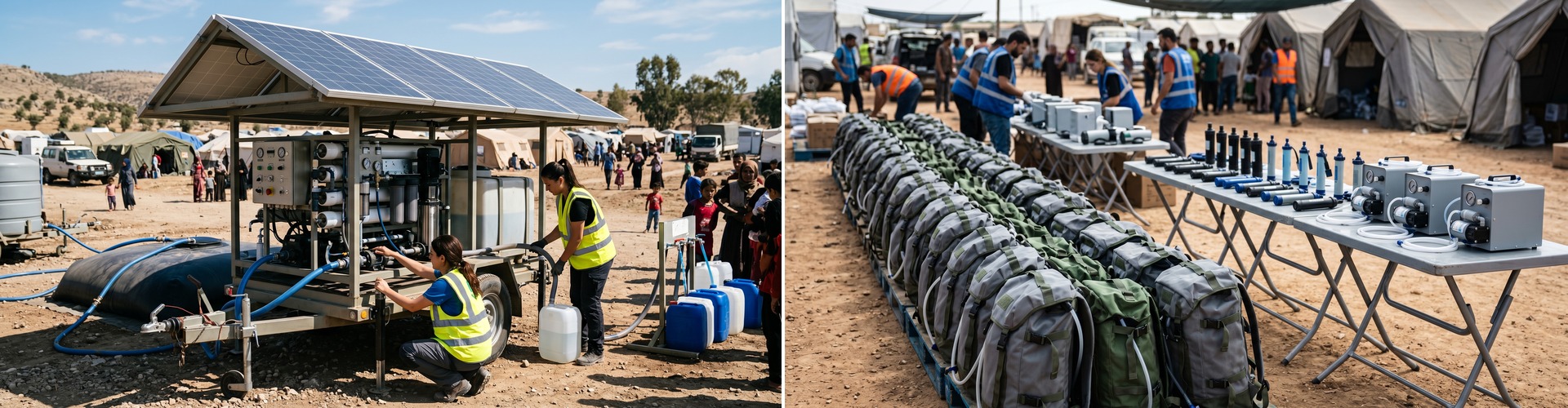
AMPAC USA manufactures emergency water purification systems specifically for disaster response. Mobile ROWPUs - reverse osmosis water purification units - are deployed on trailer-mounted skids or in ISO shipping containers that can be airlifted or sealifted to any location on the planet. These systems treat whatever water source is available: brackish groundwater, surface water from rivers and lakes with high turbidity and biological load, or seawater at coastal disaster zones. Pre-treatment stages handle the worst-case source water conditions encountered in the field.
AMPAC emergency systems are designed to operate under power-constrained conditions, with both generator and solar integration options available. Control systems are designed for non-specialist operators - aid workers and first responders, not water engineers. Systems arrive pre-assembled and pre-tested from the factory, so field deployment is a matter of connecting the inlet, outlet, and power supply rather than on-site construction.
Output capacities range from portable 150 GPD units that fit in a backpack and treat water for small groups or individual families, to containerized 50,000 GPD plants that supply entire temporary settlements. AMPAC has deployed emergency water systems in response to earthquakes, hurricanes, flooding, and conflict in more than 50 countries over three decades of operation.
AMPAC USA carries inventory of emergency systems and can ship on short notice for urgent deployments. Contact our emergency response team at (909) 548-4900 to discuss requirements, lead times, and procurement options.
Frequently Asked Questions
What source water conditions can AMPAC USA emergency RO systems handle in the field?
Our field-deployable RO systems treat source water ranging from turbid river and lake water to brackish groundwater with TDS up to 10,000 ppm. Standard units include a 20-micron and 5-micron prefiltration stage, a chlorination or UV disinfection module, and the RO membrane array in a single skid or trailer-mounted package. The systems are designed to start producing safe drinking water within two hours of setup by personnel with basic training.
How much drinking water can a portable AMPAC emergency RO unit produce per day?
Our standard emergency units range from 1,500 GPD to 30,000 GPD of purified output, with trailer-mounted systems capable of serving 500 to 6,000 people per day based on a 5-liter daily drinking water allocation per person. Multiple units can be deployed in parallel to scale capacity for larger displaced populations. FEMA and NGO deployments typically specify a 10,000 GPD minimum for medium-sized relief camps.
How is power handled for emergency water purification systems in areas without grid access?
AMPAC USA emergency systems are available in 120V/60Hz, 240V/60Hz, and 24VDC configurations for generator compatibility, and we offer solar-hybrid versions for prolonged deployments where fuel supply is uncertain. Power consumption for a 10,000 GPD unit runs approximately 3-5 kW at steady state, within the output range of standard FEMA-spec generator sets. Fuel-efficient operation is prioritized in the design since fuel logistics are often the binding constraint in disaster zones.
What training is required to operate an AMPAC portable water purification unit?
Our emergency systems are engineered for operation by non-specialist relief workers after a two-hour hands-on orientation. Controls are simplified to start/stop, a pressure gauge array, and a TDS meter that confirms product water quality before distribution. We provide laminated quick-reference cards in multiple languages and can provide remote technical support via satellite phone or radio contact with field teams.
How durable are AMPAC emergency systems for transport in rough terrain and high humidity?
Systems intended for disaster relief are built on powder-coated carbon steel or stainless steel frames with shock-mounted components and sealed electrical enclosures rated to NEMA 4 for rain and dust exposure. Trailer-mounted units use military-spec tie-down points and can be airlifted or transported over unpaved roads without component damage. We test all emergency units under simulated field conditions before shipment.
Can AMPAC emergency RO systems remove biological contamination from flood-affected water sources?
RO membranes reject 99.9%+ of bacteria, protozoa, and viruses due to the 0.0001-micron pore size of the membrane, making them effective against the biological threats common in flood water. Our emergency units pair RO with a downstream UV disinfection stage at 30,000 microwatt-seconds per square centimeter to provide a redundant barrier against any biological contaminants that might pass through membrane defects. Product water is tested on-site with a TDS meter and field bacteriological test kits before distribution begins.