
Models
-
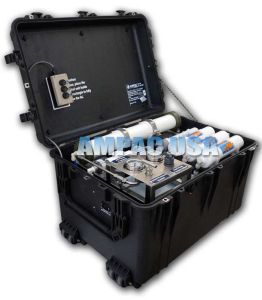
SW150
Portable Emergency Seawater Desalination Watermaker
150 GPD 560 LPD
View specifications -
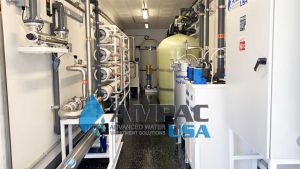
SW80K-LXC
Mobile Seawater Desalination Watermaker SW80K-LXC
View specifications -
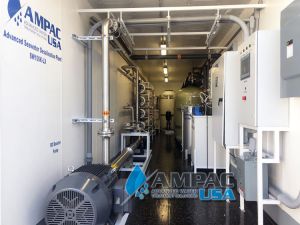
SW100K-LXC
Mobile Seawater Desalination Plant
SW100K-LXC
View specifications -

SW100K-LX
Mobile Seawater Desalination Watermaker System
SW100K-LX
View specifications
Need an output between two models, or a different feed water? Send us your numbers
About Emergency Portable RO Water Treatment
Sizing a system? Send your flow rate and a feed-water analysis, and an AMPAC engineer will work out the configuration with you.
Emergency Mobile Water Treatment
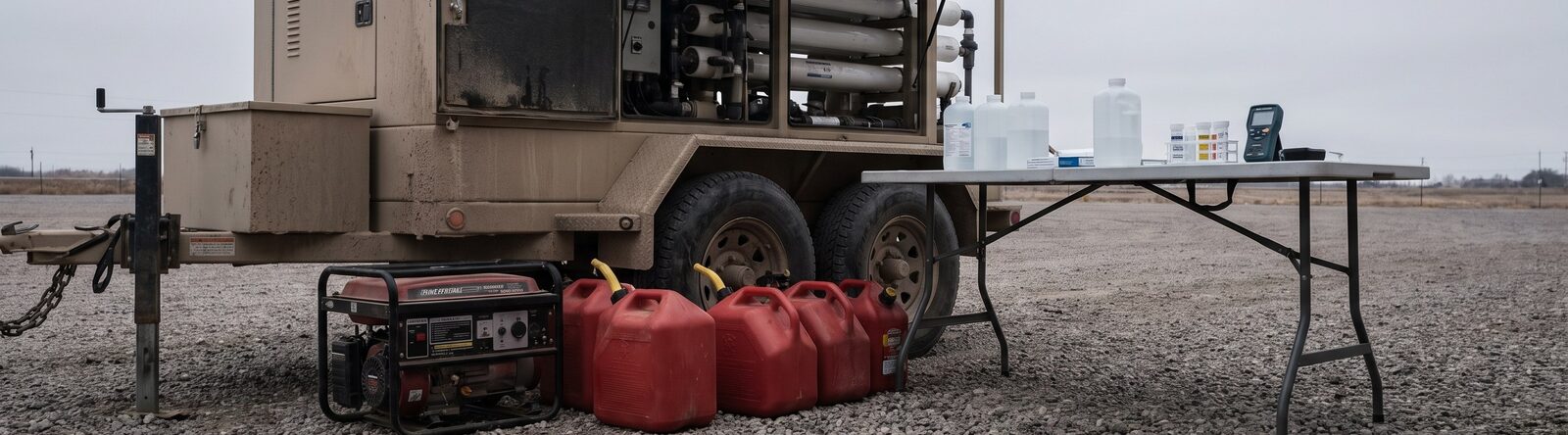
AMPAC USA Emergency Portable Watermakers and Emergency Mobile Water Treatment Systems serve a wide range of scenarios, from the smallest capacity desalination system available (150 gallons/ 570 liters per day) to modular trailers that can provision 250,000 gallons (946,250 liters) per day, enough to supply the drinking needs of 430,000 people. Modules are combined for larger requirements.
AMPAC USA's renowned performance and reliability are vital in responding to survival, Emergencies such as surges in freshwater demand; the sudden shortfall in supply; failure of existing water systems due to natural or man-made disasters; Social/ Armed conflicts; and other challenges. Efficient Emergency Portable Seawater Desalination and Emergency Mobile Water Treatment designed for faster disaster deployment and small boats from AMPAC USA.
Vessel-mounted units are listed under marine seawater desalination systems.
Frequently Asked Questions
What output capacities are available in your emergency portable watermakers?
Units range from 500 GPD for man-portable backpack systems up to 5,000 GPD for trailer-mounted configurations. Capacity selection depends on the number of people served. A general field planning figure is 1 gallon per person per day for drinking and basic sanitation, so a 500 GPD unit supports roughly 500 people in an emergency scenario.
What power sources can these portable desalination units run on?
Systems are designed for three power modes: generator (120/240V AC), solar panel arrays with battery banks, and direct vehicle power via 12V or 24V DC connections. Many deployments use a hybrid approach, running on generator during operation and solar for overnight battery charging. This matters a lot in remote disaster zones where fuel resupply is unreliable.
What water quality do these emergency watermakers produce from seawater?
The RO membranes reject 99.4% or more of dissolved salts, producing water that meets WHO emergency drinking water guidelines. Output TDS is typically below 500 mg/L from standard seawater feed at 35,000 TDS. Post-treatment options include UV disinfection and remineralization for extended field use.
How quickly can a portable emergency watermaker be deployed and operational?
Man-portable units can be running within 15 minutes of arrival. Trailer-mounted systems require leveling, inlet hose placement, and a brief pre-flush cycle, typically 30 to 60 minutes from transport to first product water. No concrete pad or fixed plumbing is required, which is critical in disaster-response timelines.
Can these systems handle contaminated fresh water as well as seawater?
Yes. While rated for seawater feed up to 45,000 TDS, the systems also process brackish groundwater, flood water, and surface water with appropriate pre-filtration. Sediment and carbon pre-filters are included. For heavily contaminated sources, a coagulation pre-treatment stage can be added upstream of the RO skid.
What certifications and standards do your emergency portable watermakers meet?
Systems are built to NSF/ANSI 58 membrane standards and are available with MIL-SPEC ruggedization for military and government procurement. Electrical components carry UL and CE listings depending on destination country. Documentation packages for FEMA, USAID, and UN humanitarian procurement are available on request.