
Models
-
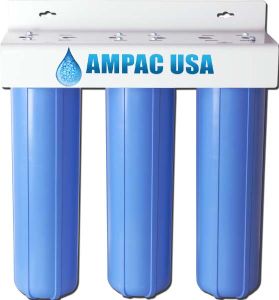
BB3-20
Wholehouse Triple Big Blue BB3-20
The AMPAC USA Wholehouse Triple Big Blue BB3-20 provides three-stage filtration for your entire home, either as a stand-alone whole house system or as pre-treatment ahead of an existing reverse osmosis unit.
View specifications -
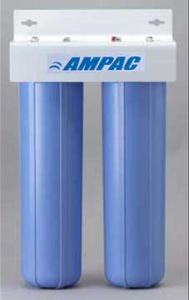
BB2-20
Whole House Twin Big Blue BB2-20
The AMPAC USA Whole House Twin Big Blue BB2-20 delivers comprehensive filtration for every water source in your home.
View specifications -
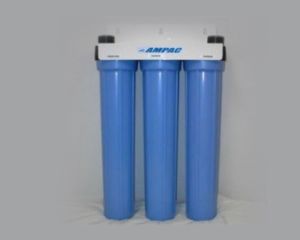
SL3-20
Slim Line Twin SL3-20
The AMPAC USA Slim Line Twin SL3-20 is a triple-stage water filtration system installed on the main pipe feeding your property, removing a wide range of impurities - from visible sediment to invisible
View specifications -
SL2-20
Slim Line Twin SL2-20
The AMPAC USA Slim Line Twin SL2-20 is a dual-stage water filtration system designed to reduce common impurities in feed water for residential and commercial applications.
View specifications -
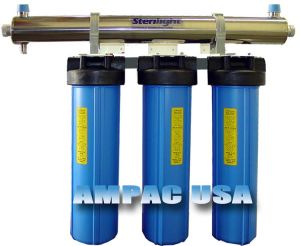
BB4-20
Quad Whole House BB UV
The Quad Whole House BB UV, BB4-20 from AMPAC USA, represents a comprehensive solution for ensuring clean and safe water throughout your entire home.
View specifications -
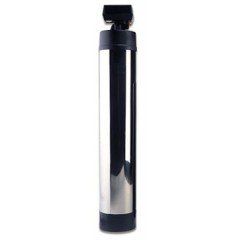
AP1000C
Ampac USA Wholehouse Carbon Filter AP1000C
The AMPAC USA Wholehouse Carbon Filter AP1000C treats water at the point it enters your home, so every tap - kitchen, bathroom, laundry - delivers cleaner, better-tasting water.
View specifications
Need an output between two models, or a different feed water? Send us your numbers
About Whole House and Commercial Water Filters
Sizing a system? Send your flow rate and a feed-water analysis, and an AMPAC engineer will work out the configuration with you.
AMPAC USA commercial water filters serve restaurants, hotels, offices, schools, car washes, and commercial food service operations requiring high-capacity water purification for drinking water, ice machines, coffee equipment, steam ovens, and food preparation. Hard water scale and chlorine in municipal water damage commercial equipment and affect food and beverage quality — commercial water filtration is the most cost-effective way to protect equipment and improve product quality simultaneously.
Our commercial filter systems range from high-flow under-counter units producing 200–1,500 GPD to large commercial whole-building filtration systems. Scale inhibition pre-filtration for commercial ice machines and espresso equipment prevents limescale buildup that causes costly equipment failures. High-flow commercial RO systems with storage tanks and booster pumps ensure consistent water pressure and quality regardless of peak demand periods.
AMPAC USA commercial water filters use NSF-compliant components and are backed by our technical support team. Systems are available in standard configurations for quick delivery or customized to specific flow rates, rejection requirements, and installation constraints. Contact AMPAC USA at (909) 548-4900 to discuss commercial filtration requirements for your facility.
Frequently Asked Questions
What is the difference between a commercial water filter and a reverse osmosis system?
Commercial water filters (sediment, carbon, multimedia) remove particles, chlorine, taste, and odor from water but do not reduce dissolved solids (TDS). Reverse osmosis systems go further, removing up to 99% of dissolved salts, heavy metals, nitrates, and other dissolved contaminants. Filters are often used as pre-treatment before an RO system.
How do I select the right commercial water filter for my business?
Selection depends on your source water quality (municipal vs. well), flow rate requirements, space constraints, and target contaminants. A water quality test report helps narrow the choice. AMPAC USA offers free consultation to match the right filtration technology to your application.
What flow rates are available for commercial water filters?
AMPAC commercial filter systems are available from 1 GPM for small food-service applications up to 500+ GPM for large industrial facilities. Multi-vessel filter skids can be paralleled for virtually unlimited flow capacity.
How often do commercial water filters need to be replaced or serviced?
Cartridge-style filters typically require replacement every 3-6 months. Backwashable multimedia and carbon filters can run for years with periodic backwash cycles. Service intervals depend heavily on feed water turbidity and flow volume. AMPAC systems can be fitted with differential pressure gauges to indicate when media is exhausted.
Can commercial filters remove bacteria and viruses?
Standard depth and carbon filters do not reliably remove bacteria or viruses. For microbiological protection, UV disinfection or ultrafiltration (UF) membranes are added downstream. AMPAC offers integrated systems combining filtration with UV or UF for complete protection.