

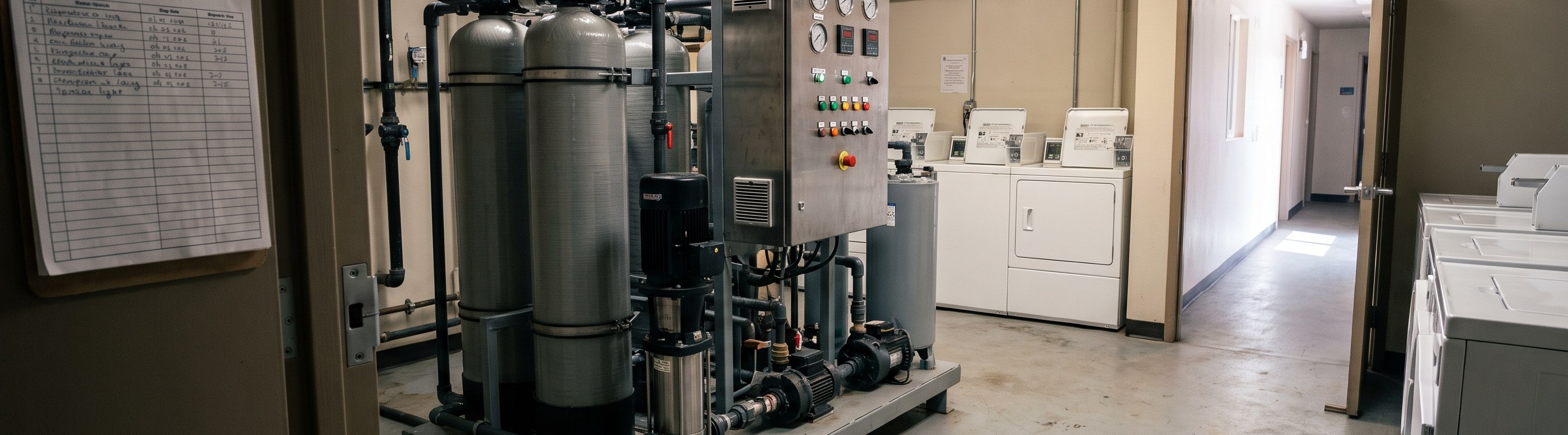
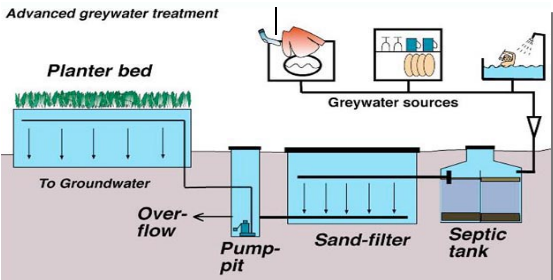
 Greywater is a residential water reject that has lesser organic loading than sewage. This makes grey water a suitable option for reuse after a reverse osmosis treatment. This rejected wastewater is mostly produced from residential buildings, large scale offices, malls, community centers, government buildings and more. With proper treatment, this water can be put to good use like for laundry, toilet flushing and even irrigation at a large scale.
Grey Water Treatment Systems Is Custom-Built
Grey Water Treatment Systems requires advanced, engineered-to-order equipment built around your exact water conditions, flow rate, and site requirements — that’s why we don’t list generic units online. Request a quote and one of our engineers will call you to walk through your application and build a solution designed specifically for it.
Frequently Asked Questions
What is grey water and why does it need treatment before reuse?
Grey water is wastewater from sinks, showers, laundry machines, and dishwashers, excluding toilet waste. It contains soaps, detergents, skin cells, hair, food particles, and moderate levels of bacteria. Without treatment, direct grey water reuse causes odors, pathogen risk, and soil or irrigation system fouling. Treated grey water can be safely reused for toilet flushing, outdoor irrigation, and many industrial applications.
What treatment process does a grey water recycling system use?
Physical-chemical systems use screening, coagulation, filtration, and disinfection. MBR (Membrane Bioreactor) systems use biological treatment combined with ultrafiltration membranes, producing very high-quality effluent. MBR systems have a smaller footprint and produce reuse-quality water consistently. The right choice depends on flow volume, space available, target reuse application, and local reuse permit requirements.
What water quality standards does treated grey water need to meet?
Requirements vary by state and application. California Title 22 sets the benchmark for recycled water reuse: toilet flushing requires secondary-treated water at less than 10 NTU turbidity and disinfection. Landscape irrigation with unrestricted access requires tertiary treatment meeting Title 22 or equivalent standards. Our MBR systems routinely produce effluent at less than 5 NTU, less than 10 mg/L BOD, and coliform below 2.2 MPN/100mL.
What buildings and facilities benefit most from grey water recycling?
Hotels and resorts, multifamily residential buildings, office towers, schools, hospitals, and industrial laundry facilities generate large grey water volumes and high water bills, making recycling economically attractive. A 200-room hotel generating 20,000-30,000 gallons per day of grey water can reduce potable water consumption by 30-40% by recycling grey water for toilet flushing. ROI depends on local water and sewer rates.
How much space does a grey water treatment system require?
MBR-based grey water systems are compact compared to conventional biological treatment. A system treating 10,000 GPD typically fits in a mechanical room footprint of 100-200 square feet. Physical-chemical systems for the same flow may require 300-500 square feet. Below-grade installation is possible with pre-packaged tank systems. We provide dimensioned drawings during engineering so you can verify fit early in the design process.
What permits are required for a grey water reuse system?
Permit requirements vary significantly by state and municipality. Most jurisdictions require an engineered system design, plumbing permit, and in some cases a water recycling permit from the state environmental agency. California, Arizona, Texas, and Florida have established grey water reuse frameworks. We can provide permit-ready engineering documentation and have experience working with inspectors in most major states. Contact us early in the design phase.