
Oil/ Water Separation is built to order
These systems are engineered around your water conditions, flow rate and site, so we do not list generic units online. Request a quote and an engineer will call you to size a system for your application.
About Oil/ Water Separation
Sizing a system? Send your flow rate and a feed-water analysis, and an AMPAC engineer will work out the configuration with you.
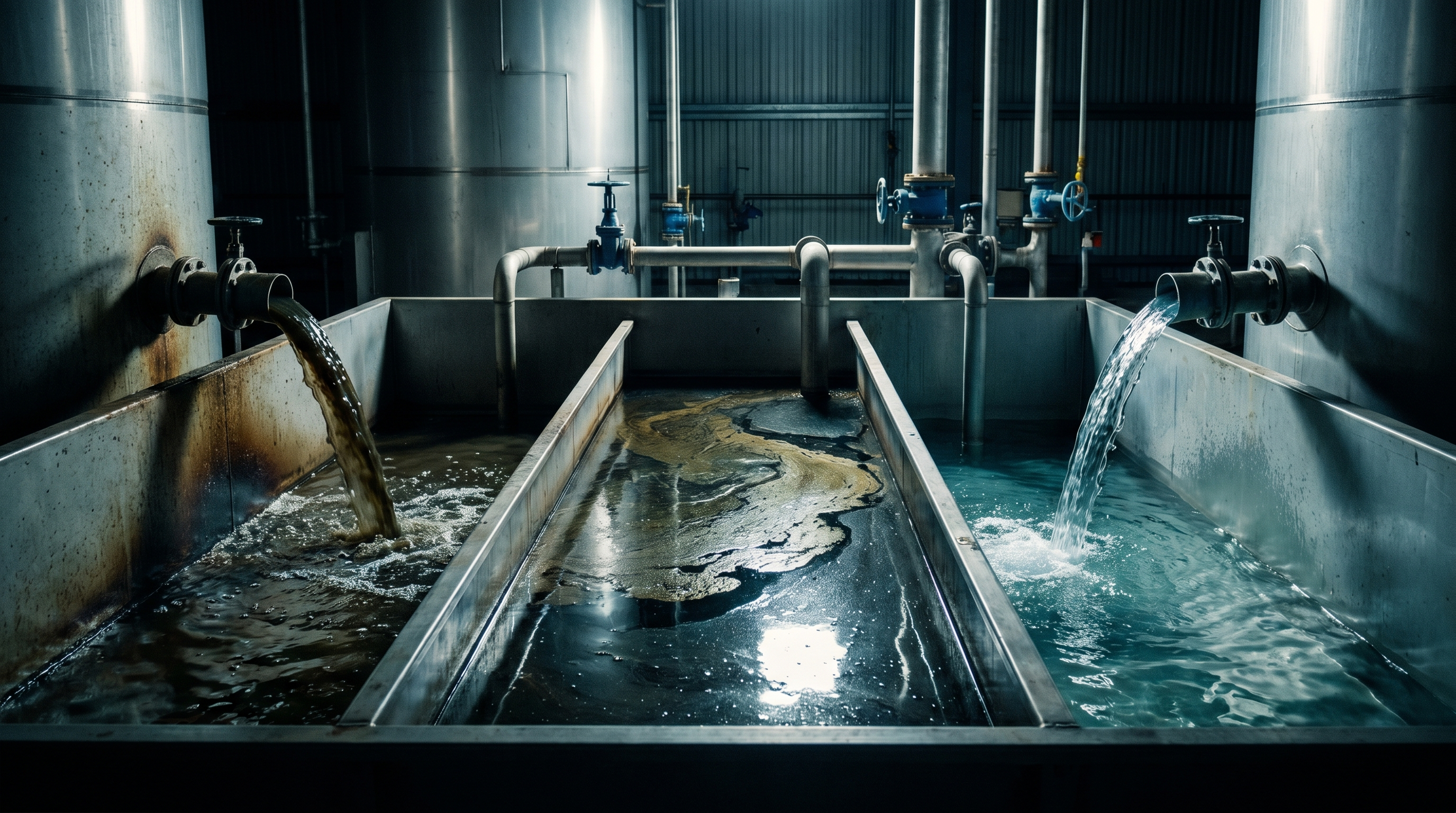
Produced water from oil and gas operations, oily wastewater from industrial equipment washing, bilge water from marine vessels, and runoff from fuel storage facilities all share the same challenge: petroleum hydrocarbons are present in concentrations that exceed discharge limits, and they must be separated from the water before disposal or reuse. The regulatory threshold for hydrocarbon discharge to surface water in the United States is typically 10 to 29 ppm oil and grease - a level that requires active treatment beyond gravity separation alone.
AMPAC USA's Polymer Sorb technology uses a proprietary blend of synthetic polymers with hydrophobic and oleophilic surface properties to selectively absorb hydrocarbon compounds from water. The polymer media allows high water flow-through rates while capturing oil derivatives, making it practical for high-volume applications. The same physical separation principle works across a range of hydrocarbon types - mineral oil, crude oil derivatives, fuel contamination, and general hydrocarbon contamination from process equipment.
Filter Sorb media cartridges are sized to fit standard Big Blue filter housings for easy integration into existing water treatment skids, and AMPAC supplies cartridges in several formulations matched to the specific contamination type: general hydrocarbon removal, mineral oil removal, and pre-filtration ahead of downstream treatment stages. For higher-volume operations, AMPAC designs complete oil/water separation systems using vessel-scale media beds with automated backwash capability.
For produced water treatment at oil and gas facilities, AMPAC integrates oil/water separation upstream of RO or evaporation systems where the goal is recycle or disposal. For marine applications, the system design accounts for the rolling and pitching motion that affects gravity separation systems, requiring membrane-based or media-based approaches to achieve consistent performance at sea.
Contact AMPAC USA at (909) 548-4900 to discuss oil/water separation requirements for your operation and receive a recommended product or system configuration.
Frequently Asked Questions
What oil concentrations can AMPAC USA oil-water separator systems achieve in treated effluent?
Our gravity coalescent separators can reduce free and dispersed oil to below 10 mg/L, which meets many industrial discharge limits and is a common pretreatment target before membrane polishing. For tighter discharge requirements below 5 mg/L or 1 mg/L, we follow the coalescer with ultrafiltration or dissolved air flotation to capture emulsified oil that gravity separation cannot reach. Effluent quality guarantees are available for systems designed to meet specific permit limits.
What is the difference between free oil, dispersed oil, and emulsified oil in wastewater treatment?
Free oil rises naturally to the surface due to density difference and is easily removed by gravity skimmers or API separators. Dispersed oil consists of small droplets at 20-150 microns that rise slowly and can be captured by coalescent media that causes droplets to merge and float. Emulsified oil has droplet sizes below 20 microns, often stabilized by surfactants, and requires chemical demulsification, dissolved air flotation, or membrane filtration because gravity and simple coalescing cannot break the emulsion.
How do coalescent media separators work, and what media types does AMPAC USA use?
Coalescent media presents a high-surface-area matrix of oleophilic material that oil droplets preferentially wet and merge on. As droplets combine into larger ones, buoyancy overcomes the media's hold and the coalesced oil rises to the surface for skimming. We use corrugated polypropylene plate packs for most industrial applications and oleophilic polyurethane foam or fibrous media for systems requiring very small footprints or handling low oil concentrations.
Can your oil-water separators handle water with high solids content alongside the oil contamination?
Yes, but solids must be addressed before the coalescent stage to prevent media blinding, which rapidly reduces separation efficiency. Our systems for high-solids applications include an upstream settling tank or hydrocyclone to remove settleable solids before the coalescer. Failing to pretreat for solids is the most common cause of premature coalescer fouling and disappointing separator performance in field installations.
What flow rate range do AMPAC USA oil-water separation systems cover?
We build oil-water separators from 5 GPM for small equipment wash pads and maintenance shops up to 2,000+ GPM for refinery and produced water applications. The design approach differs by scale: smaller systems use prefabricated skids with plate-pack coalescers, while large systems combine multiple treatment stages in a sequential process we engineer site-specifically. Contact us with your flow rate and inlet oil concentration for a preliminary system selection.