
Models
-
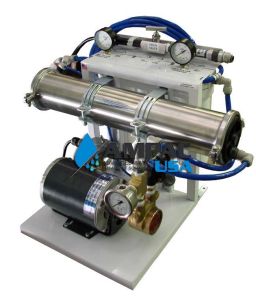
APRO800-1
Commercial Reverse Osmosis
800 GPD 3000 LPD
View specifications -
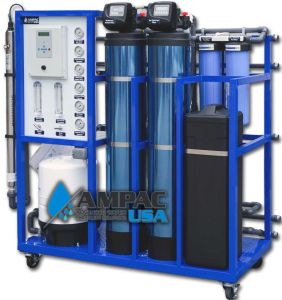
AP1500-LX
Commercial Turnkey Reverse Osmosis
1,500 GPD 5.7 m³/Day
View specifications -
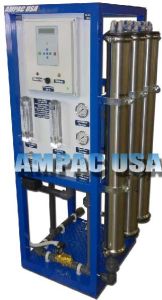
APRO6000
Commercial Reverse Osmosis
6,000 GPD 22,750 LPD
View specifications -
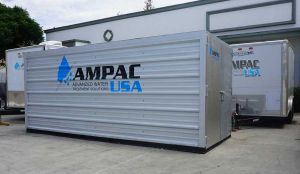
AP20K-LX-C
Emergency Portable Reverse Osmosis
20,000 GPD 3.18 m³/hr
View specifications -
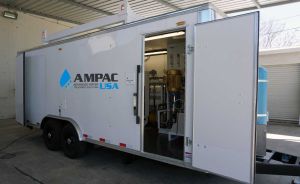
TR-40K
Mobile Trailer Reverse Osmosis
40,000 GPD 6.3 m³/hr
View specifications -
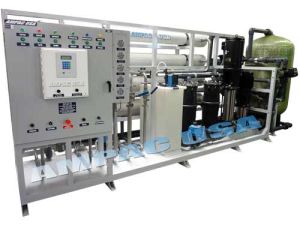
AP100K-LX
Industrial Reverse Osmosis
100,000 GPD 15.8 m³/hr
View specifications -
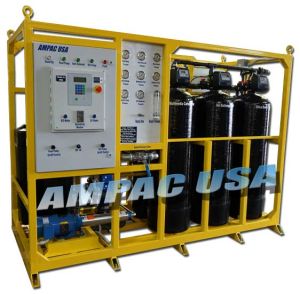
SWRO10K-C1D2
Off-Shore Sea Water Desalination Watermaker SW10K-C1D2
View specifications
Need an output between two models, or a different feed water? Send us your numbers
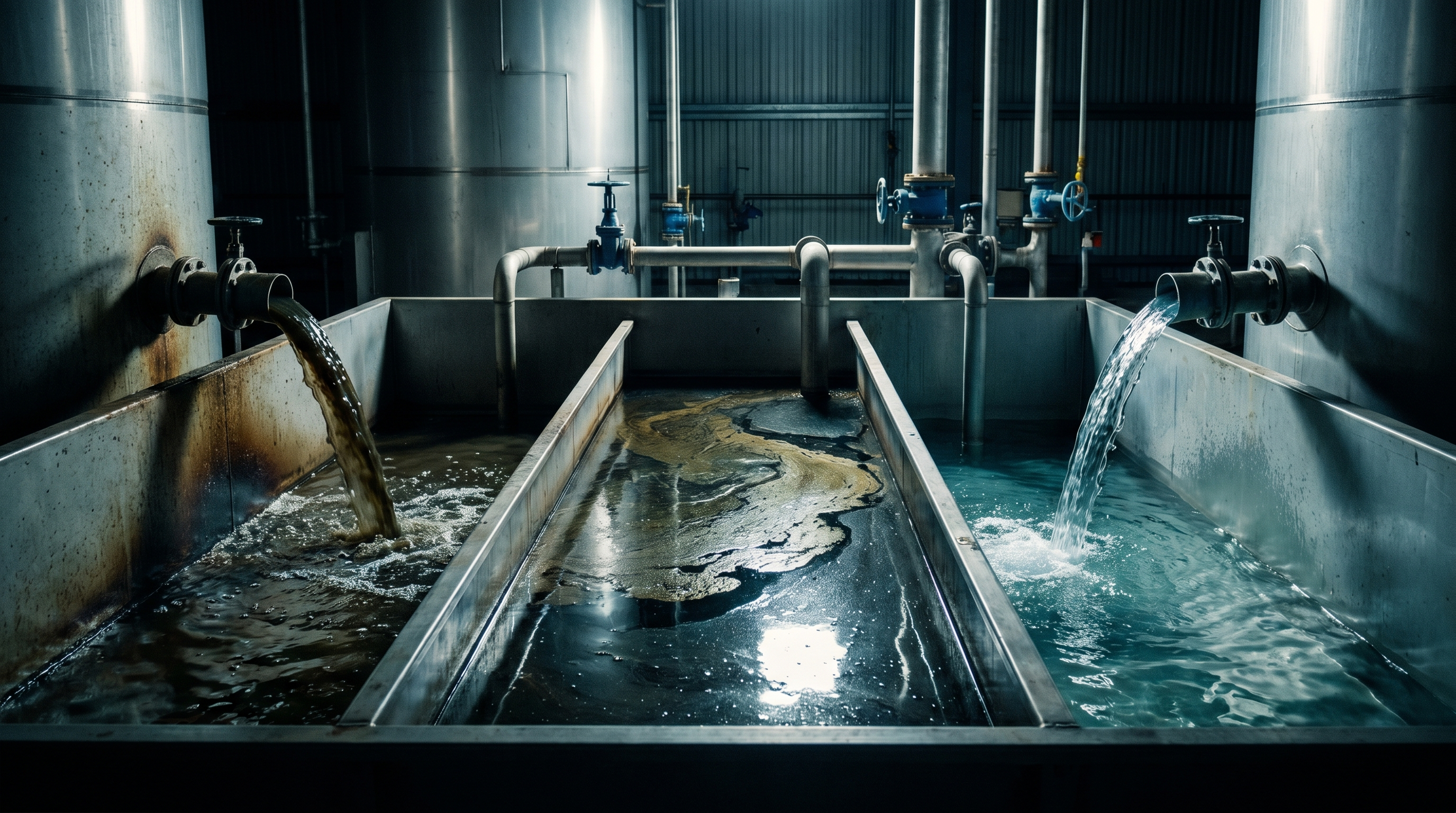
About Oil & Gas Water Treatment Systems
Sizing a system? Send your flow rate and a feed-water analysis, and an AMPAC engineer will work out the configuration with you.
Oil and gas operations consume water for drilling mud preparation, completion and hydraulic fracturing, steam-assisted recovery (SAGD), produced water management, process cooling, and staff consumption at remote field camps. The water challenge is rarely simple - field locations range from desert basins with no potable groundwater to offshore platforms surrounded by seawater, to subarctic environments where water freezes and water supply infrastructure simply doesn't exist.
AMPAC USA designs and manufactures water treatment systems for onshore and offshore oil and gas operations across the full project lifecycle. At remote exploration sites, AMPAC deploys mobile RO systems capable of treating brackish groundwater, surface water, or seawater to drinking water quality with minimal operational overhead. Containerized and trailer-mounted configurations allow rapid deployment when a well site changes, and modular expansion when camp population grows.
At producing facilities, produced water management is typically the highest-volume water treatment challenge. Produced water from oil and gas wells contains dissolved hydrocarbons, suspended solids, naturally occurring radioactive materials (NORM), scale-forming ions, and varying TDS from 5,000 to over 100,000 ppm depending on the formation. AMPAC designs produced water treatment for injection disposal, beneficial reuse in drilling operations, or surface discharge where permitted, with treatment technology matched to the water quality and the intended end use.
For offshore platforms and FPSOs, AMPAC SeaPro watermakers provide potable water supply from seawater at capacities from a few hundred GPD to 250,000+ GPD. Compact skid designs fit within the space constraints typical of platform deck installations, with remote monitoring for unattended operation. Systems are built to withstand marine environments and can be certified to applicable offshore standards.
AMPAC designs explosion-proof control configurations for Class 1 Division 2 environments as standard practice for oil and gas applications. Contact AMPAC USA at (909) 548-4900 to discuss water treatment for your upstream, midstream, or downstream operation.
Frequently Asked Questions
What makes produced water from oil and gas wells difficult to treat with conventional methods?
Produced water is a byproduct of hydrocarbon extraction that contains dissolved salts at TDS levels from 1,000 ppm up to 250,000 ppm in tight formation brines, along with dispersed oil, naturally occurring radioactive materials, and production chemicals. High TDS produced water exceeds the feed concentration limit for conventional seawater RO membranes and requires thermal desalination or high-pressure membrane technology. AMPAC USA designs produced water treatment systems using the appropriate technology matched to your formation brine chemistry and target reuse specification.
What water quality is required for waterflooding and enhanced oil recovery injection water?
Injection water for waterflood must be compatible with formation water to avoid precipitation of scale minerals like barium sulfate and calcium carbonate in the reservoir and wellbore. Suspended solids must typically be below 2 ppm with particle size below 2 microns to prevent near-wellbore plugging. Our injection water treatment systems use multimedia filtration, cartridge filtration down to 1 micron, and deoxygenation to deliver water that meets reservoir injection quality without damaging injectivity.
How are offshore platforms and FPSOs supplied with fresh water for crew and drilling operations?
Offshore platforms produce fresh water from seawater using high-pressure reverse osmosis systems designed for the corrosive marine environment with all-stainless-steel or duplex alloy construction and NEMA 4X electrical enclosures. A standard crew water system for a 200-person platform produces 5,000-15,000 GPD of potable water from seawater at 35,000 ppm TDS. AMPAC USA offshore systems include sea chest strainers, antifoulant injection, and UV disinfection as an integrated package.
Can AMPAC USA supply skid-mounted systems for temporary or mobile oilfield water treatment?
Our oilfield water treatment skids are designed for rapid deployment on wellpads with forklift pockets, integral bunded basins for spill containment, and ATEX or NEC Class I Division 2 electrical components where required for flammable vapor zones. Skids are typically 8x20 or 8x40 foot footprints for transport on standard lowboy trailers without permits. All connections use camlock or hammer union fittings common in oilfield service to minimize setup time at the wellsite.
How does scale control work in oilfield RO systems treating produced water with high barium?
Barium sulfate is one of the most insoluble scale compounds and precipitates extremely rapidly when barium-rich produced water contacts sulfate from any source, including RO reject concentration. AMPAC USA addresses barium scaling through antiscalant selection specifically tested for high-barium brines, system recovery rate management to limit concentration factors, and membrane cleaning protocols using compatible scale removal formulations. Sites with barium above 50 ppm require a dedicated antiscalant study before system design is finalized.