

Models
-
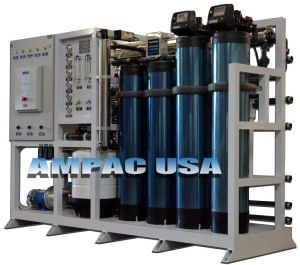
AP8000-LX-1
Industrial Reverse Osmosis
The AMPAC USA Industrial Reverse Osmosis 8,000 GPD (AP8000-LX-1) is a high-performance water treatment system engineered to deliver superior water purification for commercial and industrial applications.
8,000 GPD 30.2 m³/Day
View specifications -
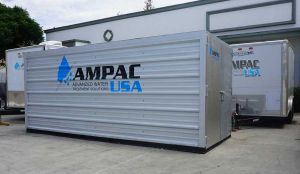
AP20K-LX-C
Emergency Portable Reverse Osmosis
The AMPAC USA Emergency Portable Reverse Osmosis 20,000 GPD system (model AP20K-LX-C) delivers immediate, reliable access to high-purity water in challenging situations.
20,000 GPD 3.18 m³/hr
View specifications -
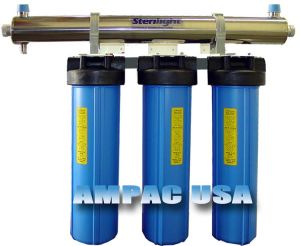
BB4-20
Quad Whole House BB UV
The Quad Whole House BB UV, BB4-20 from AMPAC USA, represents a comprehensive solution for ensuring clean and safe water throughout your entire home.
View specifications
Need an output between two models, or a different feed water? Send us your numbers
About Bacteria Removal
Sizing a system? Send your flow rate and a feed-water analysis, and an AMPAC engineer will work out the configuration with you.
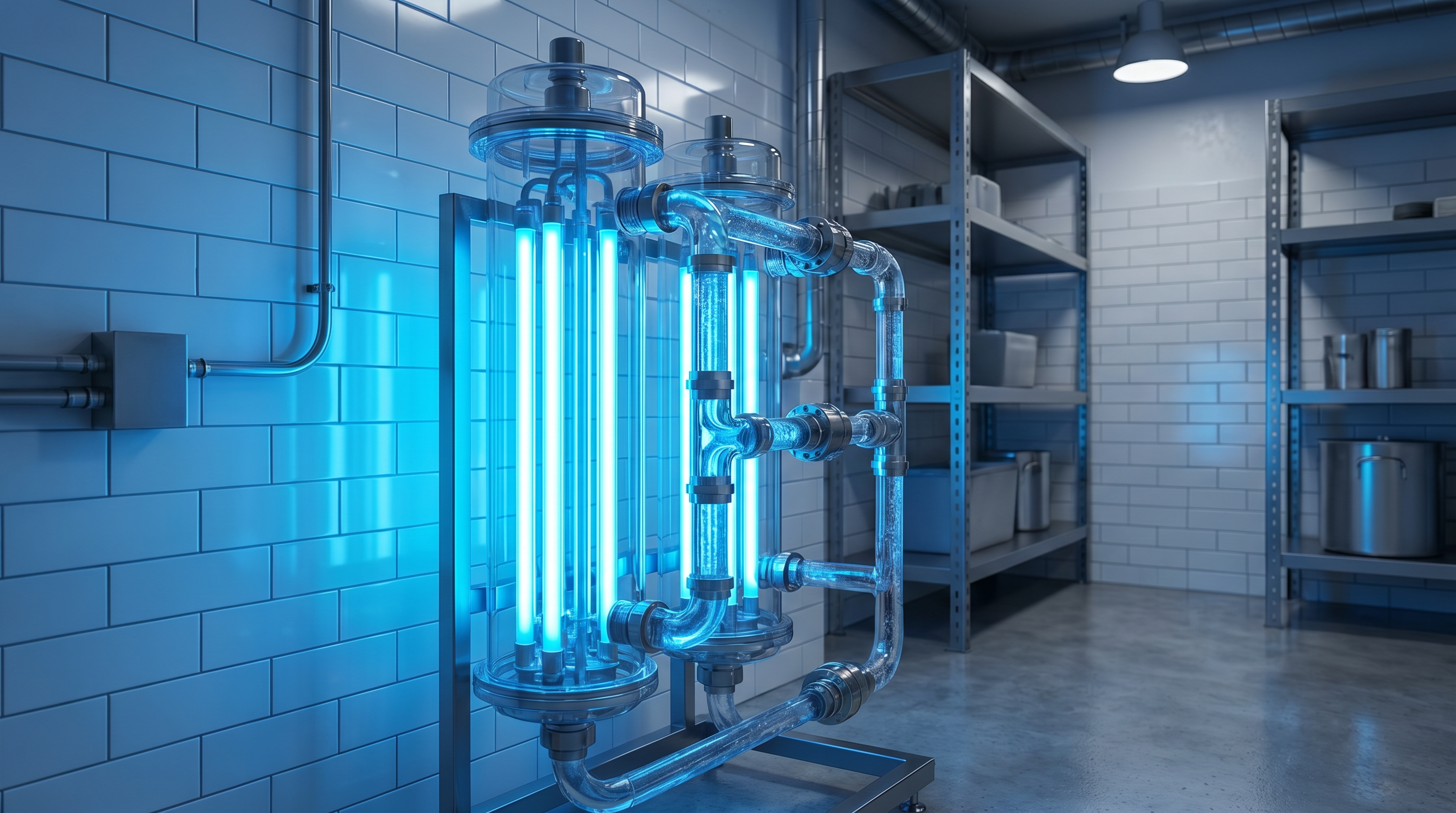
Ultra Violet Filtration is one of the four methods approved by the US FDA. It will disinfect filtered water at normal flow rate, providing one of the safest filtration systems available. Bacteria, viruses and other micro-organisms are destroyed by interfering with the DNA and RNA in the organisms' reproductive cycles. The contact disinfectant propery of UV light energy is measured in microwatt-seconds per square centimeter (uw-sec/cm2). Our 254 nanometer UV series lamp's energy ranges from 32,000 to 70,000 uw-sec/cm2
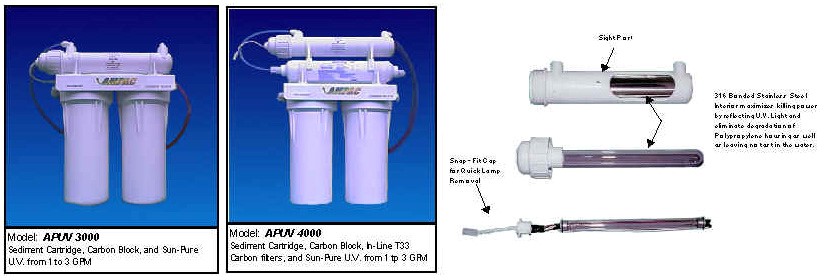
ULTRAVIOLET (UV) DISINFECTING UNITS
Microorganisms in water can cause a multitude of health problems. Ultraviolet System is the natural way to disinfect water for home or industry. UV light systems penetrate and destroy the harmful organism, disinfecting the water. To remove other drinking water contaminants, you may be able to use Ampac Reverse Osmosis system.
ULTRAVIOLET LIGHT DESTROYS:
- BACTERIA
- MOLD SPORES
- ALGAE
- PROTOZOA
- VIRUSES
- YEAST
RECOMMENDED USES:
- LAKE OR POND WATER
- PRIVATE WELLS
- CISTERNS
- FOLLOWING CARBON FILTERS
- NON-CHLORINATED MUNICIPAL SYSTEMS
- ULTRA-PURE WATER SUPPLIES
Frequently Asked Questions
What water treatment methods remove bacteria?
The most effective methods are: UV disinfection (destroys DNA of bacteria and viruses at 254 nm wavelength), ultrafiltration (UF) membranes (physical removal to 0.01-0.1 micron), reverse osmosis (removes 99.9%+ of bacteria along with all other contaminants), and chemical disinfection with chlorine or ozone. AMPAC recommends UV or UF as the primary disinfection barrier paired with pre-filtration.
Does reverse osmosis remove bacteria and viruses?
Yes. RO membranes have pore sizes of approximately 0.0001 microns, far smaller than any bacteria (1-10 microns) or virus (0.02-0.3 microns). A properly functioning RO system physically removes essentially all microbiological contaminants. AMPAC systems pair RO with UV disinfection for an additional safeguard against any bypass or membrane defects.
What is the difference between UV disinfection and chemical treatment?
UV disinfection uses ultraviolet light to inactivate microorganisms without adding chemicals, leaving no taste or odor residual and no disinfection byproducts (DBPs). Chemical treatment with chlorine is effective but produces DBPs such as trihalomethanes and requires contact time. UV is preferred for point-of-use treatment where no residual disinfectant is needed downstream.
Can bacteria grow in a reverse osmosis storage tank?
In theory, bacteria can colonize any moist environment including RO storage tanks, especially if the system sits unused for extended periods. AMPAC recommends adding a post-RO UV lamp or inline silver-impregnated carbon block to prevent recontamination. Annual sanitization of the tank and delivery lines is standard practice.
What bacteria are commonly found in well water?
Common concerns in well water include coliform bacteria (an indicator of fecal contamination), E. coli, iron bacteria, sulfur bacteria, and Legionella in some geographic areas. AMPAC well water treatment packages include shock chlorination followed by a multi-stage RO and UV system sized to your well output and bacterial load.