

Models
-
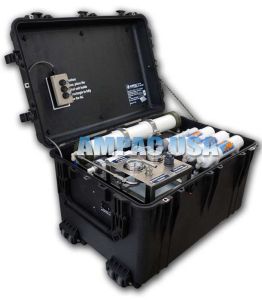
SW150
Portable Emergency Seawater Desalination Watermaker
150 GPD 560 LPD
View specifications -
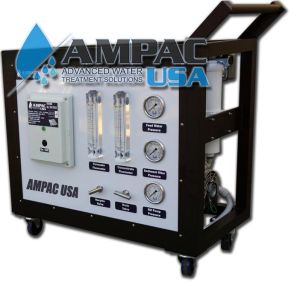
TR-300
Mobile Reverse Osmosis
300 GPD TR-300
View specifications -
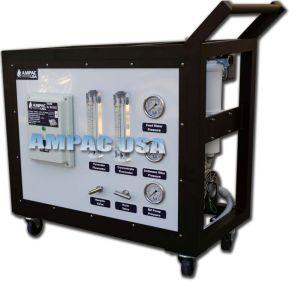
TR-500
Mobile Reverse Osmosis
500 GPD TR-500
View specifications -
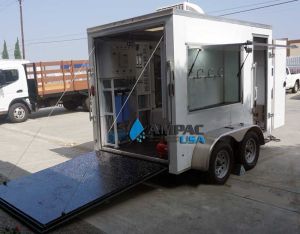
TR-3000
Mobile Trailer Reverse Osmosis
3,000 GPD 11.4 m³/hr
View specifications -
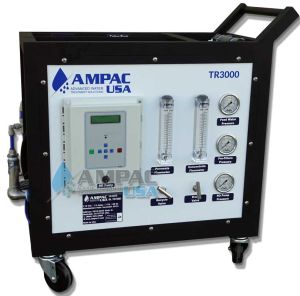
PCRO-3000
Portable Reverse Osmosis
3,000 GPD PCRO-3000
View specifications -
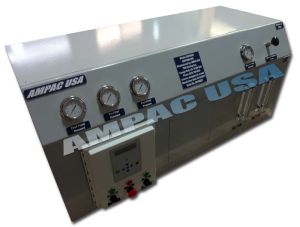
ROWPU-SW4500
ROWPU SW4500 (/17000LPD)
4,500 GPD
View specifications -
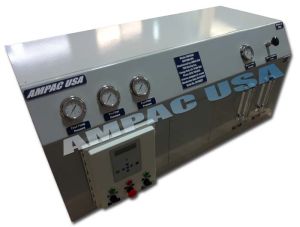
ROWPU-SW5000-ML
ROWPU SW5000 (/19000LPD)
5,000 GPD
View specifications
Need an output between two models, or a different feed water? Send us your numbers
About Military Water Filtration & Purification Systems
Sizing a system? Send your flow rate and a feed-water analysis, and an AMPAC engineer will work out the configuration with you.
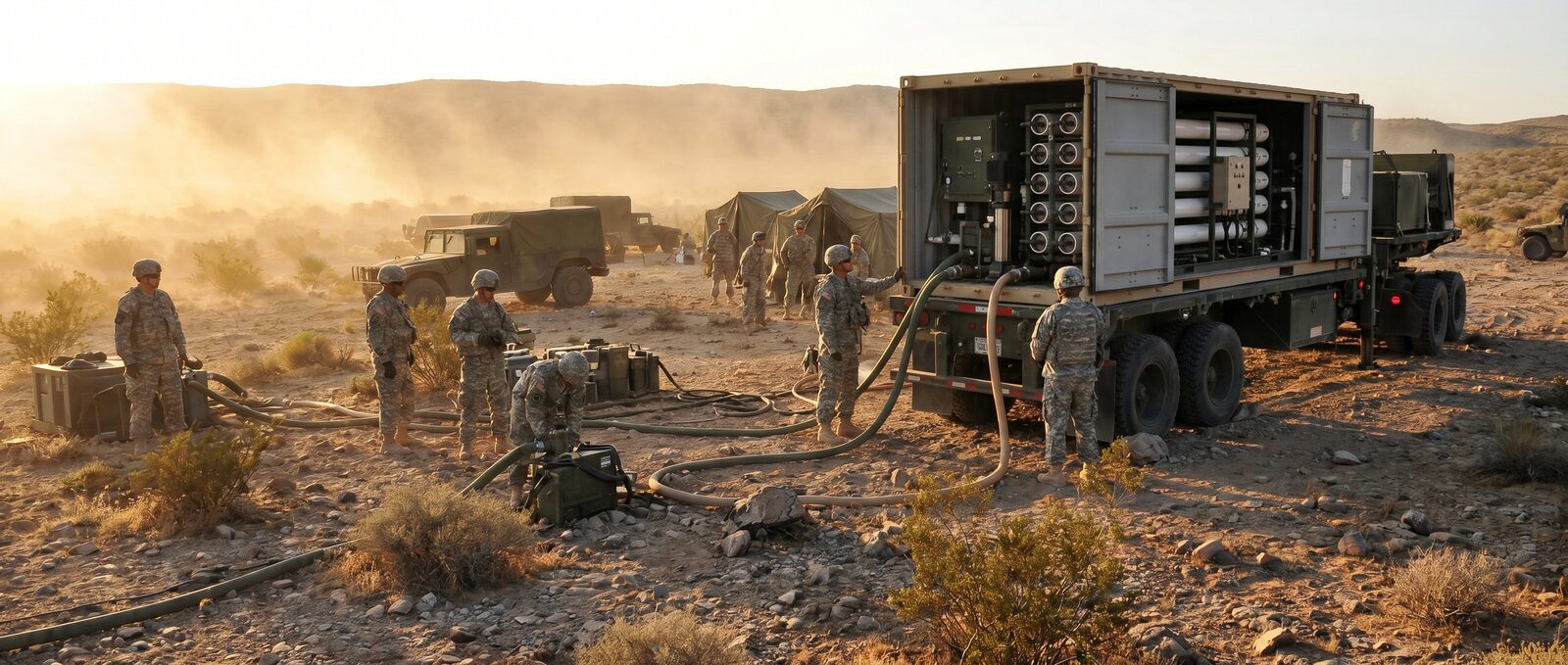
Military water purification systems (ROWPU) - Reverse Osmosis Water Purification Units - are self-contained, portable treatment plants built for U.S. and allied forces deployed in active theaters worldwide. Each unit eliminates waterborne pathogens including Dysentery and Typhoid while keeping taste, odor, clarity, and hardness within military specifications. AMPAC USA ROWPUs draw safe drinking water from almost any source: seawater, well water, surface water, brackish water, boreholes, lakes, lagoons, and rivers. Output also supports boiler plants, chiller systems, laundries, and industrial operations.
As a rugged military water filter and purification solution, each ROWPU pairs multi-stage pre-filtration with reverse osmosis membranes to meet MIL-SPEC output requirements in the field.
Frequently Asked Questions
What is a ROWPU military water purification system?
ROWPU stands for Reverse Osmosis Water Purification Unit, a military-grade water treatment system deployed by U.S. Armed Forces, allied nations, and UN peacekeeping operations. AMPAC USA engineers and manufactures ROWPUs on demand to each branch's exact specifications: containerized for rapid airlift deployment, trailer-mounted for field mobility, or fixed-base for forward operating bases.
Each unit in the AMPAC USA lineup uses either Single-Pass Reverse Osmosis (one membrane bank) or Double-Pass Reverse Osmosis (two membrane banks), depending on the salinity and contamination level of the source water. All models share the same core purification architecture proven across U.S. Army, Navy, Marine Corps, and Air Force deployments.
How does a ROWPU treat water?
Water is pumped from its raw source into the ROWPU module and passes through a multi-stage treatment sequence:
- Activated Carbon Pre-Filter removes odors, color, and organic taste compounds
- Ion Exchange Water Softener strips calcium, magnesium, iron, and lead
- Sediment Cartridges remove suspended particles larger than 5 microns (0.0002 in), eliminating turbidity ahead of the membranes
- High-Pressure RO Membranes remove 90-99.98% of dissolved impurities; output meets the DoD 500 ppm electrical conductivity standard
- pH Neutralizer Post-Treatment corrects the mild acidity common in highly purified water
- Ceramic Post-Filters provide final particulate polishing
- UV Disinfection Sterilizers destroy any residual biological contaminants
- Inline Chlorination maintains storage tank safety in the permeate tanks
What ROWPU variants are available and what are their flow rates?
Each U.S. military branch maintains its own ROWPU series, though all share the same reverse osmosis core. The Lightweight Water Purification System (LWPS), which replaced the older Marine Corps ROWPU, is light-truck-portable and puts out up to 3,000 GPD (11,350 L/hr). The Tactical Water Purification System (TWPS), carried on a Medium Tactical Military Truck, handles up to 40,000 US gallons per hour (150,000 L/hr) for brigade-level and above operations. AMPAC USA supports both platforms and custom-engineers systems for Navy vessels, Army forward bases, and special operations units.
What water sources can a ROWPU treat?
Military ROWPUs handle almost any water source: seawater, brackish water, well water, surface water, river water, lake water, ice-hole melt, borehole draws, and lagoons. The pre-treatment stack handles sediment, biological load, and high salinity before the RO membranes engage. Source quality has less impact than you might expect, provided the system is properly configured.