

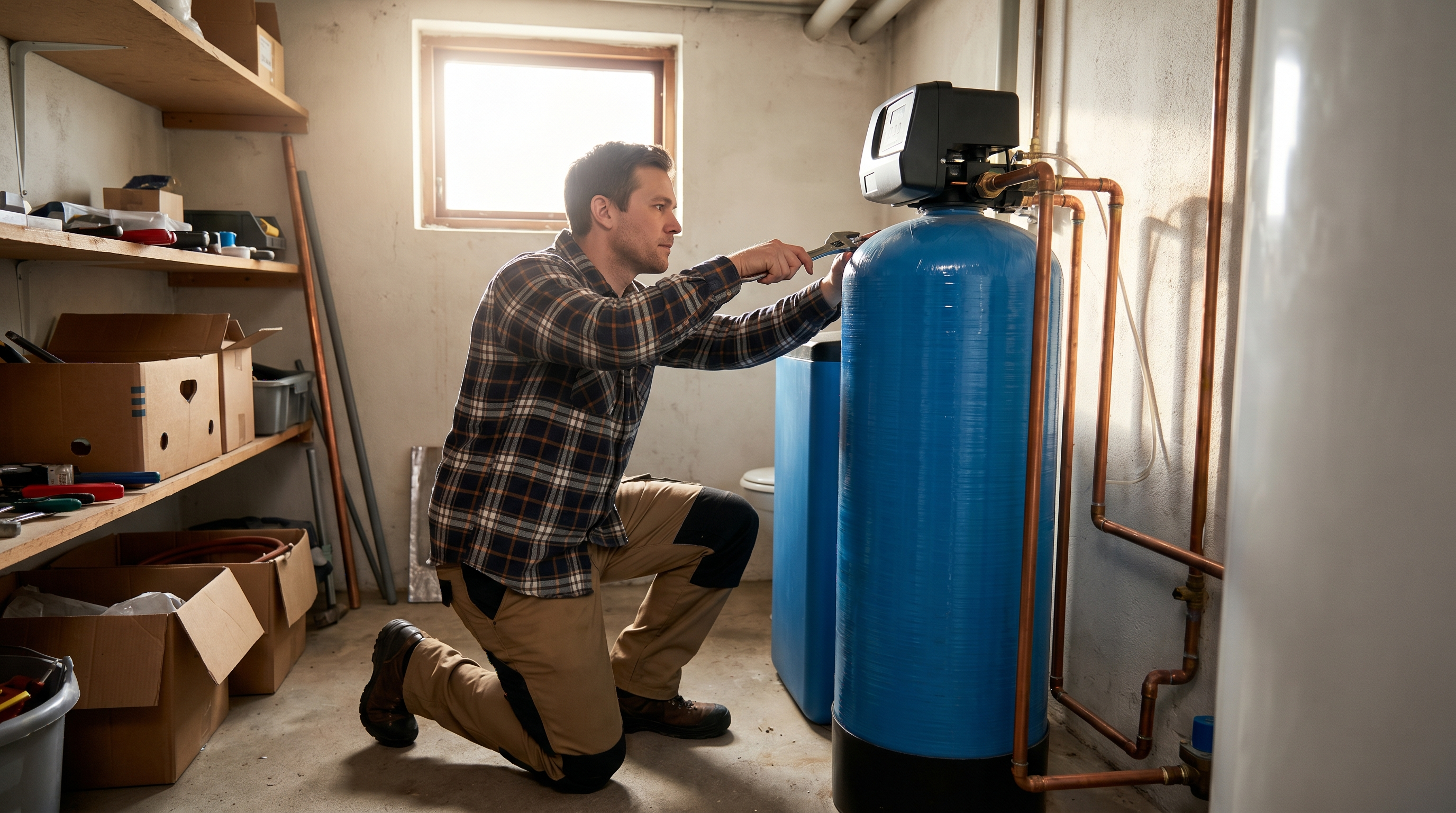
Models
-
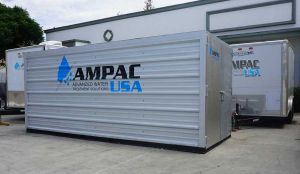
AP20K-LX-C
Emergency Portable Reverse Osmosis
The AMPAC USA Emergency Portable Reverse Osmosis 20,000 GPD system (model AP20K-LX-C) delivers immediate, reliable access to high-purity water in challenging situations.
20,000 GPD 3.18 m³/hr
View specifications -
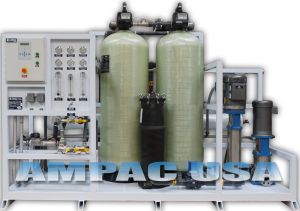
AP20K-LX
Industrial Reverse Osmosis
The AMPAC USA AP20K-LX Industrial Reverse Osmosis system processes 20,000 gallons per day, approximately 3.18 cubic meters per hour, of high-purity water.
20,000 GPD 3.18 m³/hr
View specifications -
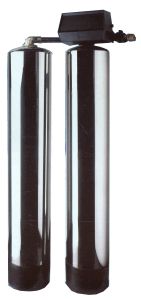
AP3000S
Ion Exchange Twin Alternating Water Softener AP3000S
The AMPAC USA AP3000S Ion Exchange Twin Alternating Water Softener removes calcium and magnesium, the minerals responsible for limescale, from household and commercial water supplies.
View specifications -
AP2500S
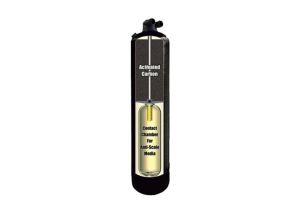
Ampac USA No-Salt E-Treat Water Conditioner
The Ampac USA No-Salt E-Treat Water Conditioner, model AP2500S, prevents hard water scale in pipes and appliances without salt-based regeneration.
View specifications -
AP2000S
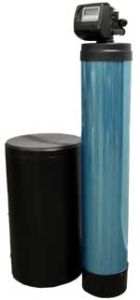
Ion Exchange Water Softener AP2000S
The AMPAC USA AP2000S Ion Exchange Water Softener treats hard water in residential and light commercial settings.
View specifications -
AP1500S
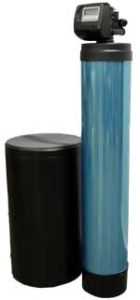
Ion Exchange Water Softener AP1500S
The AMPAC USA Ion Exchange Water Softener AP1500S tackles hard water through ion exchange, a process that removes the calcium and magnesium minerals responsible for water hardness.
View specifications -
AP1000S
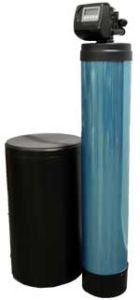
Ion Exchange Water Softener AP1000S
The AMPAC USA AP1000S Ion Exchange Water Softener is designed to reduce water hardness and prevent lime scale damage in homes and businesses.
View specifications
Need an output between two models, or a different feed water? Send us your numbers
About Hard Water
Sizing a system? Send your flow rate and a feed-water analysis, and an AMPAC engineer will work out the configuration with you.
Hardness is one of the most common water quality problems homeowners, property managers, and facility operators deal with. Technically, it's a measure of dissolved calcium and magnesium - and it's what leaves white residue on faucets, spotted dishes coming out of the dishwasher, and scale inside water heaters and pipes. Hard water doesn't pose a direct health risk, but it costs real money in shortened equipment life and higher energy bills.
The math isn't complicated. Water heaters scale at a rate that increases fuel or electricity consumption by roughly 12% for every 3/8-inch of buildup. Softened water extends the service life of water-using appliances by years. In commercial laundry operations, hard water increases detergent consumption and shortens linen life. In restaurants and hotels, scale on espresso equipment and dishwashers drives up maintenance costs and lowers output quality. For industrial processes where water contacts product - food processing, brewing, pharmaceutical, cosmetics - water hardness is a process control variable, not just a maintenance issue.
AMPAC USA designs hard water treatment systems for residential, commercial, and industrial applications. Residential and light commercial solutions typically use ion exchange water softeners, which replace calcium and magnesium ions with sodium, eliminating hardness without chemical addition to the treated water. For customers who prefer to avoid sodium, AMPAC also offers salt-free electronic water conditioners that alter the crystalline structure of scale-forming minerals without removing them.
At industrial scale, where influent flow rates, hardness levels, and downstream process requirements vary widely, AMPAC designs treatment sequences that match the specific site conditions. High-hardness groundwater feeding a boiler system requires a different approach than municipal water supplying a beverage production line. AMPAC provides feedwater analysis review and selects the softening or conditioning technology appropriate to the application and the quality standard downstream.
For facilities where hardness is part of a broader water quality issue - iron, sulfur, TDS, chlorine - AMPAC integrates softening or conditioning as one stage of a complete multi-barrier treatment system. Hard water and high iron are common together in well water, and addressing hardness alone won't solve the problem if iron fouling damages the resin or downstream equipment.
Call AMPAC USA at (909) 548-4900 to discuss a hard water solution for your home, business, or facility.
Frequently Asked Questions
What is hard water and how is hardness measured?
Hard water contains high concentrations of dissolved calcium and magnesium minerals, expressed as grains per gallon (GPG) or milligrams per liter (mg/L) of calcium carbonate. Soft water is under 1 GPG; slightly hard is 1-3.5 GPG; hard is 3.5-7 GPG; very hard is 7-10.5 GPG; and extremely hard exceeds 10.5 GPG. Most U.S. municipal supplies fall between 3 and 20 GPG.
What problems does hard water cause?
Scale buildup inside pipes, water heaters, boilers, and RO membranes reduces flow and efficiency. Scale as thin as 1/4 inch reduces heat transfer efficiency by 40%. Hard water also leaves white residue on dishes, fixtures, and glass; reduces soap lathering; dulls laundry; and shortens the life of water-using appliances.
What is the best way to treat hard water?
Ion exchange water softeners are the most effective solution for whole-house hard water treatment. They replace calcium and magnesium ions with sodium or potassium ions, preventing scale. For drinking water, a downstream RO system removes all remaining dissolved solids including the added sodium. AMPAC offers softener-RO combinations for both comfort and purity.
Does a water softener remove all hardness?
A properly sized and regenerated ion exchange softener reduces hardness to less than 1 GPG (essentially zero). Softener capacity is measured in grains of hardness removed between regeneration cycles. AMPAC sizes softeners based on your measured hardness level and daily water consumption to ensure continuous soft water supply.
How does hard water affect reverse osmosis membranes?
High hardness water causes calcium carbonate and calcium sulfate scale to form on RO membrane surfaces, reducing flux, increasing operating pressure, and eventually damaging membranes. AMPAC pre-conditions hard water with a softener or antiscalant dosing system before the RO stage, extending membrane life to 3-5 years.