
Models
-
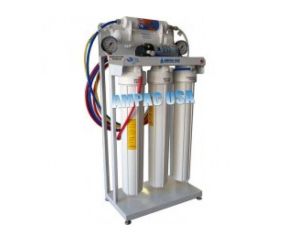
APRO100
Commercial Reverse Osmosis
100 GPD 380 LPD
View specifications -
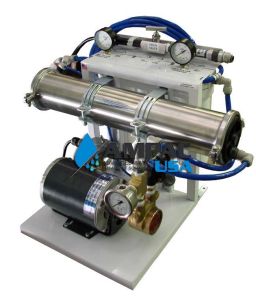
APRO800-1
Commercial Reverse Osmosis
800 GPD 3000 LPD
View specifications -
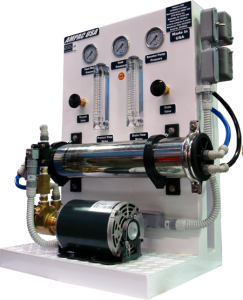
APRO1000
Commercial Reverse Osmosis
1,000 GPD 3780 LPD
View specifications -
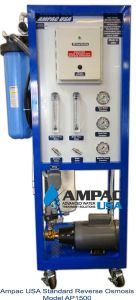
AP1500
Commercial Reverse Osmosis
1,500 GPD 5670 LPD
View specifications -
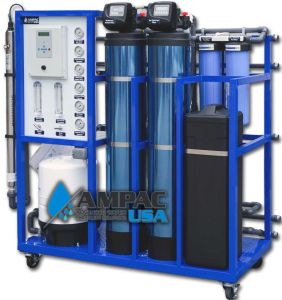
AP1500-LX
Commercial Turnkey Reverse Osmosis
1,500 GPD 5.7 m³/Day
View specifications -
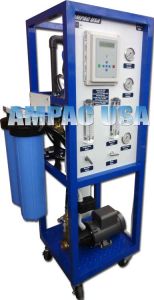
AP2200
Commercial Reverse Osmosis
2,200 GPD 8300 LPD
View specifications -
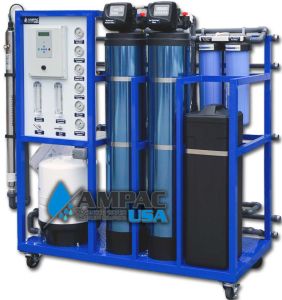
AP2200-LX
Commercial Turnkey Reverse Osmosis
2,200 GPD 8.3 m³/Day
View specifications -
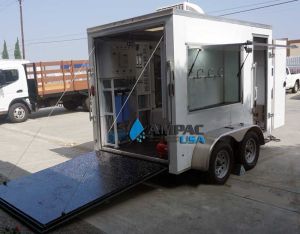
TR-3000
Mobile Trailer Reverse Osmosis
3,000 GPD 11.4 m³/hr
View specifications -
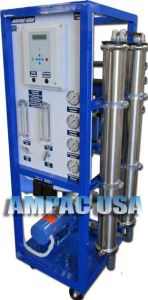
APRO3000
Commercial Reverse Osmosis
3,000 GPD 11,350 LPD
View specifications -
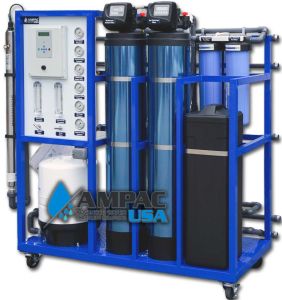
AP4400-LX
Commercial Turnkey Reverse Osmosis
4,400 GPD 16.7 m³/Day
View specifications -
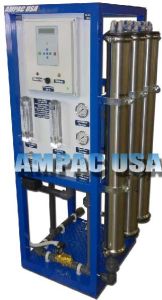
APRO6000
Commercial Reverse Osmosis
6,000 GPD 22,750 LPD
View specifications -
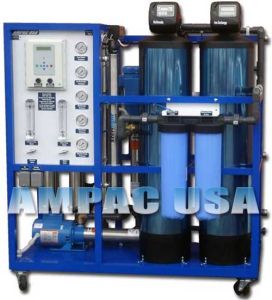
AP6000-LX
Commercial Turnkey Reverse Osmosis
6,000 GPD 22.7 m³/Day
View specifications -
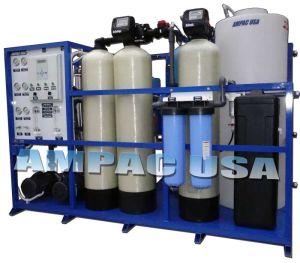
AP6000-SM-LX
Industrial Reverse Osmosis
6,000 GPD 22.7 m³/Day
View specifications -
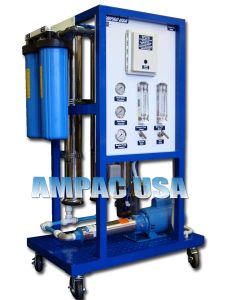
APRO8000
Commercial Reverse Osmosis
8,000 GPD 30,000 LPD
View specifications -
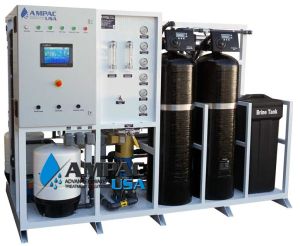
AP10K-LX
Industrial Reverse Osmosis
10,000 GPD 1.6 m³/hr
View specifications -
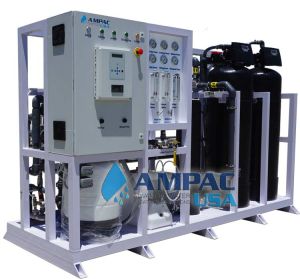
AP12K-LX
Industrial Reverse Osmosis
12,000 GPD 1.9 m³/hr
View specifications -
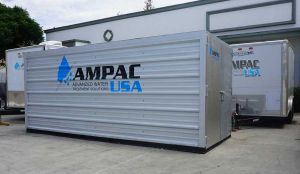
AP20K-LX-C
Emergency Portable Reverse Osmosis
20,000 GPD 3.18 m³/hr
View specifications -
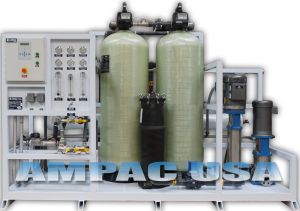
AP20K-LX
Industrial Reverse Osmosis
20,000 GPD 3.18 m³/hr
View specifications -
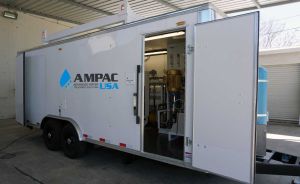
TR-40K
Mobile Trailer Reverse Osmosis
40,000 GPD 6.3 m³/hr
View specifications -
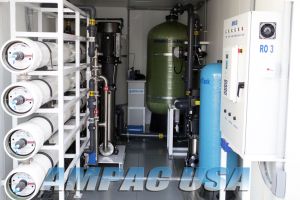
BWRO80K-LX
Mobile Turnkey Reverse Osmosis Water Purification
80,000 GPD 12.6 m³/hr
View specifications -
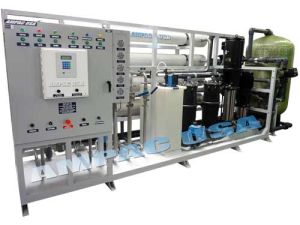
AP80K-LX
Industrial Reverse Osmosis
80,000 GPD 12.6 m³/hr
View specifications -
AP100K-LX
Industrial Reverse Osmosis
100,000 GPD 15.8 m³/hr
View specifications -
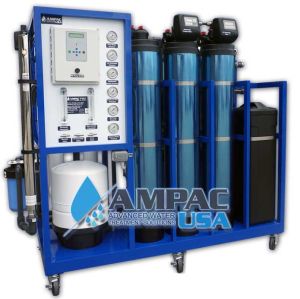
AP3000-LX-ALK
Alkaline Water Reverse Osmosis AP3000-LX-ALK
View specifications -
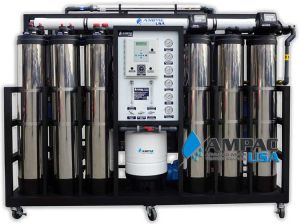
AP4000-SM
Super Water Store Reverse Osmosis AP4000-SM
View specifications -
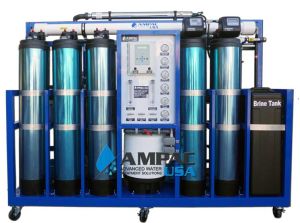
AP3000-SM
Super Water Store Reverse Osmosis AP3000-SM
View specifications
Need an output between two models, or a different feed water? Send us your numbers
About Reverse Osmosis Systems
Sizing a system? Send your flow rate and a feed-water analysis, and an AMPAC engineer will work out the configuration with you.
Reverse osmosis forces water through a semi-permeable membrane at pressure, rejecting 95 to 99% of dissolved salts, heavy metals, and most organic compounds. It is the dominant water purification technology across residential, commercial, industrial, and desalination applications because it works on a wide range of source water quality without requiring heat or chemical regeneration.
AMPAC USA has manufactured reverse osmosis systems for over 30 years across five categories: residential units from 50 to 150 GPD for under-sink or whole-house installation; commercial RO from 100 to 12,000 GPD for restaurants, car washes, laboratories, and office buildings; industrial RO from 12,000 to 250,000 GPD for manufacturing, power generation, and process industries; seawater desalination systems for marine vessels, offshore platforms, and coastal communities; and water store systems including vending units and bulk filling stations.
Feed water sources treated include municipal tap water, well water, brackish groundwater up to 10,000 ppm TDS, and open-ocean seawater at 35,000 ppm TDS. Each system is engineered with pre-treatment matched to the source chemistry - sediment and carbon filtration, softening, antiscalant dosing, or pH adjustment - to protect membranes and deliver consistent output quality over a service life of 10 or more years.
All AMPAC RO systems ship with pre-installed membranes, pressure gauges, and flow meters, factory-tested and ready to connect. Systems are available as standalone skids or integrated into complete treatment trains with pre-filtration, chemical dosing, post-treatment, and storage. Technical support and replacement membranes are available from AMPAC USA for the life of the system. Contact us at (909) 548-4900 to discuss the right RO system for your application.
Frequently Asked Questions
What contaminant rejection rates should a well-designed RO system achieve?
A properly operating RO membrane rejects 95-99% of dissolved salts, 99%+ of bacteria and viruses by size exclusion, and 95-98% of most pesticides and pharmaceuticals. Heavy metals like lead and arsenic are rejected at 95-99% depending on their ionic form in the feed water. Rejection rates decline as membranes age or foul, which is why regular normalized permeate flow and salt passage monitoring is part of any serious maintenance program.
What is the difference between recovery rate and rejection rate in an RO system?
Rejection rate measures how much of a specific contaminant the membrane keeps out of the product water, expressed as a percentage. Recovery rate is a system-level measurement describing what fraction of feed water becomes usable product versus concentrate discharged to drain. A system running at 75% recovery produces 75 gallons of purified water and 25 gallons of concentrate for every 100 gallons fed to the system.
What operating pressure does a typical RO system require?
Brackish water RO systems treating feed water up to 5,000 ppm TDS operate at 150-400 psi. Seawater systems with feed water above 30,000 ppm require 800-1,200 psi to overcome osmotic pressure and produce meaningful product flow. Municipal water RO systems treating chlorinated tap water at 200-500 ppm typically run at 80-150 psi. AMPAC USA sizes pump and pressure rating to feed water chemistry, not a generic pressure setting.
What pre-treatment is required before water enters an RO membrane?
At minimum, feed water must pass through a 5-micron cartridge filter to prevent particulate damage to the membrane element. Chlorinated feed water requires carbon filtration or sodium bisulfite injection to protect thin-film composite membranes, which degrade rapidly with chlorine exposure above 0.1 ppm. Hard water above 10 grains per gallon benefits from softening or antiscalant dosing to prevent calcium carbonate fouling on the membrane surface.
How long do RO membranes last, and what causes premature failure?
In clean feedwater applications with proper pre-treatment, RO membranes commonly last 3-5 years before replacement is warranted by declining performance. Premature failure is almost always caused by chlorine oxidation, biological fouling from inadequate feed water disinfection, or scaling from insufficient antiscalant dosing or pH control. Running the system outside the manufacturer's specified pressure and temperature limits also accelerates membrane degradation.