

Models
-
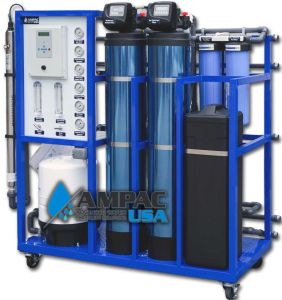
AP1500-LX
Commercial Turnkey Reverse Osmosis
1,500 GPD 5.7 m³/Day
View specifications -
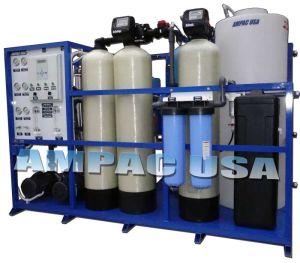
AP6000-SM-LX
Industrial Reverse Osmosis
6,000 GPD 22.7 m³/Day
View specifications -
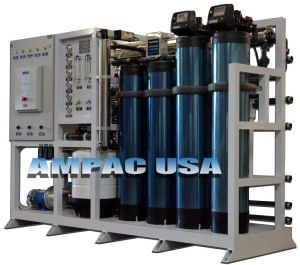
AP8000-LX-1
Industrial Reverse Osmosis
8,000 GPD 30.2 m³/Day
View specifications -
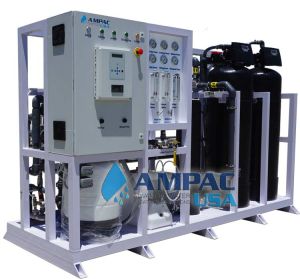
AP12K-LX
Industrial Reverse Osmosis
12,000 GPD 1.9 m³/hr
View specifications -
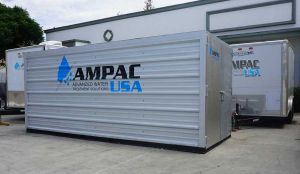
AP20K-LX-C
Emergency Portable Reverse Osmosis
20,000 GPD 3.18 m³/hr
View specifications -
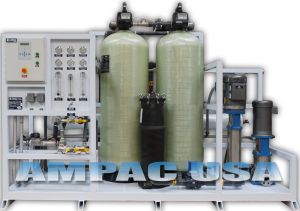
AP20K-LX
Industrial Reverse Osmosis
20,000 GPD 3.18 m³/hr
View specifications -
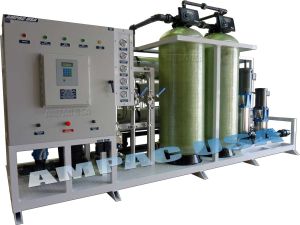
AP25K-LX
Industrial Reverse Osmosis
25,000 GPD 4.0 m³/hr
View specifications -
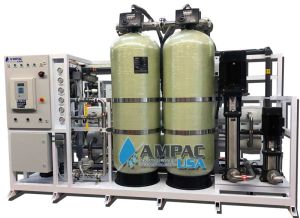
AP30K-LX
Industrial Reverse Osmosis
30,000 GPD 4.75 m³/hr
View specifications -
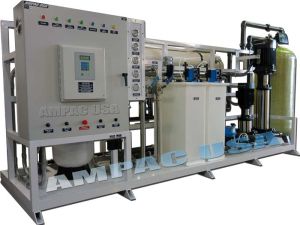
AP40K-LX
Industrial Reverse Osmosis
40,000 GPD 6.30 m³/hr
View specifications -
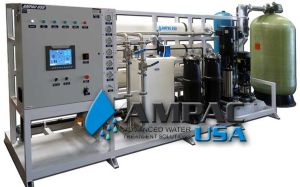
AP60K-LX
Industrial Reverse Osmosis
60,000 GPD 9.5 m³/hr
View specifications -
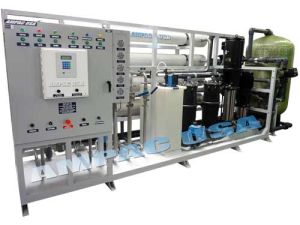
AP80K-LX
Industrial Reverse Osmosis
80,000 GPD 12.6 m³/hr
View specifications
Need an output between two models, or a different feed water? Send us your numbers
About Arsenic Removal
Sizing a system? Send your flow rate and a feed-water analysis, and an AMPAC engineer will work out the configuration with you.
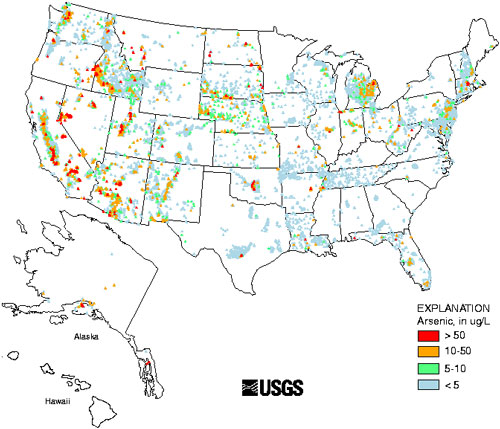 Arsenic contamination of drinking water is a global issue, The maximum concentration of allowable arsenic is 10 Parts per Billion as per WHO (World Health Organization) Standards. Arsenic is distributed throughout the earth's crust. In some areas, safe drinking water may not be possible, or may be very expensive. Arsenic removal is the only solution to this issue.
Arsenic is introduced into water through the dissolution of minerals and ores, Concentrations in groundwater in some areas are higher due to erosion from arsenic rich rocks, industrial effluents contribute to arsenic concentrations in some areas, as well as Combustion of fossil fuels is a source of arsenic in the environment through disperse atmospheric deposition. Finally, arsenic occurs in the environment in several forms, in natural waters it is mostly found as trivalent arsenite or pentavalent arsenate. Organic arsenic species, abundant in seafood, are very much less harmful to health, and are readily eliminated by the body.Drinking-water represent the highest threat to public health from arsenic. Exposure at work and mining and industrial emissions may also be significant.
Arsenic Removal Technologies:
All of the technologies for arsenic removal rely on a few basic processes, as follows:
-
Oxidation Reduction:
Reactions that reduce or oxidize, altering the chemical forms of Arsenic.
-
Precipitation Process:
Causes dissolved arsenic to form a low-soluble solid mineral that can be removed through filtration.
-
Ion Exchange Adsorption:
Involve the reversible displacement of an ion adsorbed onto a solid surface by a dissolved ion.
-
Physical Exclusion:
Synthetic Membranes are permeable to certain dissolved compounds and exclude others, these membranes elements can act as a molecular filters to remove dissolves arsenic along with other dissolves solids.
-
Activated Alumina:
AA Adsorption is a physical/chemical process by which ions in solution are removed by the available adsorption sites on an oxide surface. AA is used primarily in packed beds to remove contaminants such as fluoride, arsenic, selenium, silica, and natural organic matters.
-
Reverse Osmosis:
Simple Technologies for household removal of arsenic are limited. Reverse osmosis have proven to be an efficient solution for arsenic removal.
Frequently Asked Questions
What is the EPA maximum contaminant level for arsenic in drinking water?
The EPA MCL for arsenic in drinking water is 10 micrograms per liter, which took effect in 2006 and replaced the previous 50 ppb standard. Meeting this limit reliably requires treatment down to 5 ppb or below to maintain a compliance buffer, because arsenic levels fluctuate seasonally in groundwater sources. AMPAC USA designs arsenic removal systems to consistently achieve finished water below 5 ppb.
What forms of arsenic occur in groundwater, and which are harder to remove?
Arsenic occurs primarily as arsenate and arsenite in groundwater. Arsenate is negatively charged at typical drinking water pH levels and is readily removed by adsorption media and RO. Arsenite is uncharged at neutral pH and passes through many treatment processes unaffected, which is why oxidation to arsenate using chlorine, potassium permanganate, or ozone is a standard pretreatment step before adsorption or membrane filtration.
How does adsorption media for arsenic removal work, and what is its capacity?
Iron-based adsorption media, including granular ferric hydroxide and iron oxide-coated sands, attract arsenate ions through surface complexation. Capacity depends on arsenic influent concentration and competing ions like phosphate and silica, but a well-designed media system typically treats 10,000-50,000 bed volumes before media exhaustion in low-arsenic groundwater. AMPAC USA sizes media beds with safety factors and designs for simple changeout when capacity is reached.
Can reverse osmosis remove arsenic to below 10 ppb reliably?
RO membranes reject 90-95% of arsenate when operating at normal recovery rates, and in most cases can bring 50-100 ppb feed water below the 10 ppb MCL. However, RO rejection of arsenite is lower and less consistent, which is why we always recommend pre-oxidation before an RO system treating arsenic-contaminated groundwater. For very high arsenic concentrations above 500 ppb, a combination of media adsorption and RO provides the most reliable barrier.
What testing is needed before selecting an arsenic removal system for a private well?
A basic water analysis for arsenic, pH, iron, manganese, phosphate, silica, and hardness is the minimum needed to select media type, size the system correctly, and predict media life. Iron above 0.3 mg/L and high silica concentrations reduce adsorption capacity and may require pretreatment. We review customer water analysis at no cost and recommend systems sized for verified site conditions rather than worst-case assumptions.