

Models
-
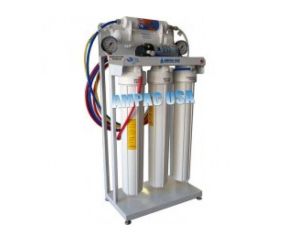
APRO100
Commercial Reverse Osmosis
100 GPD 380 LPD
View specifications -
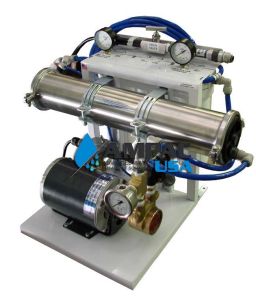
APRO800-1
Commercial Reverse Osmosis
800 GPD 3000 LPD
View specifications -
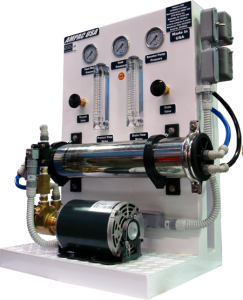
APRO1000
Commercial Reverse Osmosis
1,000 GPD 3780 LPD
View specifications -
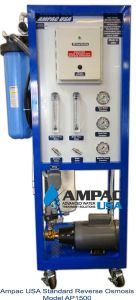
AP1500
Commercial Reverse Osmosis
1,500 GPD 5670 LPD
View specifications -
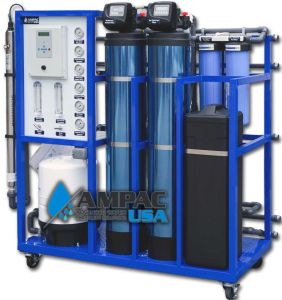
AP1500-LX
Commercial Turnkey Reverse Osmosis
1,500 GPD 5.7 m³/Day
View specifications -
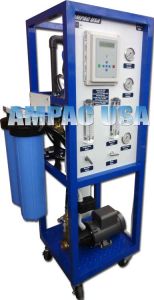
AP2200
Commercial Reverse Osmosis
2,200 GPD 8300 LPD
View specifications -
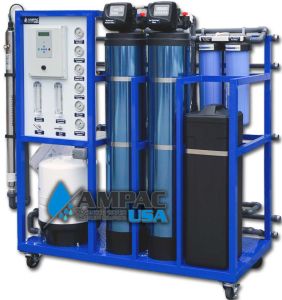
AP2200-LX
Commercial Turnkey Reverse Osmosis
2,200 GPD 8.3 m³/Day
View specifications -
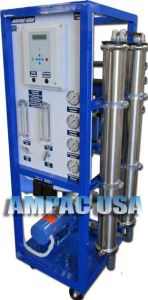
APRO3000
Commercial Reverse Osmosis
3,000 GPD 11,350 LPD
View specifications -
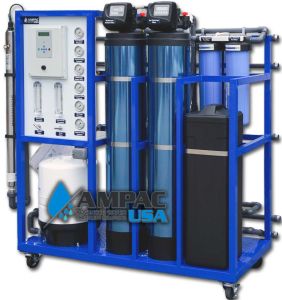
AP4400-LX
Commercial Turnkey Reverse Osmosis
4,400 GPD 16.7 m³/Day
View specifications -
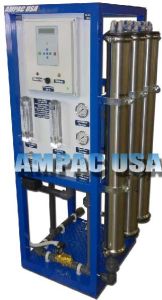
APRO6000
Commercial Reverse Osmosis
6,000 GPD 22,750 LPD
View specifications -
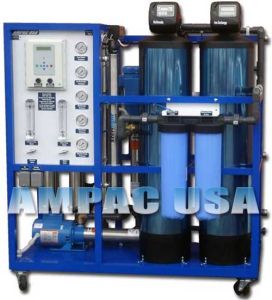
AP6000-LX
Commercial Turnkey Reverse Osmosis
6,000 GPD 22.7 m³/Day
View specifications -
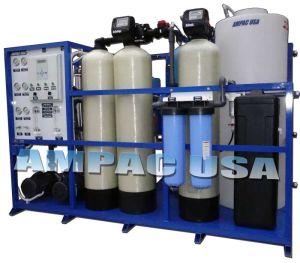
AP6000-SM-LX
Industrial Reverse Osmosis
6,000 GPD 22.7 m³/Day
View specifications -
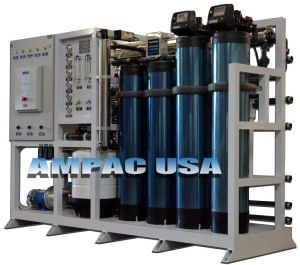
AP8000-LX-1
Industrial Reverse Osmosis
8,000 GPD 30.2 m³/Day
View specifications -
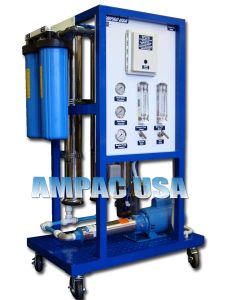
APRO8000
Commercial Reverse Osmosis
8,000 GPD 30,000 LPD
View specifications -
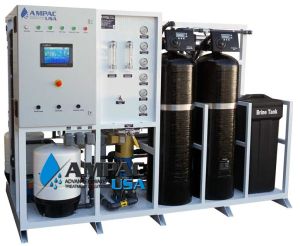
AP10K-LX
Industrial Reverse Osmosis
10,000 GPD 1.6 m³/hr
View specifications -
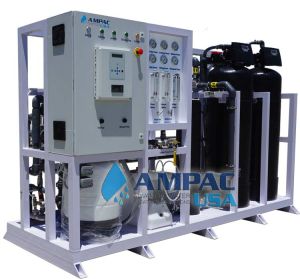
AP12K-LX
Industrial Reverse Osmosis
12,000 GPD 1.9 m³/hr
View specifications -
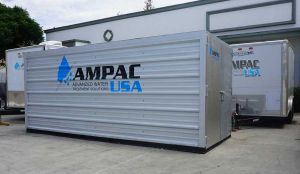
AP20K-LX-C
Emergency Portable Reverse Osmosis
20,000 GPD 3.18 m³/hr
View specifications -
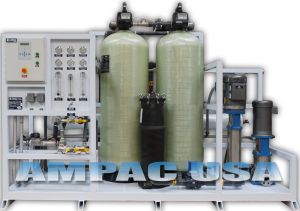
AP20K-LX
Industrial Reverse Osmosis
20,000 GPD 3.18 m³/hr
View specifications -
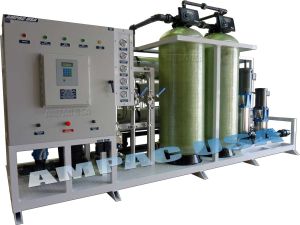
AP25K-LX
Industrial Reverse Osmosis
25,000 GPD 4.0 m³/hr
View specifications -
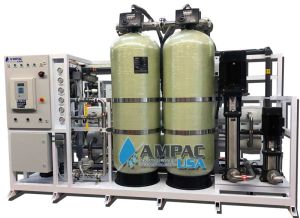
AP30K-LX
Industrial Reverse Osmosis
30,000 GPD 4.75 m³/hr
View specifications -
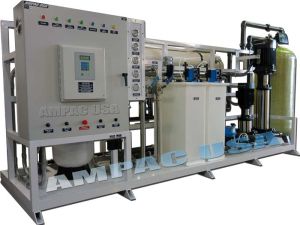
AP40K-LX
Industrial Reverse Osmosis
40,000 GPD 6.30 m³/hr
View specifications -
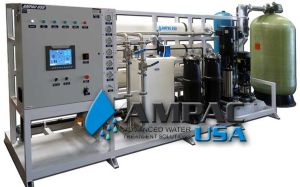
AP60K-LX
Industrial Reverse Osmosis
60,000 GPD 9.5 m³/hr
View specifications -
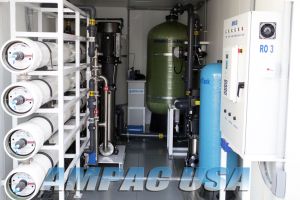
BWRO80K-LX
Mobile Turnkey Reverse Osmosis Water Purification
80,000 GPD 12.6 m³/hr
View specifications -
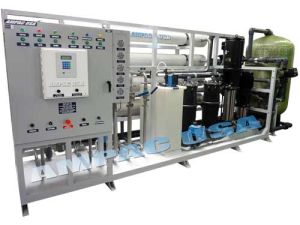
AP80K-LX
Industrial Reverse Osmosis
80,000 GPD 12.6 m³/hr
View specifications -
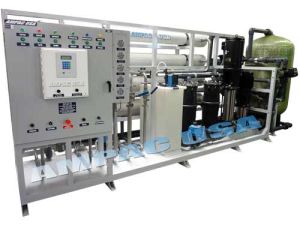
AP100K-LX
Industrial Reverse Osmosis
100,000 GPD 15.8 m³/hr
View specifications -
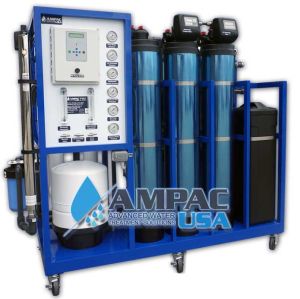
AP3000-LX-ALK
Alkaline Water Reverse Osmosis AP3000-LX-ALK
View specifications -
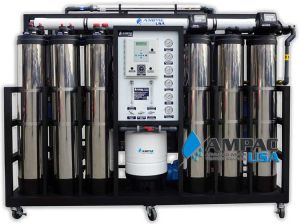
AP4000-SM
Super Water Store Reverse Osmosis AP4000-SM
View specifications
Need an output between two models, or a different feed water? Send us your numbers
About Food & Dairy Water Purification Equipment
Sizing a system? Send your flow rate and a feed-water analysis, and an AMPAC engineer will work out the configuration with you.
Water touches every surface in a food and dairy processing facility — ingredient water, cleaning water, steam, cooling, and equipment rinse. Each use carries a different quality standard, and failure on any one of them creates a food safety issue. Ingredient water and water in direct food contact typically must meet drinking water standards at minimum, and many processes — beverage production, dairy pasteurization, bakery operations — require tighter specifications for hardness, chlorine, TDS, and microbial content that municipal water alone doesn't always deliver.
Hard water scale in pasteurizers and heat exchangers reduces thermal efficiency and creates rough surfaces that trap bacteria, driving up cleaning chemical costs and audit risk. Chlorine and chloramine in municipal water react with food compounds and affect flavor in beverages, dairy, and baked goods. High nitrate levels in agricultural well water present a regulatory issue in many food applications. Processing facilities in coastal or island locations may rely on brackish water or desalination as their primary source.
AMPAC USA designs water treatment systems for food and dairy processing plants that address the specific quality requirements of each water use in the facility. A single centralized treatment system at the main supply line can produce treated water for multiple end uses simultaneously — ingredient water at one quality level, CIP rinse water at another, cooling tower makeup at a third. This reduces the number of point-of-use treatment units and simplifies quality monitoring and maintenance.
AMPAC systems are designed to meet NSF/ANSI 61 requirements for drinking water contact, consistent with HACCP and FSMA facility considerations. Systems include real-time water quality monitoring with alarm capability to detect quality excursions before they affect production.
Contact AMPAC USA at (909) 548-4900 to discuss water treatment for your food or dairy processing facility. Provide your current water analysis report and our engineers will specify the right treatment sequence.
Frequently Asked Questions
What water quality standard applies to process water used in dairy and beverage production?
Process water that contacts food products or food-contact surfaces must meet FDA 21 CFR Part 110 requirements and typically NSF/ANSI 60 for treatment chemicals, with finished water quality matching or exceeding EPA drinking water standards. Many dairy processors set internal targets stricter than regulatory minimums, specifying TDS below 50 ppm and chlorine removal to non-detectable levels for product water. Our food-grade RO systems are built with NSF-certified components throughout the product water pathway.
How does RO water improve product consistency in beverage manufacturing?
Municipal water chemistry varies seasonally, and even small changes in mineral content, pH, or hardness affect flavor, carbonation uptake, and syrup ratios in beverages. RO reduces feedwater TDS to 5-15 ppm, giving the blending team a consistent neutral base to which minerals and CO2 can be added at controlled levels for each product formulation. AMPAC USA builds beverage RO systems with inline conductivity monitoring and automated divert valves that reject off-spec water before it reaches production.
What is CIP water and why does its quality matter in food and dairy plants?
Clean-in-place water is used to rinse and sanitize processing equipment including tanks, piping, heat exchangers, and filling lines without disassembly. Hard water with calcium and magnesium above 50 ppm as CaCO3 forms mineral deposits in CIP circuits that interfere with sanitizer contact and reduce cleaning effectiveness. Soft or RO-treated CIP water also extends the life of sanitary gaskets and O-rings by reducing scale-driven abrasion.
How do AMPAC USA food-grade RO systems prevent microbial contamination in product water?
All internal wetted components in our food-grade systems use 304 or 316L stainless steel or FDA-compliant plastics with no dead legs where biofilm can accumulate. We integrate UV disinfection at 38,000 microwatt-seconds per square centimeter downstream of the RO membrane as a redundant microbial barrier, which is standard in dairy and beverage applications. Systems are designed for sanitization-in-place using hot water or food-grade chemical sanitizers compatible with plant SIP protocols.
What documentation do food and dairy processors receive for regulatory compliance purposes?
We provide material certifications for all food-contact components, NSF/ANSI 61 certificates for applicable components, and full system performance test data at commissioning. Facilities undergoing SQF, BRC, or FSSC 22000 audits regularly request our documentation packages, and we maintain records formatted to meet third-party food safety audit standards. Our engineering team can participate in pre-audit reviews to address auditor questions about water system design and controls.