

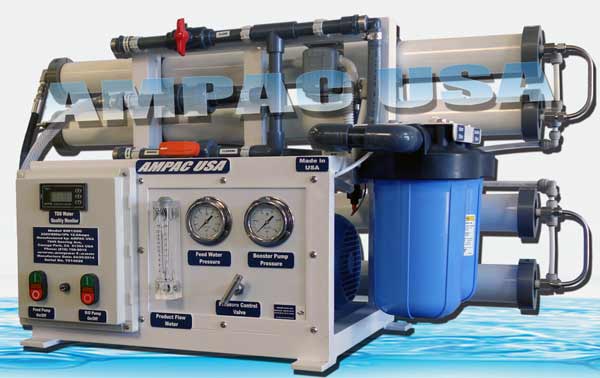
Models
-
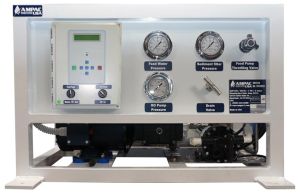
SWRO100
Seawater Desalination RO Watermaker
100 GPD 380 LPD
View specifications -
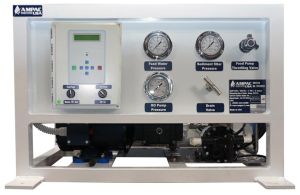
SW200
Seawater Desalination RO Watermaker
200 GPD 750 LPD
View specifications -
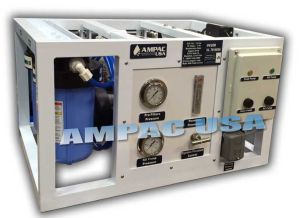
SW300
Seawater Desalination RO Watermaker
300 GPD 1135 LPD
View specifications -
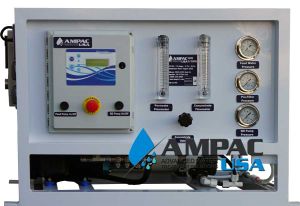
SW600
Seawater Desalination Watermaker
600 GPD 2270 LPD
View specifications -
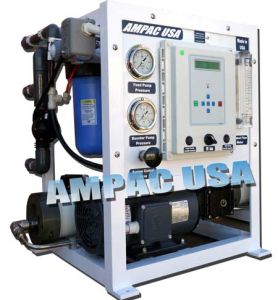
SW800
Seawater Desalination Watermaker
800 GPD 3000 LPD
View specifications -
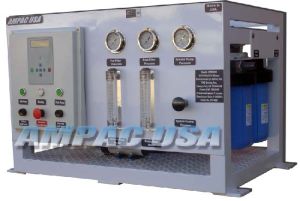
SW1000
Seawater Desalination Watermaker
1,000 GPD 3780 LPD
View specifications -
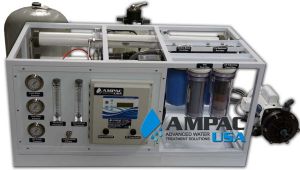
SW1500
Seawater Desalination Reverse Osmosis Watermaker
1,500 GPD 5,670 LPD
View specifications -
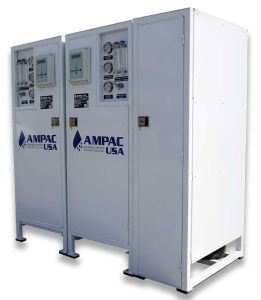
SW2000-LC
Twin Redundant Seawater Desalination RO Watermakers 2 X
2,000 GPD 2 X 7,500 LPD
View specifications -
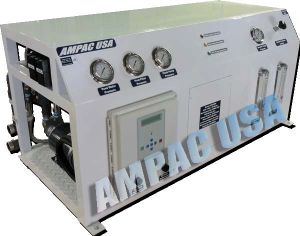
SW2000
Seawater Desalination Reverse Osmosis Watermaker
2,000 GPD 7,500 LPD
View specifications -
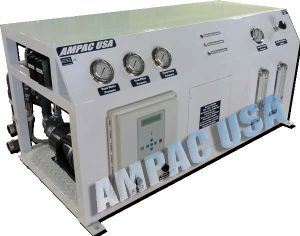
SW3000
Seawater Desalination Reverse Osmosis Watermaker
3,000 GPD 11,350 LPD
View specifications -
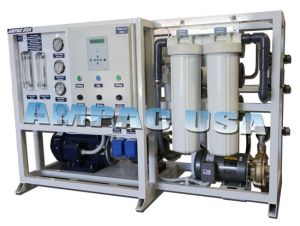
SW4500
Seawater Desalination Reverse Osmosis Watermaker
4,500 GPD 17,000 LPD
View specifications -
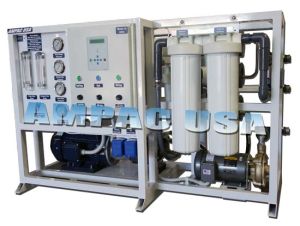
SW5000
Seawater Desalination Reverse Osmosis Watermaker
5,000 GPD 19,000 LPD
View specifications -
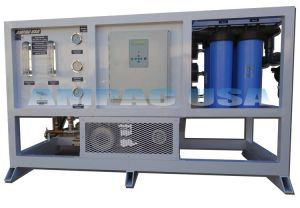
SW6000
Seawater Desalination Reverse Osmosis Watermaker
6,000 GPD
View specifications
Need an output between two models, or a different feed water? Send us your numbers
About Marine Watermaker for Boats
Sizing a system? Send your flow rate and a feed-water analysis, and an AMPAC engineer will work out the configuration with you.
AMPAC USA integrates advanced marine-grade Seawater Desalination Watermakers with a master craftsman's extreme attention to detail. The result is a reliable, super-duty, long-lasting fresh watermaker trusted by the marine industry worldwide. We design a wide variety of seawater desalination fresh watermakers that work on high-pressure Reverse Osmosis technology and can be used for varying amounts of use.
Our Seawater Desalination Fresh Watermakers are also available in modular configurations for smaller vessels that are lacking sufficient space or partially mounted in a compact frame offering an easier installation.
For further details on our Marine Seawater Desalination Fresh Watermaker Systems, fill our contact form now, we will get back to you soon Or you can also call on our toll-free number 877-611-8530.
AMPAC USA is the trusted source for watermaker for boat applications - from compact water maker units for sailboats and motor yachts to high-capacity marine seawater desalination systems for commercial vessels. Our marine watermakers run on 12V, 24V DC, or AC power, with optional battery power and solar integration for extended offshore passages.
Each AMPAC watermaker for boat includes a high-pressure pump, seawater pre-filters, RO membrane, and control panel with easy-to-read pressure and flow displays. Output is potable fresh water ready for drinking, cooking, and onboard use. Our systems are engineered for marine environments - corrosion-resistant components, compact form factor, and quiet operation. Contact AMPAC USA for sizing and configuration of your vessel's water maker system.
Rigs and platforms are served by our offshore watermakers instead.
Frequently Asked Questions
What vessel types are these marine watermakers designed for?
The product line covers commercial fishing boats, recreational yachts, sailing catamarans, passenger ferries, and small cargo vessels. Units are sized and configured for each application, with compact horizontal or vertical mounting orientations. Corrosion resistance is built in throughout, using 316L stainless steel, fiberglass reinforced plastic, and marine-grade fittings rated for saltwater environments.
What fresh water output rates are available for marine applications?
The marine watermaker range produces 50 GPD at the low end for a small cruising sailboat up to 2,000 GPD for a large commercial ferry or fishing vessel. Mid-range units at 200 to 500 GPD suit most liveaboard yachts and small commercial craft. System selection is based on daily water consumption plus a 25 to 30 percent safety margin for hotter days and cleaning needs.
Can these systems run on 12V or 24V DC power from the vessel battery bank?
Yes. Units up to approximately 300 GPD are available in 12V or 24V DC configurations, drawing 7 to 15 amps depending on capacity. This allows operation directly from the vessel alternator or solar charging system. Larger units above 300 GPD require AC power, typically 120V or 240V single-phase from an onboard generator or shore power connection.
How often do membranes need replacement in a marine watermaker?
Membrane life in marine service is typically 3 to 7 years depending on operating hours, feed water cleanliness, and whether the system is flushed with fresh water when not in use. Fouled membranes show reduced output and higher operating pressure. FILMTEC and equivalent replacement membranes are standard sizes available from AMPAC USA or marine chandleries worldwide.
What happens if the system sits unused for weeks at anchor?
Biological fouling is the main risk during prolonged idle periods. The correct procedure is a fresh water flush after the last use, then pickling with a sodium metabisulfite preservative solution if the layup exceeds two weeks. AMPAC USA systems include a fresh water flush valve as standard. Preserved membranes can remain idle for up to 12 months without damage.
What is the typical salt rejection rate for marine RO membranes?
Marine-grade spiral-wound membranes reject 99.4 to 99.6 percent of dissolved salts at standard test conditions. From typical open ocean seawater at 35,000 TDS, product water TDS comes out at 140 to 210 mg/L, well below the 500 mg/L WHO potable water guideline. Product water quality improves in cooler water and declines slightly in warm tropical surface water.