

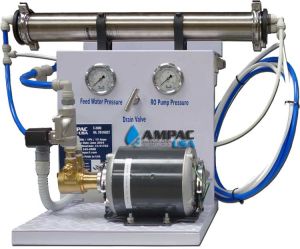
Make brackish water drinkable with the BWRO300, a 300 GPD reverse osmosis system for contaminant-free water | AMPAC USA
View details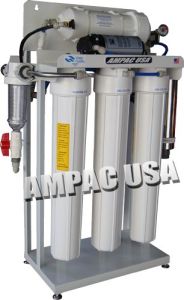
Purify groundwater to WHO standards with the Commercial Reverse Osmosis 300 GPD system from AMPAC USA. | AMPAC USA
View details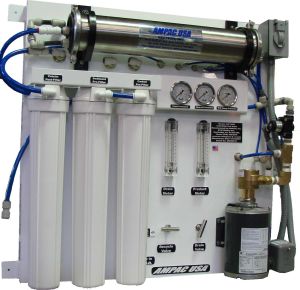
Get the APRO 1000 GPD Wall Mount Reverse Osmosis system for high-capacity water purification. Learn more about this RO system | AMPAC USA
View details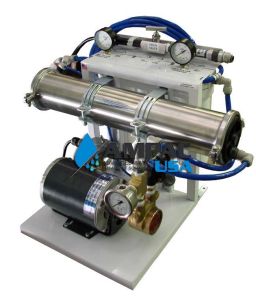
Commercial Reverse Osmosis 800 GPD system removes impurities & TDS for your business. Reliable water treatment. | AMPAC USA
View details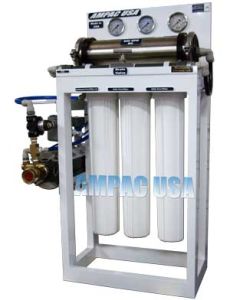
Brackish water RO system, 500 GPD, provides constant pure water for commercial firms. | AMPAC USA
View details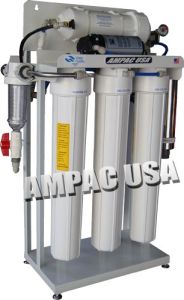
Commercial Reverse Osmosis 400 GPD system for small to mid-sized businesses. High-quality water treatment. | AMPAC USA
View details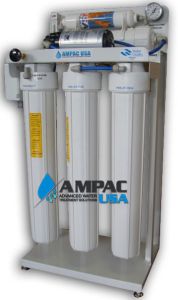
Commercial Reverse Osmosis 200 GPD system for shops, restaurants, and microbreweries. Pure water for your business | AMPAC USA
View details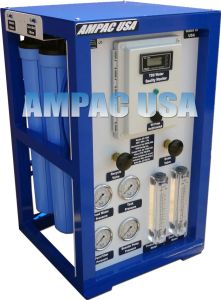
Efficient commercial reverse osmosis system, the APRO1200 provides 1200 GPD for pure water treatment. | AMPAC USA
View details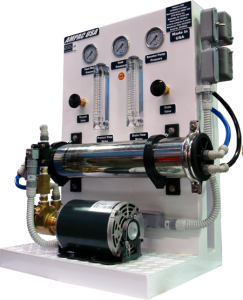
Get pure water for commercial use with the APRO1000, a 1000 GPD reverse osmosis system at low costs | AMPAC USA
View details
Get swift factory-direct delivery of the Commercial Reverse Osmosis 100 GPD system for pure water. | AMPAC USA
View detailsFrequently Asked Questions
What applications are best suited to small commercial RO systems in the 100 to 1200 GPD range?
This capacity range covers restaurants serving 50 to 200 customers daily, small office buildings, coffee shops, car detailing operations, dental offices, and light commercial applications needing low-TDS process water. At 100 GPD, a system runs roughly 4 hours per day to fill a storage tank sized for peak demand. At 1,200 GPD, continuous operation supports moderate production demands.
What membrane brands and rejection rates are used in these small commercial systems?
AMPAC USA systems in this range use FILMTEC TW30 or equivalent commercial-grade spiral-wound membranes with 96 to 98 percent TDS rejection. Membrane sizes are standard 4-inch diameter by 40-inch length, widely available for replacement. Each system is sized with appropriate membrane count and staging to hit product water targets based on the customer feed water analysis.
What automatic features do these units include to reduce operator attention?
Standard automation includes daily or cycle-triggered membrane flush to prevent biofilm accumulation, low-pressure shutoff that protects membranes if feed pressure drops below 40 PSI, high-pressure shutoff, and automatic shutdown when the storage tank reaches full capacity via float or pressure signal. An audible alarm and indicator light signal fault conditions without requiring continuous monitoring.
What feed water pressure is required to run a 100-1200 GPD RO system?
Minimum inlet pressure is 40 PSI for satisfactory membrane performance. Optimal range is 60 to 80 PSI, which is typical municipal main pressure. Sites with pressure below 40 PSI require a booster pump, sold as an add-on option. Sites exceeding 100 PSI need a pressure-reducing valve upstream to prevent membrane and housing damage.
How often does the membrane need replacement in a small commercial system?
Membrane life in small commercial service is typically 3 to 5 years with proper pre-filtration and periodic flushing. Sediment and carbon pre-filters require replacement every 6 to 12 months depending on feed water quality. The easiest performance indicator is product water TDS: when it climbs more than 15 to 20 percent above baseline, membrane inspection or cleaning is the next step.
What does installation require for a point-of-entry commercial RO system?
Standard installation needs a cold water supply line connection (3/4-inch or 1-inch depending on system size), a drain connection for concentrate discharge at 30 to 50 percent of feed flow, a product water line to a storage tank or direct-use point, and a standard 120V electrical outlet for the controller and automatic flush valve. Most installations complete in 2 to 4 hours.