
Models
-
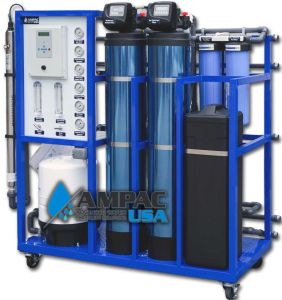
AP1500-LX
Commercial Turnkey Reverse Osmosis
1,500 GPD 5.7 m³/Day
View specifications -
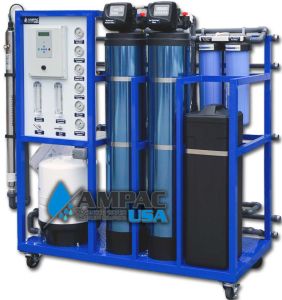
AP2200-LX
Commercial Turnkey Reverse Osmosis
2,200 GPD 8.3 m³/Day
View specifications -
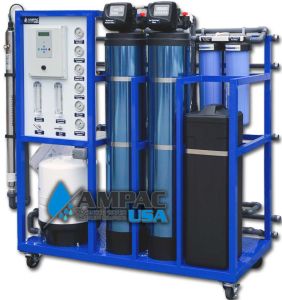
AP3000-LX
Commercial Turnkey Reverse Osmosis
3,000 GPD 11.4 m³/Day
View specifications -
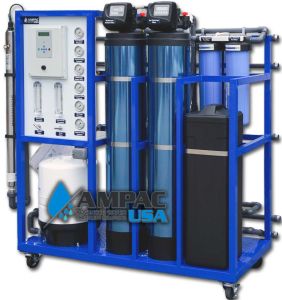
AP4400-LX
Commercial Turnkey Reverse Osmosis
4,400 GPD 16.7 m³/Day
View specifications -
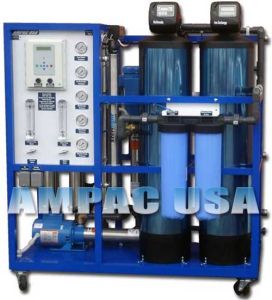
AP6000-LX
Commercial Turnkey Reverse Osmosis
6,000 GPD 22.7 m³/Day
View specifications -
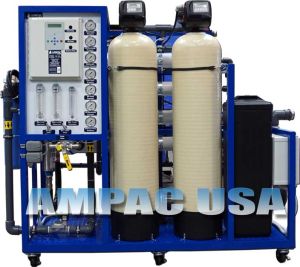
AP8000-LX
Commercial Turnkey Reverse Osmosis
8,000 GPD 30 m³/Day
View specifications -
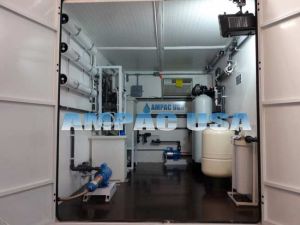
BWRO-10K-LXC
Mobile Turnkey Reverse Osmosis
10,000 GPD 37.9 m³/Day
View specifications -
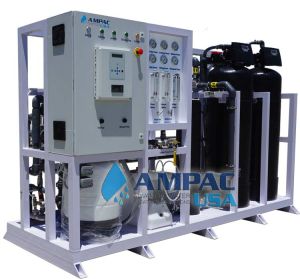
AP12K-LX
Industrial Reverse Osmosis
12,000 GPD 1.9 m³/hr
View specifications -
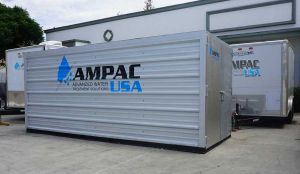
AP20K-LX-C
Emergency Portable Reverse Osmosis
20,000 GPD 3.18 m³/hr
View specifications -
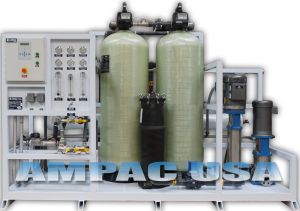
AP20K-LX
Industrial Reverse Osmosis
20,000 GPD 3.18 m³/hr
View specifications -
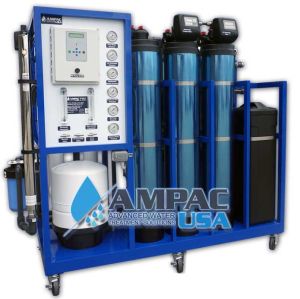
AP3000-LX-ALK
Alkaline Water Reverse Osmosis AP3000-LX-ALK
View specifications
Need an output between two models, or a different feed water? Send us your numbers
About Turnkey and Brackish Water Reverse Osmosis
Sizing a system? Send your flow rate and a feed-water analysis, and an AMPAC engineer will work out the configuration with you.
The AMPAC USA Brackish Water Reverse Osmosis LX™ Series Turnkey Reverse Osmosis, are custom-built according to end-user water conditions and requirements, the LX™ Series offers Fully Automated, Fully Equipped Commercial Brackish Water Purifiers designed specifically for the needs and requirements of commercial pure water users. These Reverse Osmosis systems can operate with Tap or Brackish Well Water is includes Family Homes, Restaurants, Coffee Stores, Convenience Stores, Microbreweries, Supermarket Produce and Food Preparation Operations, Misting and Humidification Systems, Car Wash Facilities, and many other businesses that must have consistently high-quality water for their daily operations.
These are especially well known for their reliability, serviceability, and consistent performance with minimum user intervention. These key factors are achieved with its solid design. The frames are built by Powder Coated Welded Aluminum. Stainless Steel pressure vessels and fastening hardware provide the structural strength and corrosion resistance required for a commercial appliance.
The AMPAC USA LX™ Series Commercial Reverse Osmosis water purifiers design is optimized for the freestanding application. The eight models all occupy similar compact footprints. This allows flexibility in utilizing the limited space available in most commercial utility equipment locations.
AMPAC USA LX™ Reverse Osmosis models incorporate the most reliable combination of proven Reverse Osmosis hydraulic design and state of the art Thin Film Membrane Elements to provide the long-term performance expected by commercial users.
Frequently Asked Questions
What TDS range can brackish water RO systems handle?
Brackish water RO (BWRO) systems are designed for feed water from 1,000 to 10,000 TDS, covering the full range of inland groundwater brackishness. Feed above 10,000 TDS requires seawater-class membranes and higher operating pressure. A feed water analysis is the starting point for any BWRO system design, confirming TDS, ion composition, hardness, and scaling potential.
How does BWRO operating pressure compare to seawater desalination systems?
Brackish water systems operate at 100 to 400 PSI, roughly one-third to one-half the pressure of seawater RO at 800 to 1,000 PSI. Lower operating pressure means lower energy consumption per gallon. At 2,000 TDS feed, energy use is typically 0.4 to 0.6 kWh per 1,000 gallons, compared to 4 to 6 kWh per 1,000 gallons for seawater desalination.
What salt rejection percentage do BWRO membranes achieve?
Standard BWRO membranes achieve 95 to 98 percent NaCl rejection. High-rejection variants reach 99.5 percent and are used when softening or nitrate removal is the primary treatment goal. For agricultural water applications where some residual mineral content is desirable, standard 96 to 97 percent rejection membranes are typically the right choice.
What industries and applications use brackish water RO systems most commonly?
The most common applications are municipal water systems drawing from brackish aquifers, agricultural processing facilities, food and beverage production requiring low-TDS process water, power plant makeup water, and light industrial manufacturing. AMPAC USA also supplies BWRO systems to hospitals and commercial laundries where high-TDS source water causes equipment scaling and product quality problems.
How is scaling managed in BWRO systems treating hard groundwater?
Antiscalant chemical injection upstream of the membranes inhibits carbonate, sulfate, silica, and barium scaling. Dosage is calculated from a Langelier Saturation Index analysis of the feed water. For very high hardness feeds, a water softener pre-treatment stage may be added. AMPAC USA provides feed water analysis review and antiscalant dosing recommendations with every system.
What recovery rate do BWRO systems typically achieve?
Standard BWRO system recovery is 75 to 85 percent, meaning 75 to 85 gallons of permeate per 100 gallons of feed. Higher recovery reduces concentrate disposal volume, which matters in water-scarce inland locations without ocean or river discharge options. Recovery is optimized against concentrate scaling risk; high silica or sulfate feeds may be limited to 70 to 75 percent to stay below saturation thresholds.