
Models
-
AP20K-LX-C
Emergency Portable Reverse Osmosis
The AMPAC USA Emergency Portable Reverse Osmosis 20,000 GPD system (model AP20K-LX-C) delivers immediate, reliable access to high-purity water in challenging situations.
20,000 GPD 3.18 m³/hr
View specifications -
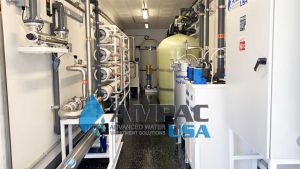
SW80K-LXC
Mobile Seawater Desalination Watermaker SW80K-LXC
The AMPAC USA Mobile Seawater Desalination Watermaker SW80K-LXC is a fully packaged, containerized system built for immediate deployment, giving operators a turnkey answer to water scarcity without on-site construction or added infrastructure.
View specifications -
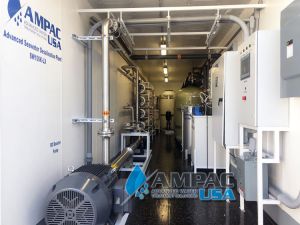
SW100K-LXC
Mobile Seawater Desalination Plant
The AMPAC USA SW100K-LXC Mobile Seawater Desalination Plant converts seawater into potable drinking water in a fully packaged, containerized, turnkey system ready for immediate deployment.
SW100K-LXC
View specifications
Need an output between two models, or a different feed water? Send us your numbers
About Buy Mobile Water Provisioning Systems
Sizing a system? Send your flow rate and a feed-water analysis, and an AMPAC engineer will work out the configuration with you.
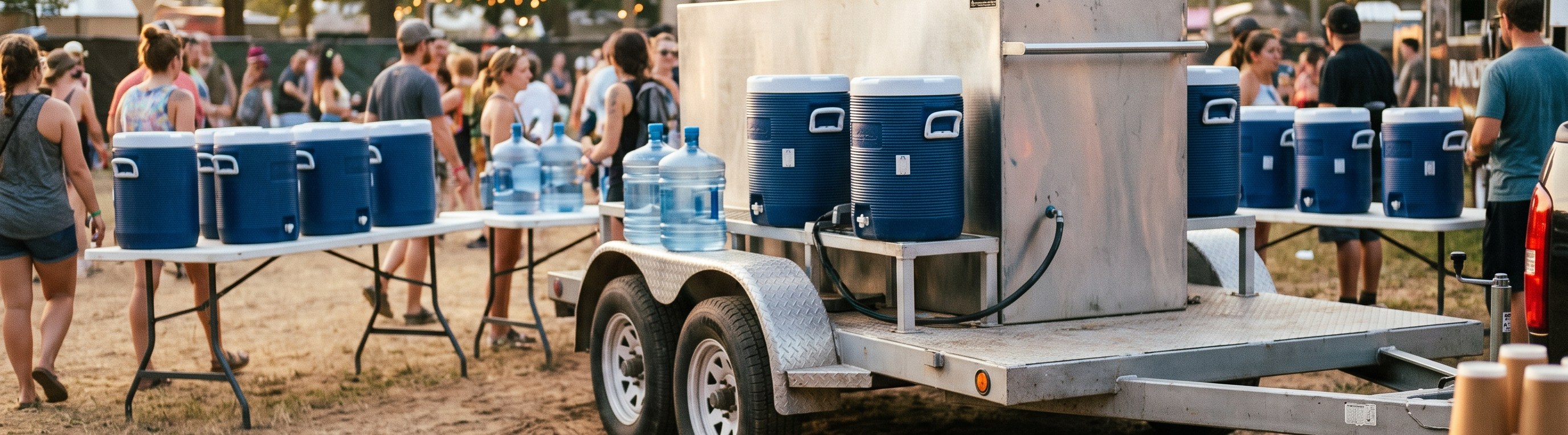
AMPAC USA Mobile Water Provisioning Systems range from luggage sized, hand-pulled weatherproof mini-water-production plants to self-contained enclosed trailers that can provide drinking water for a small city, temporarily or permanently. These systems are designed and structured carefully by the experienced engineers at AMPAC to ensure the perfect functioning of these systems. The capacity and capability of these systems is also taken into account as these are mostly used for emergency situations.
These mobile systems are frequently used in temporary projects to build certain facilities, and then are assigned to future projects for a similar water provisioning role. They are also used for "roving" water provisioning, such as along a route of coastal communities, stopping to fill storage tanks along the way.
For locations with limited or no access to an electrical power grid, optional diesel- or gasoline- driven power generators can be installed and calibrated by Ampac USA into a seamless system built on the same platform. These systems are capable of meeting the requirements of areas that are unfortunately struck with disaster or are declared as emergency areas. These are in fact ways of technology to meet the emergency situations where safe and drinkable water supply to the residents also becomes a matter of national concern.
Ampac USA has immense options for delivering these water provisioning systems with multiple options. These can also be customized according to the need of the client. You can fill our contact form for one of our representatives to get in touch with you or you can call us directly on the toll-free number 877-611-8530 for detailed assistance on our mobile water provisioning systems.
Most provisioning projects start from our standard mobile water treatment systems.
Frequently Asked Questions
What are mobile water provisioning systems used for?
Mobile water provisioning systems provide water storage and distribution capabilities where fixed infrastructure does not exist or has been destroyed. Applications include disaster relief operations supplying water to displaced populations, military forward operating base water supply, large outdoor events, and remote construction sites. Systems move water from a treatment source to end users efficiently and safely.
What sizes of water bladder tanks do you supply?
We supply collapsible water bladder tanks from 5,000 gallons up to 50,000 gallons. Smaller 5,000-10,000 gallon units can be transported on a pickup truck and deployed by two people in under an hour. Larger 50,000-gallon units arrive in a compact package that expands on site and can be operational within a day. All tanks use NSF-compliant materials for potable water contact.
How does a tanker truck fill station work?
A fill station consists of a metered, quick-connect outlet plumbed to a treated water source, with flow control valves and optional metering for water accounting. Tanker trucks connect via standard cam-lock or fire hose fittings, fill at rates of 100-500 GPM depending on pump capacity, then distribute water to storage points or directly to populations. Fill stations can serve multiple trucks simultaneously with manifolded outlets.
How is water quality maintained in bladder tank storage?
Maintaining water quality in storage requires an adequate disinfection residual (0.2-0.5 mg/L free chlorine for potable water) at the time of storage. Bladder tanks use UV-resistant materials and are fully covered to prevent algae growth and contamination. For extended storage beyond 24-48 hours, re-chlorination at the point of distribution is recommended. Tank materials are tested to prevent leaching into stored water.
Can gravity-fed distribution systems reach end users without pumps?
Gravity distribution works when the storage bladder or tank can be positioned at an elevation at least 30-50 feet above the distribution point, providing 13-22 PSI working pressure. On flat terrain, a small booster pump is required. Gravity systems are preferred for their simplicity and freedom from fuel dependence in prolonged operations. We design gravity and pump-assisted distribution networks based on site topography.
What quantity of water do these systems support per day?
SPHERE humanitarian standards call for minimum 15 liters (4 gallons) per person per day for basic survival, and 50 liters (13 gallons) per person for full household needs. A single 10,000 GPD mobile treatment system combined with 50,000-gallon bladder storage can supply basic water needs for approximately 2,500 people for 24 hours. We size provisioning systems to population and duration requirements.