

About Water Quality Monitoring Systems
Sizing a system? Send your flow rate and a feed-water analysis, and an AMPAC engineer will work out the configuration with you.
Water quality that cannot be measured cannot be controlled. Inline monitoring gives plant operators real-time visibility into RO system performance — catching membrane degradation, scaling, or fouling before product water goes out of specification.
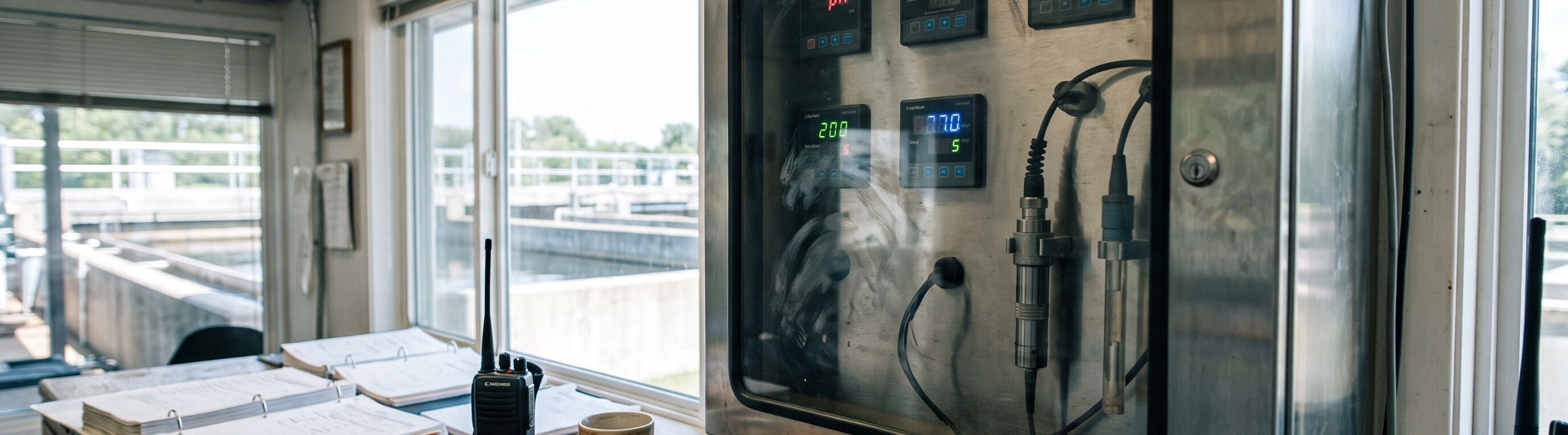
AMPAC USA offers a range of water quality monitoring instruments including TDS and conductivity meters, pH and ORP sensors, flow meters, and multi-parameter panels designed to mount directly on RO skids or in wall-mount enclosures. Instruments are available with 4–20 mA analog outputs and relay contacts for integration with SCADA systems and building management platforms.
For pharmaceutical, semiconductor, and power generation applications where water quality documentation is a regulatory requirement, AMPAC can integrate data logging and alarm functions that record measurement history with time stamps. Sensors are calibrated before shipment and come with NIST-traceable calibration certificates on request.
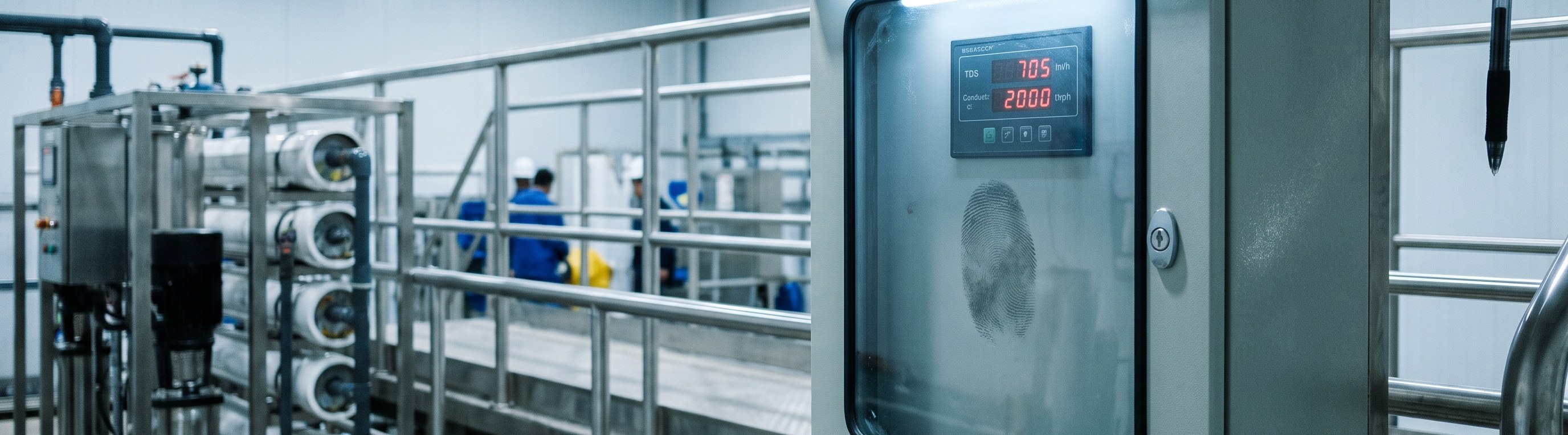
Beyond system performance monitoring, inline TDS meters at the point of dispense — water stores, office coolers, bottling lines — give end users confidence in the water quality they're receiving. AMPAC installs dual-reading meters on many commercial systems: one on the RO permeate to monitor membrane performance, one on the product tap to confirm post-treatment polishing is performing as intended. When readings diverge, operators have a clear signal that something needs attention before the water quality issue becomes visible to customers.
Contact AMPAC USA at (909) 548-4900 to discuss water quality monitoring equipment for your system or facility.
Frequently Asked Questions
What parameters can AMPAC USA online water quality monitors measure continuously?
Our monitoring systems cover TDS, conductivity, pH, ORP, turbidity, temperature, free chlorine, dissolved oxygen, and flow rate, either as standalone instruments or as a multi-parameter panel. Continuous online monitoring catches process deviations in real time instead of waiting for periodic grab samples to reach the lab. Most units log data locally and support remote access via cellular or Ethernet.
What is the difference between TDS and conductivity measurements, and which should I use?
Conductivity measures the electrical conductance of ions in solution directly and is expressed in microsiemens per centimeter. TDS is derived by multiplying conductivity by a conversion factor, typically 0.5-0.7, and represents an estimate of dissolved solids in mg/L. For process control, conductivity is more accurate because the conversion factor varies with ion composition; TDS as a number is more intuitive for communicating results to non-technical personnel.
How accurate are your inline chlorine sensors compared to colorimetric test kits?
Our amperometric chlorine sensors measure free chlorine within 0.05 mg/L accuracy over a 0-5 mg/L range, which is tighter than most manual DPD colorimetric methods. They respond to changes within seconds, making them suitable for controlling chlorine dosing pumps in real time. Test kits remain useful for calibration checks and field verification but cannot match the continuous monitoring that automated sensors provide.
Can water quality monitors be integrated with existing SCADA or building management systems?
Yes. Our monitors output 4-20 mA analog signals, Modbus RTU/TCP, or BACnet depending on the model, which are the standard protocols used by most SCADA, PLC, and BMS platforms. We also offer cloud-connected units that log data to a web dashboard and send email or SMS alerts when readings cross user-defined thresholds. Integration with existing systems is supported during commissioning.
What maintenance do online water quality sensors require to stay accurate?
Conductivity and TDS sensors need periodic cleaning when fouling is present and calibration verification against a traceable standard every 3-6 months. Chlorine and pH sensors require more attention: membrane replacement every 1-3 months for amperometric chlorine probes, and pH electrode replacement every 6-12 months under continuous service. Our monitors log calibration history so auditors can verify compliance without paper records.