
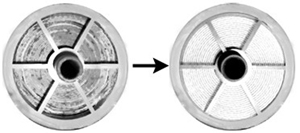
 Reverse Osmosis Membrane Elements becomes fouled by microorganisms, mineral scaling, suspended solids in feed water supplies. These contaminants deposits build up during normal operation and cause loss membrane clogging, reduce water output production, and as well reduce membrane rejection efficiency. Regular cleaning improve performance, extends membrane life, and maintain permeate water quality.
Membrane Cleaning Chemicals Is Custom-Built
Membrane Cleaning Chemicals requires advanced, engineered-to-order equipment built around your exact water conditions, flow rate, and site requirements — that’s why we don’t list generic units online. Request a quote and one of our engineers will call you to walk through your application and build a solution designed specifically for it.
Frequently Asked Questions
What types of CIP chemicals are used for RO membrane cleaning?
CIP cleaning uses alkaline cleaners (pH 11-12) to remove biofouling and organic deposits, and acid cleaners (pH 2-3) to dissolve calcium carbonate scale, iron oxides, and metal precipitates. Enzyme-based formulas address protein fouling in food-grade applications. Using the wrong cleaner type can damage membranes or set fouling deposits permanently.
How do I know when my RO membranes need chemical cleaning?
Clean membranes when normalized permeate flow drops 10-15%, normalized salt passage increases 10-15%, or normalized differential pressure rises 15% from baseline values. These thresholds are calculated by correcting raw performance data for feed pressure and temperature. Waiting too long makes cleaning less effective and shortens membrane life.
Are your cleaning chemicals compatible with FILMTEC, Hydranautics, and Toray membranes?
Yes. Our alkaline cleaners are formulated within the pH 11-12 range at 35 degrees C maximum, which is within the tolerance envelope for FILMTEC, Hydranautics, Toray, and CSM elements. Acid cleaners are maintained at pH 2-3. We provide compatibility data sheets with each product. Always check the membrane manufacturer's current cleaning guidelines before proceeding.
What is a typical CIP cleaning procedure using your chemicals?
A standard CIP sequence involves flushing the system with permeate water, recirculating alkaline cleaner at low flow for 60-90 minutes at 25-35 degrees C, flushing again, then repeating with acid cleaner if scale is present. Total process time is 3-6 hours. Detailed step-by-step protocols matched to your fouling type are included with each chemical order.
How much CIP chemical do I need per cleaning cycle?
Chemical volume depends on your pressure vessel count and element configuration. A typical 8040 six-element vessel holds roughly 40 gallons of solution volume in the recirculation loop. We calculate required chemical quantities based on your system size and provide dosing tables. Most industrial systems use 10-50 gallons of cleaning solution per cleaning pass.
Can citric acid be used instead of proprietary acid cleaners?
Citric acid (2% solution) is effective for light carbonate scale and is safe for most polyamide membranes. It is less aggressive than EDTA-based or hydrochloric acid formulas. For heavy iron fouling or silica deposits, a purpose-formulated acid cleaner with chelating agents works significantly better. We can recommend the right product based on your feed water chemistry and fouling history.