


Models
-
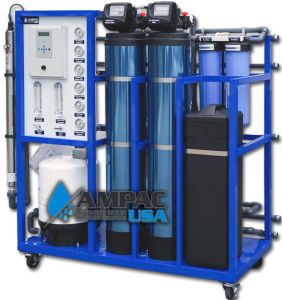
AP2200-LX
Commercial Turnkey Reverse Osmosis
2,200 GPD 8.3 m³/Day
View specifications -
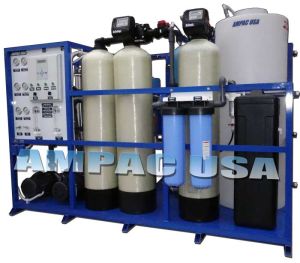
AP6000-SM-LX
Industrial Reverse Osmosis
6,000 GPD 22.7 m³/Day
View specifications -
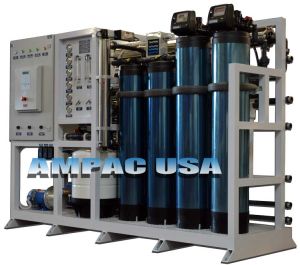
AP8000-LX-1
Industrial Reverse Osmosis
8,000 GPD 30.2 m³/Day
View specifications -
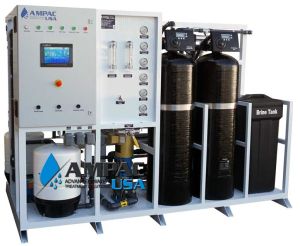
AP10K-LX
Industrial Reverse Osmosis
10,000 GPD 1.6 m³/hr
View specifications -
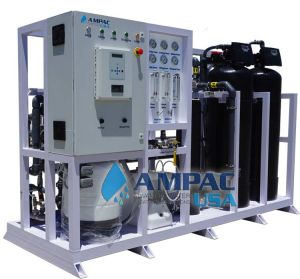
AP12K-LX
Industrial Reverse Osmosis
12,000 GPD 1.9 m³/hr
View specifications -
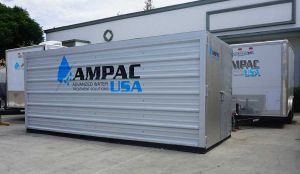
AP20K-LX-C
Emergency Portable Reverse Osmosis
20,000 GPD 3.18 m³/hr
View specifications -
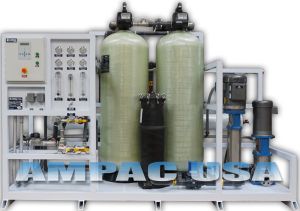
AP20K-LX
Industrial Reverse Osmosis
20,000 GPD 3.18 m³/hr
View specifications -
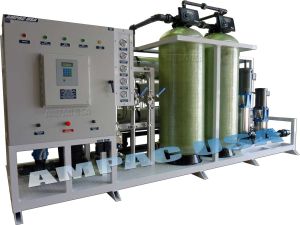
AP25K-LX
Industrial Reverse Osmosis
25,000 GPD 4.0 m³/hr
View specifications -
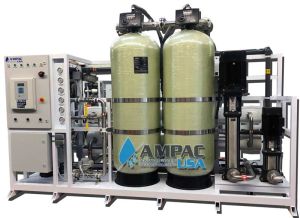
AP30K-LX
Industrial Reverse Osmosis
30,000 GPD 4.75 m³/hr
View specifications -
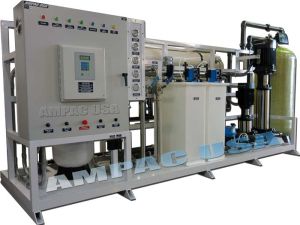
AP40K-LX
Industrial Reverse Osmosis
40,000 GPD 6.30 m³/hr
View specifications -
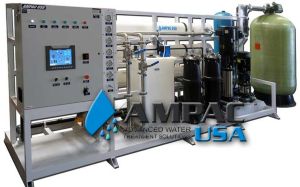
AP60K-LX
Industrial Reverse Osmosis
60,000 GPD 9.5 m³/hr
View specifications -
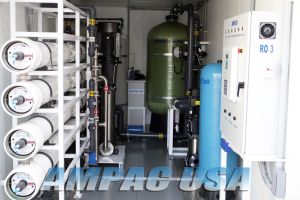
BWRO80K-LX
Mobile Turnkey Reverse Osmosis Water Purification
80,000 GPD 12.6 m³/hr
View specifications -
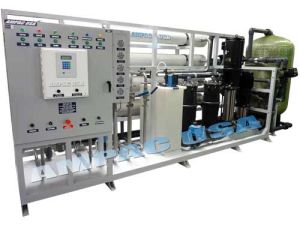
AP80K-LX
Industrial Reverse Osmosis
80,000 GPD 12.6 m³/hr
View specifications -
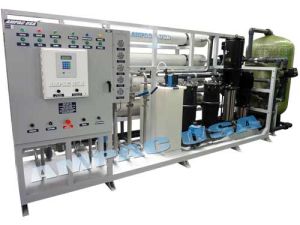
AP100K-LX
Industrial Reverse Osmosis
100,000 GPD 15.8 m³/hr
View specifications -
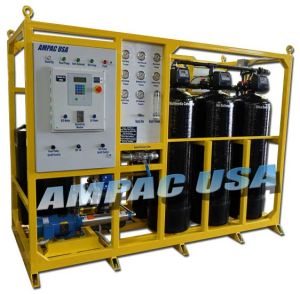
SWRO10K-C1D2
Off-Shore Sea Water Desalination Watermaker SW10K-C1D2
View specifications
Need an output between two models, or a different feed water? Send us your numbers
About Mining Water Treatment Systems
Sizing a system? Send your flow rate and a feed-water analysis, and an AMPAC engineer will work out the configuration with you.
Mining operations consume water at every stage of production - drilling, blasting, ore processing, dust suppression, and camp supply for workers in remote locations. The source water is rarely clean. Mine sites often draw from brackish groundwater reservoirs, surface water with high turbidity and mineral content, or recycled process water carrying heavy metals, suspended solids, and industrial chemicals. Treatment requirements vary by the end use, but none of them tolerate unprocessed source water.
AMPAC USA has supplied water treatment systems to mining operations on six continents, including some of the largest copper and gold mining sites in the world. At remote sites without reliable access to municipal water, AMPAC watermakers and brackish water reverse osmosis systems serve as the primary fresh water supply for camp operations, process water, and equipment washing. Systems are designed for operation by non-specialist personnel, with automated controls that handle routine adjustments without constant operator attention.
Process water for mineral extraction and ore beneficiation requires specific quality standards that vary by mineral type and process chemistry. Froth flotation operations require water with controlled pH and low dissolved salts. Electrowinning for copper and precious metals requires low-TDS process water to control current efficiency and product purity. AMPAC designs process water treatment to match the specific mineral processing chemistry in use at each operation.
Wastewater from mine tailings and process drainage carries heavy metals, sulfates, and suspended solids that require treatment before discharge or reuse. AMPAC designs mine wastewater treatment systems including sedimentation, pH neutralization, heavy metal precipitation, and membrane filtration for reclaim water reuse. Where discharge to surface water requires permit compliance, AMPAC provides systems engineered to the applicable discharge limits.
Contact AMPAC USA at (909) 548-4900 to discuss water supply and treatment for your mining operation. Our team can work from your site water analysis and process flow diagram to specify the right system.
Frequently Asked Questions
What makes acid mine drainage particularly difficult to treat with standard water systems?
Acid mine drainage is characterized by pH as low as 2-3, dissolved iron concentrations up to several hundred ppm, and heavy metals including arsenic, lead, cadmium, and zinc at levels that can exceed discharge limits by orders of magnitude. Standard RO membranes are not pH-compatible with raw AMD and require upstream pH adjustment to above 6.0 before membrane treatment is feasible. AMPAC USA designs mine water treatment systems with staged chemical treatment, precipitation, and clarification before the membrane array.
What treatment process is used to remove heavy metals from mine process water?
Heavy metals are most cost-effectively removed by raising pH to between 8.5 and 10 with lime or caustic soda, which precipitates metals as hydroxides that can then be settled and filtered. The specific pH target varies by metal: iron precipitates near pH 7, while arsenic and cadmium require pH above 9 for effective removal. Following chemical precipitation, RO or nanofiltration provides a polishing stage to achieve discharge or reuse quality.
Can AMPAC USA systems achieve zero liquid discharge for mine dewatering operations?
ZLD for mine dewatering is achievable but capital-intensive, typically using RO to concentrate reject, followed by a brine concentrator and crystallizer to produce a dry solid waste stream. The economics depend heavily on water disposal costs, regulatory pressure, and the value of recovered water for process reuse. Our project team evaluates ZLD feasibility against conventional high-recovery RO systems to help mining operators choose the approach that meets compliance requirements at the lowest lifecycle cost.
How is water treated for reuse in mineral processing and flotation circuits?
Flotation circuit water reuse requires controlling reagent carryover, particularly residual frothers and collectors that can depress recovery in subsequent flotation stages if recycled without treatment. Clarification and filtration to remove solids below 50 ppm total suspended solids is usually sufficient for coarse reuse, while RO or ultrafiltration is needed for applications sensitive to dissolved reagents. AMPAC USA sizes process water recovery systems for the high flow rates typical in large-scale mineral processing, often in the millions of GPD range.
What are the power and infrastructure requirements for remote mine water treatment systems?
Remote mine sites often lack reliable grid power, so our systems for mine applications are available in diesel-generator-compatible configurations and can be containerized for transport by truck or helicopter to inaccessible sites. A 50,000 GPD mine water treatment system requires approximately 30-50 kW at steady state depending on source water chemistry and treatment complexity. We design for minimal operator intervention through automated chemical dosing, remote monitoring, and alarm notification via satellite.