

Models
-
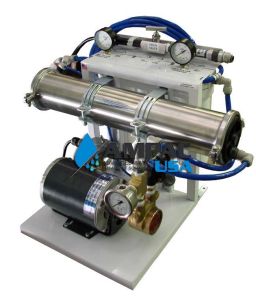
APRO800-1
Commercial Reverse Osmosis
800 GPD 3000 LPD
View specifications -
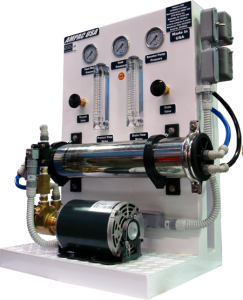
APRO1000
Commercial Reverse Osmosis
1,000 GPD 3780 LPD
View specifications -
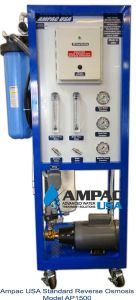
AP1500
Commercial Reverse Osmosis
1,500 GPD 5670 LPD
View specifications -
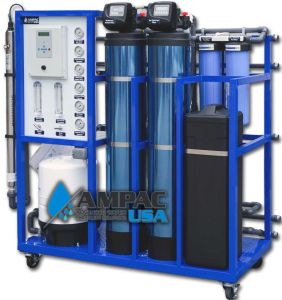
AP1500-LX
Commercial Turnkey Reverse Osmosis
1,500 GPD 5.7 m³/Day
View specifications -
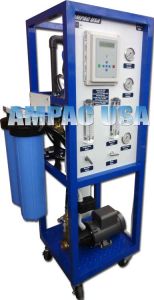
AP2200
Commercial Reverse Osmosis
2,200 GPD 8300 LPD
View specifications -
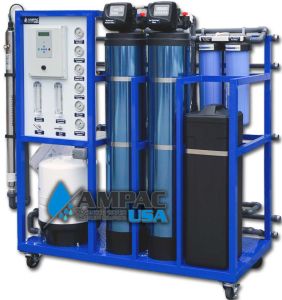
AP2200-LX
Commercial Turnkey Reverse Osmosis
2,200 GPD 8.3 m³/Day
View specifications -
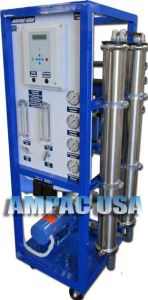
APRO3000
Commercial Reverse Osmosis
3,000 GPD 11,350 LPD
View specifications -
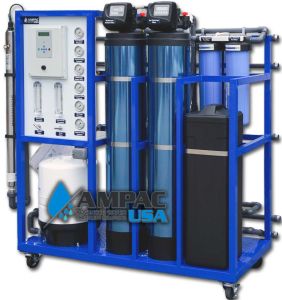
AP4400-LX
Commercial Turnkey Reverse Osmosis
4,400 GPD 16.7 m³/Day
View specifications -
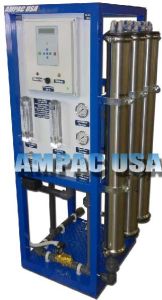
APRO6000
Commercial Reverse Osmosis
6,000 GPD 22,750 LPD
View specifications -
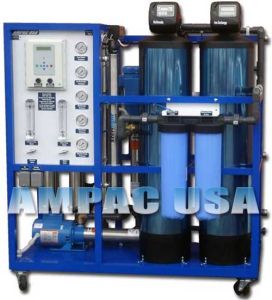
AP6000-LX
Commercial Turnkey Reverse Osmosis
6,000 GPD 22.7 m³/Day
View specifications -
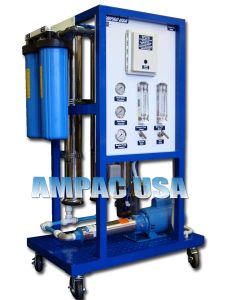
APRO8000
Commercial Reverse Osmosis
8,000 GPD 30,000 LPD
View specifications -
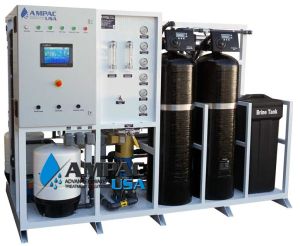
AP10K-LX
Industrial Reverse Osmosis
10,000 GPD 1.6 m³/hr
View specifications -
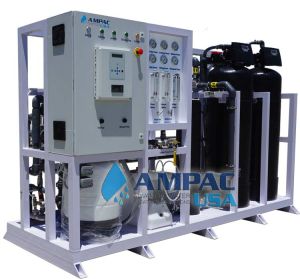
AP12K-LX
Industrial Reverse Osmosis
12,000 GPD 1.9 m³/hr
View specifications -
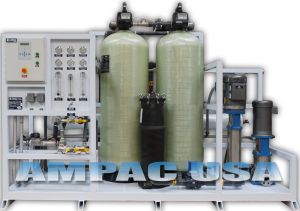
AP20K-LX
Industrial Reverse Osmosis
20,000 GPD 3.18 m³/hr
View specifications -
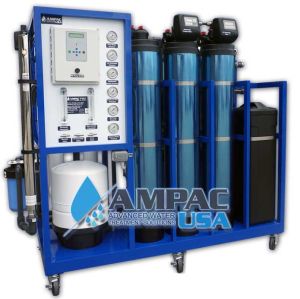
AP3000-LX-ALK
Alkaline Water Reverse Osmosis AP3000-LX-ALK
View specifications -
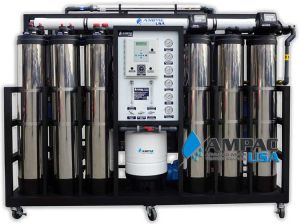
AP4000-SM
Super Water Store Reverse Osmosis AP4000-SM
View specifications -
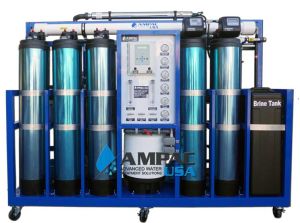
AP3000-SM
Super Water Store Reverse Osmosis AP3000-SM
View specifications
Need an output between two models, or a different feed water? Send us your numbers
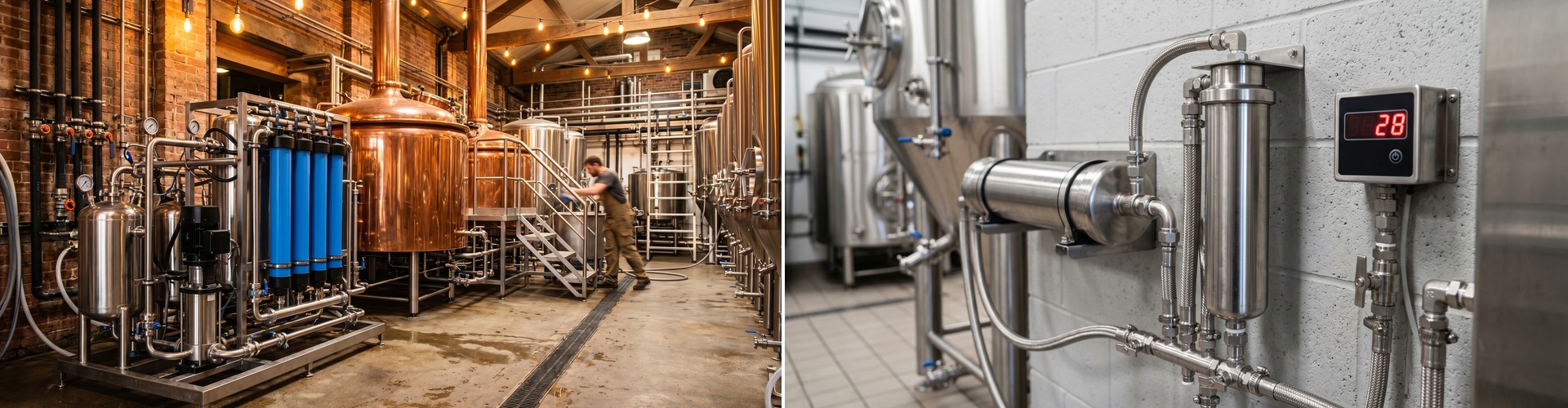
About Water Treatment for Breweries & Distilleries
Sizing a system? Send your flow rate and a feed-water analysis, and an AMPAC engineer will work out the configuration with you.
Water is the primary ingredient in beer — typically 90 to 95 percent of the finished product by volume — and its chemistry directly shapes flavor, mouthfeel, and consistency. Every classic beer style developed in a specific region because the local water happened to suit it. Burton-on-Trent's hard sulfate-rich water made it the home of pale ales. Pilsen's exceptionally soft water shaped the light, clean lager style the world later copied. Modern craft breweries don't rely on geography. They control their water profile to brew any style consistently, batch after batch.
This means removing what's in the tap water first, then adding back only what the recipe calls for. Municipal water supplies contain chlorine or chloramine, which kills yeast activity and imparts medicinal off-flavors that persist through fermentation. Dissolved minerals at the wrong concentrations affect enzyme activity during mashing, pH stability, and final flavor. High TDS water that works for one style ruins another. The starting point for process water in a well-run craft brewery is nearly pure — and the brewer adds back specific mineral additions to match the target water profile.
AMPAC USA designs water treatment systems specifically for craft brewery and micro-brewery applications. A typical brewery system starts with activated carbon to eliminate chlorine and chloramines, followed by a commercial RO system to remove dissolved minerals and produce clean base water. Mineral addition kits or in-line dosing then allow the brewer to dial in the exact water chemistry for each beer. For boiler feed water — used to heat the mash tun and kettle — AMPAC supplies softened and deaerated water to prevent scale and corrosion that shortens boiler service life.
Beyond process water, AMPAC systems handle CIP (clean-in-place) water for tank and line cleaning, cooling tower makeup for fermentation temperature control, and in some operations, wastewater treatment for process water discharge compliance. AMPAC has installed brewing water systems in craft breweries across the United States and internationally.
Contact AMPAC USA at (909) 548-4900 to discuss water treatment for your brewery. Bring your water report and your target beer styles, and our engineers will specify the right system from the start.
Frequently Asked Questions
Why do most craft brewers use RO water instead of building recipes on local tap water?
Municipal tap water varies in mineral content from city to city and even season to season, making it impossible to brew the same beer consistently without controlling the water chemistry. RO removes 95-98% of dissolved minerals, giving the brewer a near-blank-slate water at 5-15 ppm TDS to which specific minerals can be added in measured amounts for each beer style. Our brewery RO systems include a blend bypass valve so brewers can dial in a target TDS without going to full strip.
What minerals are commonly added back to RO water for different beer styles?
The classic mineral additions are calcium sulfate for dry, hoppy ales where sulfate accentuates bitterness, and calcium chloride for malt-forward lagers and stouts where chloride rounds out mouthfeel. Most recipes target calcium at 50-150 ppm, sulfate at 50-300 ppm for hoppy styles, and chloride at 50-150 ppm for malty styles, with exact ratios driven by the brewer's target flavor profile. AMPAC USA systems give brewers the consistent, mineral-free starting point that makes these additions repeatable batch to batch.
How large of an RO system does a microbrewery typically need?
A 3-barrel brewhouse brewing 4-5 times per week needs roughly 500-1,000 GPD of RO capacity, while a 15-barrel production brewery running daily may require 3,000-7,000 GPD when accounting for brewing liquor, cleaning water, and boiler makeup. Storage tank sizing matters as much as membrane capacity since brew day water demand is concentrated into a few hours. We size brewery systems with at least one day's brewing volume in pressurized storage so the RO unit can catch up overnight.
What pretreatment does a brewery RO system need to protect membrane life?
At minimum, brewery RO systems require a 5-micron sediment filter and a carbon block or catalytic carbon filter to remove chlorine and chloramines before the membrane. Chlorine above 0.1 ppm degrades polyamide RO membranes rapidly, and chloramines are more damaging than free chlorine because catalytic carbon is required to remove them effectively rather than standard activated carbon. AMPAC USA brewery systems include the correct carbon media matched to your utility's disinfection method.
Does RO water affect yeast health or fermentation performance?
Very low mineral content water, below 50 ppm calcium, can stress yeast and cause sluggish fermentation, haze issues, and poor flocculation. Calcium above 50 ppm supports yeast health, enzyme activity, and protein precipitation during the boil. This is why our systems are designed to allow mineral addition post-RO rather than targeting absolute zero TDS; the brewer controls the final chemistry intentionally rather than accepting whatever the tap delivers.