
Models
-
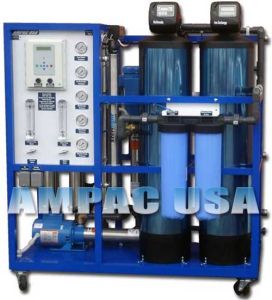
AP6000-LX
Commercial Turnkey Reverse Osmosis
6,000 GPD 22.7 m³/Day
View specifications -
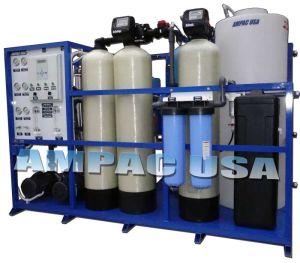
AP6000-SM-LX
Industrial Reverse Osmosis
6,000 GPD 22.7 m³/Day
View specifications -
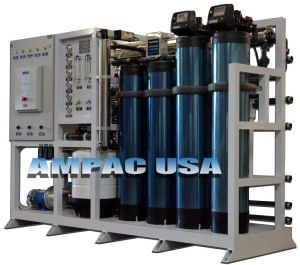
AP8000-LX-1
Industrial Reverse Osmosis
8,000 GPD 30.2 m³/Day
View specifications -
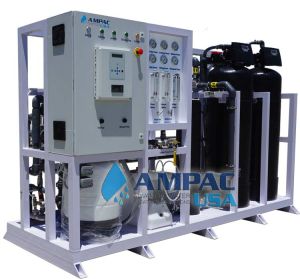
AP12K-LX
Industrial Reverse Osmosis
12,000 GPD 1.9 m³/hr
View specifications -
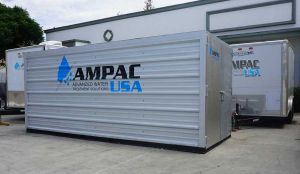
AP20K-LX-C
Emergency Portable Reverse Osmosis
20,000 GPD 3.18 m³/hr
View specifications -
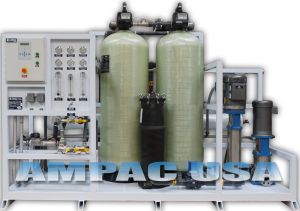
AP20K-LX
Industrial Reverse Osmosis
20,000 GPD 3.18 m³/hr
View specifications -
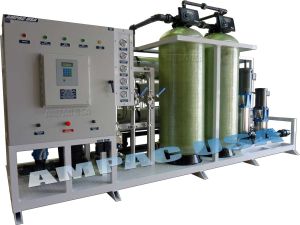
AP25K-LX
Industrial Reverse Osmosis
25,000 GPD 4.0 m³/hr
View specifications -
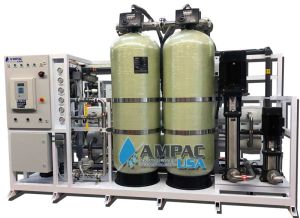
AP30K-LX
Industrial Reverse Osmosis
30,000 GPD 4.75 m³/hr
View specifications -
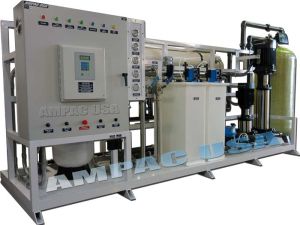
AP40K-LX
Industrial Reverse Osmosis
40,000 GPD 6.30 m³/hr
View specifications -
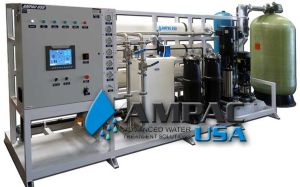
AP60K-LX
Industrial Reverse Osmosis
60,000 GPD 9.5 m³/hr
View specifications -
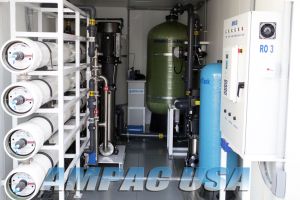
BWRO80K-LX
Mobile Turnkey Reverse Osmosis Water Purification
80,000 GPD 12.6 m³/hr
View specifications -
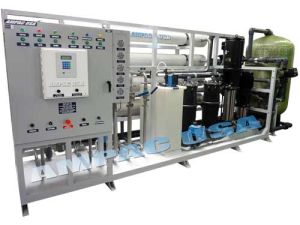
AP80K-LX
Industrial Reverse Osmosis
80,000 GPD 12.6 m³/hr
View specifications -
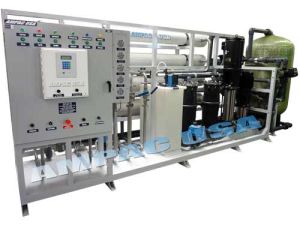
AP100K-LX
Industrial Reverse Osmosis
100,000 GPD 15.8 m³/hr
View specifications
Need an output between two models, or a different feed water? Send us your numbers
About Boiler Makeup Water Treatment Systems
Sizing a system? Send your flow rate and a feed-water analysis, and an AMPAC engineer will work out the configuration with you.
Scale buildup inside boiler tubes is one of the leading causes of boiler failure. A deposit just 1/16-inch thick on heat transfer surfaces increases fuel consumption by approximately 12%, and at higher pressures even thin scale can cause tube rupture. The American Boiler Manufacturers Association (ABMA) publishes water quality guidelines for steam boilers by operating pressure — at 600 psig, total dissolved solids in the feedwater must be below 150 ppm, with hardness at zero and silica below 0.3 ppm.
AMPAC USA designs reverse osmosis systems specifically for boiler feedwater applications. Systems are sized by steam output requirements, blowdown rate, and local makeup water TDS to ensure the RO permeate consistently meets the target water quality specification. Where operating pressure demands it, a mixed-bed deionization polisher is added downstream to achieve resistivity above 1 megohm-cm.
Pre-treatment is matched to the source water: softening for hard groundwater, carbon filtration for chlorinated municipal supply, and antiscalant dosing to protect membranes. All systems include a conductivity meter on the permeate line so operators can monitor feedwater quality continuously and catch membrane degradation before it affects boiler performance.
For plants operating multiple boilers at different pressure ratings, AMPAC designs zoned distribution systems that deliver different water quality grades to different service points from a single treatment skid. High-pressure boilers receive fully deionized water while lower-pressure units and domestic hot water systems receive softened or RO-treated water. This approach minimizes treatment cost while meeting the specification at every point of use.
Contact AMPAC USA at (909) 548-4900 to discuss boiler makeup water treatment for your facility. Provide your boiler operating pressure and current makeup water analysis and we'll specify the right system.
Frequently Asked Questions
Why is softened water not sufficient for high-pressure boiler feedwater?
Softening removes hardness minerals but leaves dissolved solids like sodium, bicarbonates, and silica in the water. At boiler operating temperatures above 200 degrees F, these residuals concentrate rapidly and cause carryover, foaming, and silica scaling on turbine blades. AMPAC USA recommends RO as the primary treatment stage, reducing TDS by 95-99% before water enters the boiler system.
What TDS level should boiler makeup water reach before entering a high-pressure boiler?
ASME guidelines for boilers operating above 600 psi specify feedwater TDS below 0.1 ppm, which requires RO followed by mixed-bed deionization. For low-pressure boilers under 150 psi, many operators target feedwater TDS under 50 ppm. Our systems are sized to hit these targets based on your specific boiler rating and duty cycle.
How does silica in feed water damage a boiler system?
Silica forms an extremely dense, glass-like scale on heat transfer surfaces that has roughly 10 times the insulating effect of calcium carbonate scale. Even a 1/8-inch silica deposit can increase fuel consumption by 25% and create hot spots that crack boiler tubes. RO membranes reject silica at 85-95% depending on pH, and a downstream polisher brings it to near-zero.
How do we size an RO system for boiler makeup when steam demand varies seasonally?
We size to peak demand plus a 20-25% buffer, then use a product storage tank to handle swing loads without oversizing the membrane array. A 10,000 GPD boiler makeup system with a 5,000-gallon storage tank can satisfy peak draws of 20,000 GPD for short periods. Variable-frequency drives on the high-pressure pump reduce energy consumption during low-demand periods.
What pretreatment does a boiler makeup RO system typically require?
At minimum, a 5-micron sediment filter and carbon block to protect membranes from chlorine degradation are required. Hard water above 7 grains per gallon benefits from a softener ahead of the RO to extend membrane service life. If your source water contains iron above 0.1 ppm, an oxidizing filter or iron removal step is necessary before the softener stage.