
Models
-
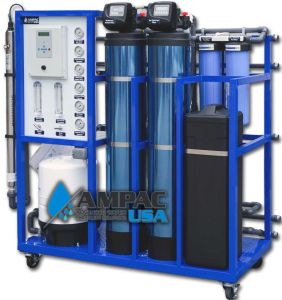
AP1500-LX
Commercial Turnkey Reverse Osmosis
1,500 GPD 5.7 m³/Day
View specifications -
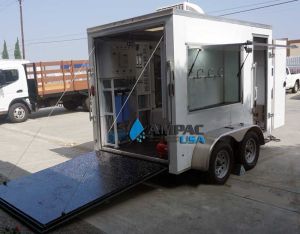
TR-3000
Mobile Trailer Reverse Osmosis
3,000 GPD 11.4 m³/hr
View specifications -
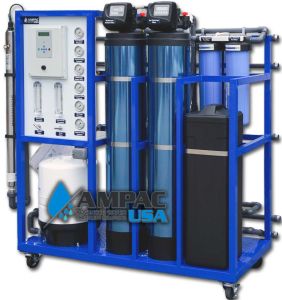
AP4400-LX
Commercial Turnkey Reverse Osmosis
4,400 GPD 16.7 m³/Day
View specifications -
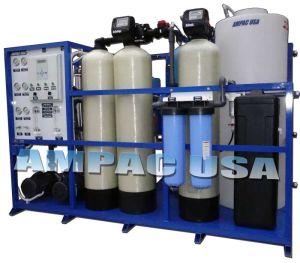
AP6000-SM-LX
Industrial Reverse Osmosis
6,000 GPD 22.7 m³/Day
View specifications -
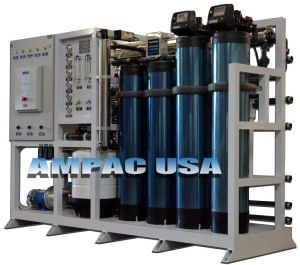
AP8000-LX-1
Industrial Reverse Osmosis
8,000 GPD 30.2 m³/Day
View specifications -
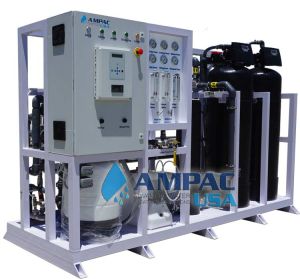
AP12K-LX
Industrial Reverse Osmosis
12,000 GPD 1.9 m³/hr
View specifications -
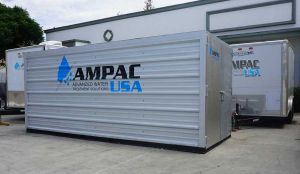
AP20K-LX-C
Emergency Portable Reverse Osmosis
20,000 GPD 3.18 m³/hr
View specifications -
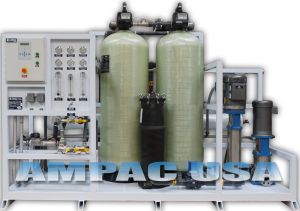
AP20K-LX
Industrial Reverse Osmosis
20,000 GPD 3.18 m³/hr
View specifications -
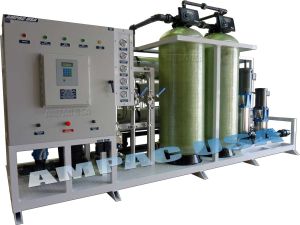
AP25K-LX
Industrial Reverse Osmosis
25,000 GPD 4.0 m³/hr
View specifications -
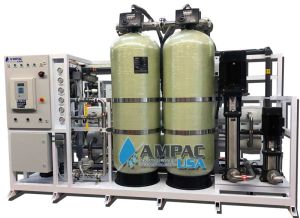
AP30K-LX
Industrial Reverse Osmosis
30,000 GPD 4.75 m³/hr
View specifications -
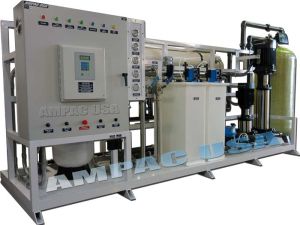
AP40K-LX
Industrial Reverse Osmosis
40,000 GPD 6.30 m³/hr
View specifications -
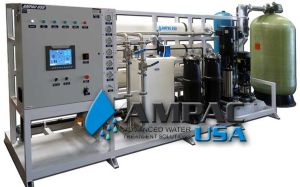
AP60K-LX
Industrial Reverse Osmosis
60,000 GPD 9.5 m³/hr
View specifications -
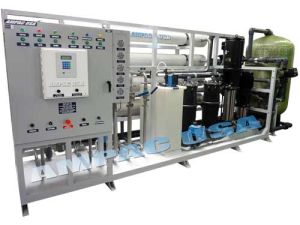
AP80K-LX
Industrial Reverse Osmosis
80,000 GPD 12.6 m³/hr
View specifications -
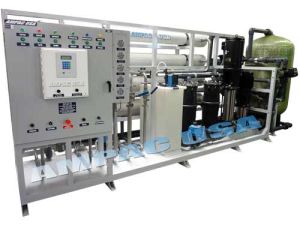
AP100K-LX
Industrial Reverse Osmosis
100,000 GPD 15.8 m³/hr
View specifications -
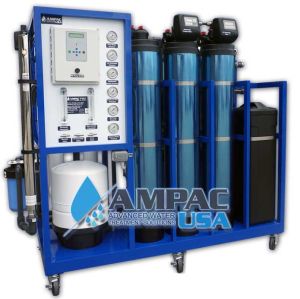
AP3000-LX-ALK
Alkaline Water Reverse Osmosis AP3000-LX-ALK
View specifications
Need an output between two models, or a different feed water? Send us your numbers
About Custom Solutions
Sizing a system? Send your flow rate and a feed-water analysis, and an AMPAC engineer will work out the configuration with you.
Water Analysis and Project Planning:
Ampac USA System and Process Engineers, Design and Fabricate Water Purification, Water Treatment Solutions, and Seawater Desalination watermakers as per Client's Feed Water Analysis, Requirements and Conditions. This process can take a few days to achieve your solution as comprehensive as possible. Below are the simplified steps that Ampac USA takes in designing Water Purification and Water Treatmenrt Equipment to solve customers' water problems. The Ampac USA applications engineers carefully analyze and consult with our expert design team to engineer a custom solution tailored to fit the specific needs of your project. At this stage Ampac USA Engineers will determine the system that will be appropriate for your water conditions.
Design & Engineering:
A perfect System design begins with a P&ID (Initial Process & Instrumentation diagram), which will lead to a correct system design and flow. Ampac USA design team details out the necessary components to each system in a timely manner while giving the upmost attention to accuracy. Our team extensive experience in mechanical, chemical and electrical engineering will create a design suited to your application. Once the design is established, Ampac USA will provide a budgetary proposal based on the needs of the application. Ampac USA takes customer demand in to consideration in providing the most competitive pricing.
Manufacturing Process:
Once Ampac USA is awarded the project it then moves into the manufacturing process. Ampac USA assigns one of its engineers as a project manager who is designated to oversee the project from start to completion.
At this point, Ampac USA will ensure that the system is built exactly to specification and that all quality control measures are met using good industrial practice and following components manufacturer's guidlines for every component.
Ampac USA technical ability and flexibility in process and manufacturing allows us to accommodate the most complex water purification and seawater desalination applications.
Quality Assurance:
We take pride in our attention to detail with our customers requirement, best design, best materials and excellent workmanship is applied and specified according to the world wide recognized industry practices to ensure reliability, durability, and easy maintenance.
Ampac USA delivers water purification and water treatment systems. During the manufacturing process and after completion every system is tested under the toughest conditions for a minumum of 72 hours, then overseen and certified by both project manager and our quality control team. This provides our customers with the confidence and reliability expected from Ampac USA.
Customer satisfaction is always what we are looking for at Ampac USA. Ensuring that all specifications have been met before shipping is mandatory. Once the system and/or equipment has met our thorough quality assurance requirements, Ampac USA shipping department ensures that everything is professionally and carefully packaged, crated and ready for shipping.
On-Site Startup & Troubleshooting:
Ampac USA will always be available for systems start up, commissioning, training and after sales support support, including consumables, spare parts and service for the operational life of the system to be agreed upon after the first year. If RO operation does not meet the specifications listed above, Ampac USA will be able to respond with product support in a timely manner.
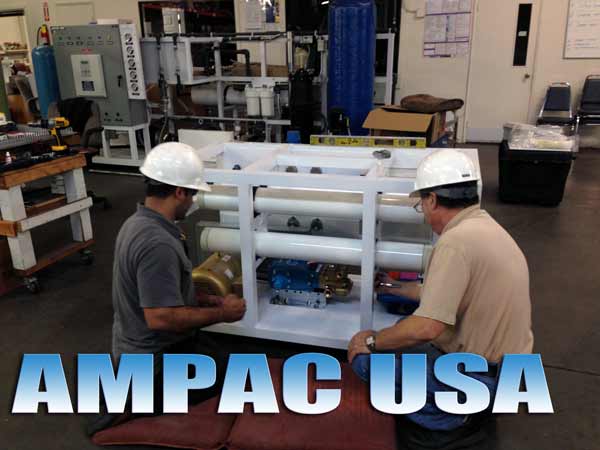
Ampac USA Quality Control Team
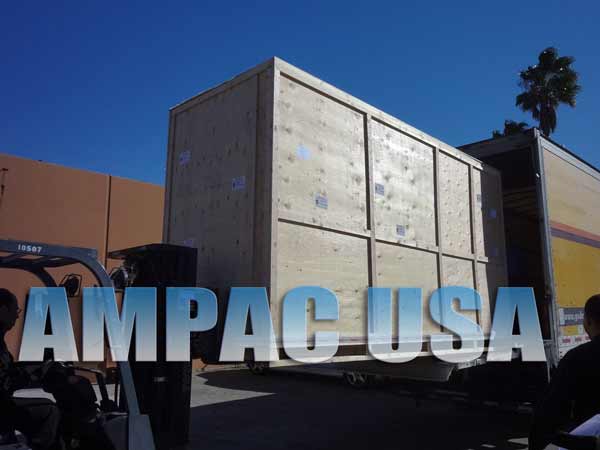
Ampac USA Systems Fully Crated Staged for Export
Frequently Asked Questions
What does the design process look like for a custom AMPAC USA water treatment system?
We start with a detailed water analysis of your source water and a review of your treated water specifications, flow rate requirements, site constraints, and regulatory environment. From that data we develop a process flow diagram, equipment sizing calculations, and a written proposal before any fabrication begins. Most custom projects go from initial inquiry to approved design in 2-4 weeks depending on complexity.
What feed water types can AMPAC USA custom systems address?
Our engineers have designed systems treating municipal feed, brackish groundwater, seawater, industrial process water, agricultural runoff, mine drainage, and produced water from oil and gas operations. Each source presents a different contaminant matrix and recovery target, and the treatment train is built specifically for those conditions rather than adapted from a standard product line. Call (909) 548-4900 to discuss your specific water quality challenge.
Can AMPAC USA handle projects that require multiple treatment technologies in series?
Yes. Complex water treatment often requires combining softening, clarification, media filtration, activated carbon, RO, UV disinfection, and chemical dosing in a single integrated system. We engineer, fabricate, and test these multi-stage systems as complete packages, and our controls integrate all treatment stages under a single HMI so operators manage the whole process from one screen.
What flow rate range do your custom engineered systems cover?
Our custom systems range from 1 GPM point-of-use skids for laboratories and medical facilities up to 5,000 GPM municipal and industrial plants. Mid-range systems between 10 and 500 GPM represent the most common requests, and we have standard skid footprints and control architectures that reduce engineering time and cost for projects in that range.
How does AMPAC USA handle installation and commissioning for custom projects?
We deliver fully assembled, factory-tested skids that arrive wired, piped, and ready for connection to site utilities. Our commissioning engineers travel to the site for startup, verify performance against the guaranteed specifications, and train operating staff before leaving. We document as-built drawings and provide operations and maintenance manuals as part of every project.