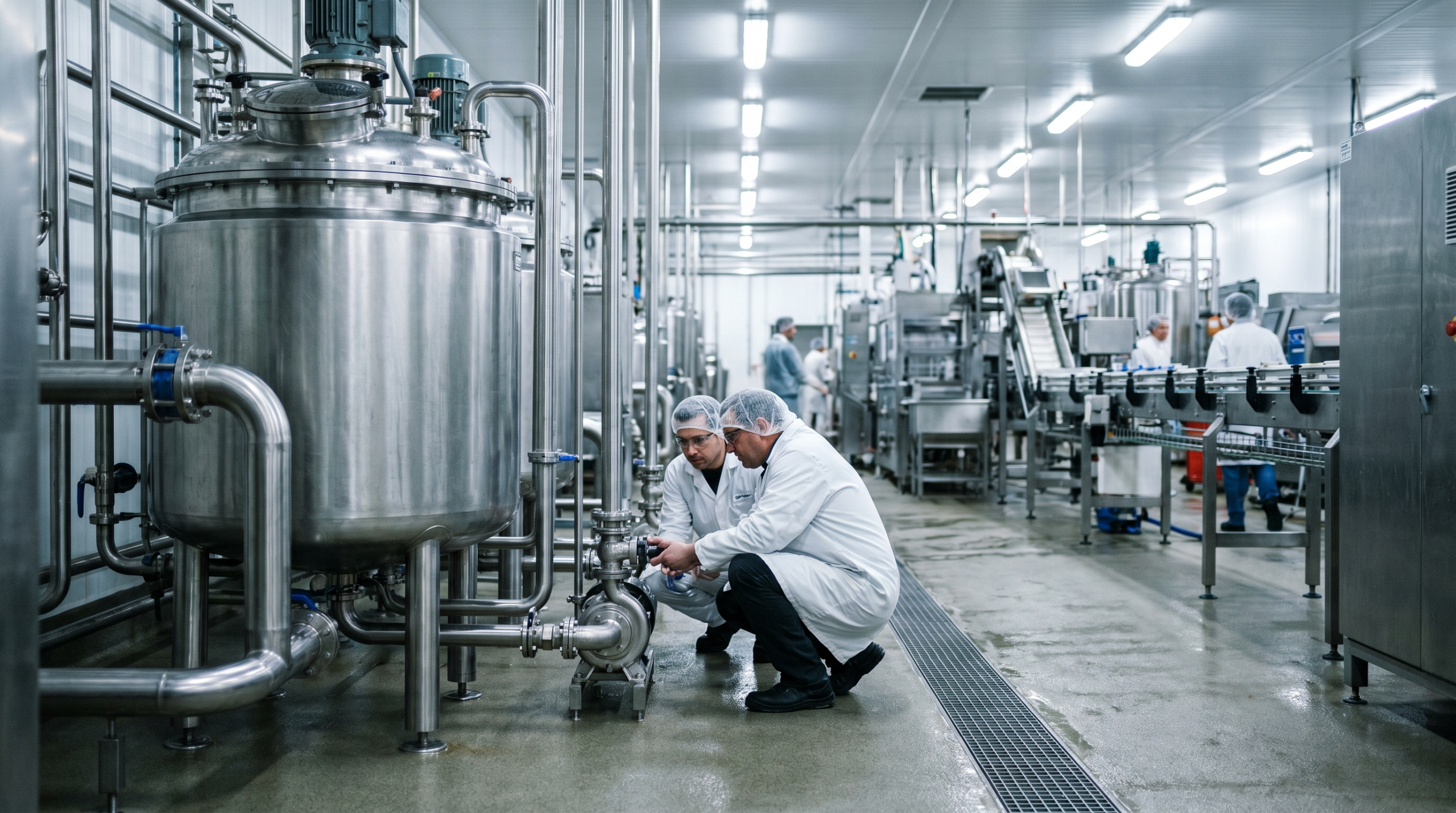

Look, water isn’t just part of food and beverage manufacturing; it’s a core ingredient. It’s in your product itself, touches every surface, is critical for cleaning and sanitizing, and drives countless process utilities—think cooking, cooling, boiler feed, rinse applications. When water quality fails in food processing, it’s not just an equipment glitch. It’s a serious food safety and regulatory compliance nightmare. That’s why reverse osmosis—RO—is fundamental. It’s the bedrock for water treatment programs at facilities that truly prioritize product consistency, FDA compliance, and keeping production costs in check.
Why Food and Beverage Manufacturers Use Reverse Osmosis
So, why do food and beverage manufacturers lean so heavily on RO? It boils down to two primary reasons: regulatory mandates and operational efficiency. Here’s the breakdown:
- FDA 21 CFR Part 110 / FSMA compliance — The FDA is quite clear on this. Their regulations for food manufacturing—specifically 21 CFR Part 110, which has mostly been updated by FSMA’s Preventive Controls for Human Food, 21 CFR Part 117—demand that any water touching food or food-contact surfaces must be safe and sanitary. What we’ve found in the field is that RO is the go-to technology for reliably hitting those consistent, documented water quality targets in any food manufacturing environment.
- HACCP water control points — Most HACCP plans for food manufacturing identify water quality as a critical control point. Using RO-treated water, especially with continuous TDS monitoring, gives you a measurable, easily documentable Critical Control Point (CCP). Achieving that level of precision with chemical treatment alone is challenging.
- Product consistency — Subtle mineral variations in your source water directly impact product flavor, texture, and even shelf life, a phenomenon we’ve observed repeatedly. Consider that soft drink giants, breweries, dairy processors, and commercial bakers all use RO to guarantee their source water’s TDS and mineral profile remains absolutely consistent, batch after batch. This holds true even with challenging seasonal shifts in municipal water supply.
- Cleaning and sanitation effectiveness — Hard water—that’s calcium and magnesium, mostly—actually works against your alkaline cleaning chemicals. It forms insoluble soaps, which renders your cleaning less effective. When you switch to RO or even softened water for your CIP/COP systems, you’ll see chemical consumption drop by a significant 20% to 40%. Plus, it stops scale from building up in those critical spray jets and nozzles, a small change that yields a significant difference.
- Boiler and steam system protection — Any process steam used for cooking, blanching, or sterilization requires high-purity boiler feed water. Scale forming inside boiler tubes not only reduces efficiency but also creates dangerous hot spots that lead to tube failures. Using RO-treated water drastically extends boiler tube life and reduces the frequency of system blowdowns. It is essential for maximizing uptime.
Food Processing Water Applications by Use
Different stages of food processing demand different water qualities. Here’s a brief overview of common applications and their typical requirements, based on our field experience:
| Application | Water Quality Requirement | Typical RO System Size |
|---|---|---|
| Product water (beverages, sauces, soups) | <10–50 ppm TDS; chlorine-free; meets FDA potable standards | 1,000–20,000+ GPD depending on production volume |
| CIP / COP rinse water | <100 ppm TDS; chlorine-free; low hardness | 500–5,000 GPD |
| Boiler feed water | <5–25 ppm TDS (depending on boiler pressure rating); silica <1 ppm at high pressure | 500–10,000 GPD |
| Cooling tower makeup | Low TDS to support high cycles of concentration; silica and sulfate managed | 1,000–10,000 GPD |
| Ice production | <50 ppm TDS for clear, hard ice | 200–2,000 GPD |
| Vegetable / produce washing | Potable water standards; low chlorine for organic operations | 2,000–20,000+ GPD |
Industry-Specific RO Applications
This section examines how RO is utilized in specific industry sectors. We’ve seen these patterns develop over decades of installations:
Beverage Manufacturing
Leading carbonated soft drink, juice, sports drink, and bottled water plants standardize on RO water for all product water, without exception. The Beverage Institute and NSF International have specific protocols for beverage-grade water—they detail maximum TDS, turbidity, chlorine, hardness, and microbiological limits. RO reliably hits every one of those. What we’ve often found is that concentrate manufacturers, especially those diluting syrup with municipal water across multiple sites, rely on RO to guarantee their dilution water will not introduce off-notes or mineral variability between plants, as consistency is paramount.
Dairy Processing
In dairy processing, we typically see RO systems serving two distinct, critical purposes: first, as product water for applications such as milk reconstitution, cheese brining, or whey processing; and second, for equipment CIP. For cheese production, the mineral content in water directly impacts curd formation; incorrect mineral content can negatively impact product quality. Beyond that, in membrane filtration for WPC/WPI production from whey, a pre-concentration RO stage significantly reduces the volume before spray drying. This represents a substantial efficiency gain, cutting energy costs by a significant 60% to 70% compared to evaporation alone, resulting in considerable cost savings.
Baking and Snack Production
Any commercial baker operating in a hard water market should consider RO water—or at least softened water with some RO blending—for dough mixing. This is because calcium in hard water strengthens gluten structure. While beneficial to a point, excessive calcium can be harmful, making dough tough. RO gives bakers total control over their water hardness, allowing them to precisely hit the dough water chemistry their specific formulations demand for optimal bread characteristics. It’s about precision.
Meat and Poultry Processing
Large-scale meat and poultry processing operations heavily rely on RO water for their chill water systems, brine injection, and marination. For USDA-inspected facilities, potable water is required throughout the operation. RO often becomes that crucial extra purification step, going beyond municipal treatment. It ensures total compliance with FSIS water quality requirements and, just as important, eliminates any chlorine taste in the final processed meat products. Consumers prefer products free from chlorine taste.
Produce Washing and Fresh-Cut Processing
The quality of your produce wash water directly impacts both food safety and how long your product stays fresh. High-TDS wash water, for instance, can actually speed up oxidation in cut produce—shortening shelf life. For operations processing organic produce, where chlorinated wash water is typically restricted, RO offers an excellent alternative. It provides essential treatment without the burden of chemical residue documentation, making it a logical choice.
Sizing an RO System for Food Processing
Sizing an RO system for a food processing plant is not an arbitrary process. We size these systems based on your facility’s peak daily water demand, always factoring in a storage buffer. Here are the key inputs we consider:
- Total daily RO water volume—every application counts: product, CIP, boiler feed, cooling, and others.
- Peak hourly demand. This is crucial; it dictates whether we specify a storage tank or a direct-feed system.
- Source water TDS and mineral profile. This directly influences recovery rate design and your necessary pre-treatment steps.
- Water temperature range. Note that RO output drops about 3% for every degree Fahrenheit decrease. Therefore, if well water is utilized in winter, a larger system will be required to maintain summer production rates. This detail should not be overlooked.
- Your specific regulatory framework. For instance, NSF/ANSI 61 certification might be a strict requirement for RO systems used in direct product water contact applications. We see this often.
Pre-Treatment Requirements for Food Processing RO
Proper pre-treatment is just as important as the RO system itself. It is contingent upon your source water quality and the stringency of the final application. Here’s a general guide:
- Municipal water: For municipal water, a 5-micron sediment pre-filter followed by a carbon block is typically required—essential for removing chlorine and chloramines. If hard water is present and feeding a boiler or requiring high purity, a water softener before the RO will dramatically extend membrane life, a significant advantage.
- Well water: If well water is the source, the process becomes more complex. An iron filter is necessary if iron (Fe) levels are 0.05 ppm or higher, as iron rapidly fouls TFC membranes. A softener is essential if hardness exceeds 10 GPG. And for product water in HACCP programs, we almost always recommend UV disinfection post-RO. It provides an additional layer of protection.
- Post-RO polishing: Sometimes, RO isn’t the absolute final step. For high-pressure boiler feed water—for example, for 150 PSI steam—RO followed by mixed-bed deionization (DI) is typically required to achieve less than 1 ppm TDS. And for pharmaceutical-grade food facilities (such as nutraceuticals or infant formula), validated product water often requires RO, then UV, and finally ultrafiltration. It is about meeting those extremely stringent specifications.
AMPAC USA Food and Beverage RO Systems
At AMPAC USA, we’ve designed and built commercial and industrial RO systems ranging from 500 GPD up to 20,000+ GPD. They are deployed in food and beverage manufacturing facilities across the United States, keeping operations running smoothly. Every one of our systems uses top-tier FILMTEC™ DuPont thin-film composite membranes, robust stainless steel pressure vessels, and powder-coated welded aluminum frames. These materials are chosen specifically because they perform optimally in demanding food processing environments.
If your food and beverage application demands NSF/ANSI 61 component certification—and many do—AMPAC USA can specify systems with NSF-certified membranes and pressure vessel materials. Please contact our engineering team with your specific application requirements. We will promptly confirm the exact certification scope needed for your facility’s compliance. It’s part of our process.
Every system we ship comes factory-assembled, pressure-tested, and fully documented with comprehensive performance data sheets. We provide comprehensive support beyond delivery. Commissioning and startup support is always included, along with initial replacement membrane and pre-filter stock for your planned maintenance. We ensure operational readiness.
Need to specify water treatment for a food or beverage facility? Avoid guesswork. Provide us with your daily water volume requirements, your source water’s TDS, and your regulatory framework. Contact AMPAC USA directly, and we will provide you with a system specification and quote.
Related Articles
- Water Treatment for Food and Beverage Manufacturing: RO Systems and FDA Compliance
- Nitrate Removal by Reverse Osmosis: Well Water Treatment Guide | AMPAC USA
- Water Treatment Chemicals: Ensuring Safe, Clean, and Sustainable Water with AMPAC USA Solutions
- Brackish Water Treatment Processes & Solutions by Ampac USA
Frequently Asked Questions
Why do food and beverage manufacturers rely on reverse osmosis?
FDA 21 CFR Part 110/117 and HACCP programs require documented, consistent water quality at food-contact points. RO reliably hits those targets while also protecting product consistency, since mineral variation in source water affects flavor, texture, and shelf life batch over batch.
How much can RO-treated water reduce cleaning chemical costs in food processing?
Switching to RO or softened water for CIP/COP cleaning systems typically cuts chemical consumption by 20-40 percent, since hard water minerals work against alkaline cleaning chemicals by forming insoluble soaps.
What water quality does product water need to meet in food and beverage manufacturing?
Typically below 10-50 ppm TDS, chlorine-free, and meeting FDA potable standards, with system sizes from 1,000 to 20,000+ GPD depending on production volume.
Does dairy processing use reverse osmosis differently than other food sectors?
Yes. Dairy uses RO both as product water for milk reconstitution or cheese brining and as a pre-concentration stage for whey protein production, which cuts energy costs by 60-70 percent compared to evaporation alone before spray drying.