
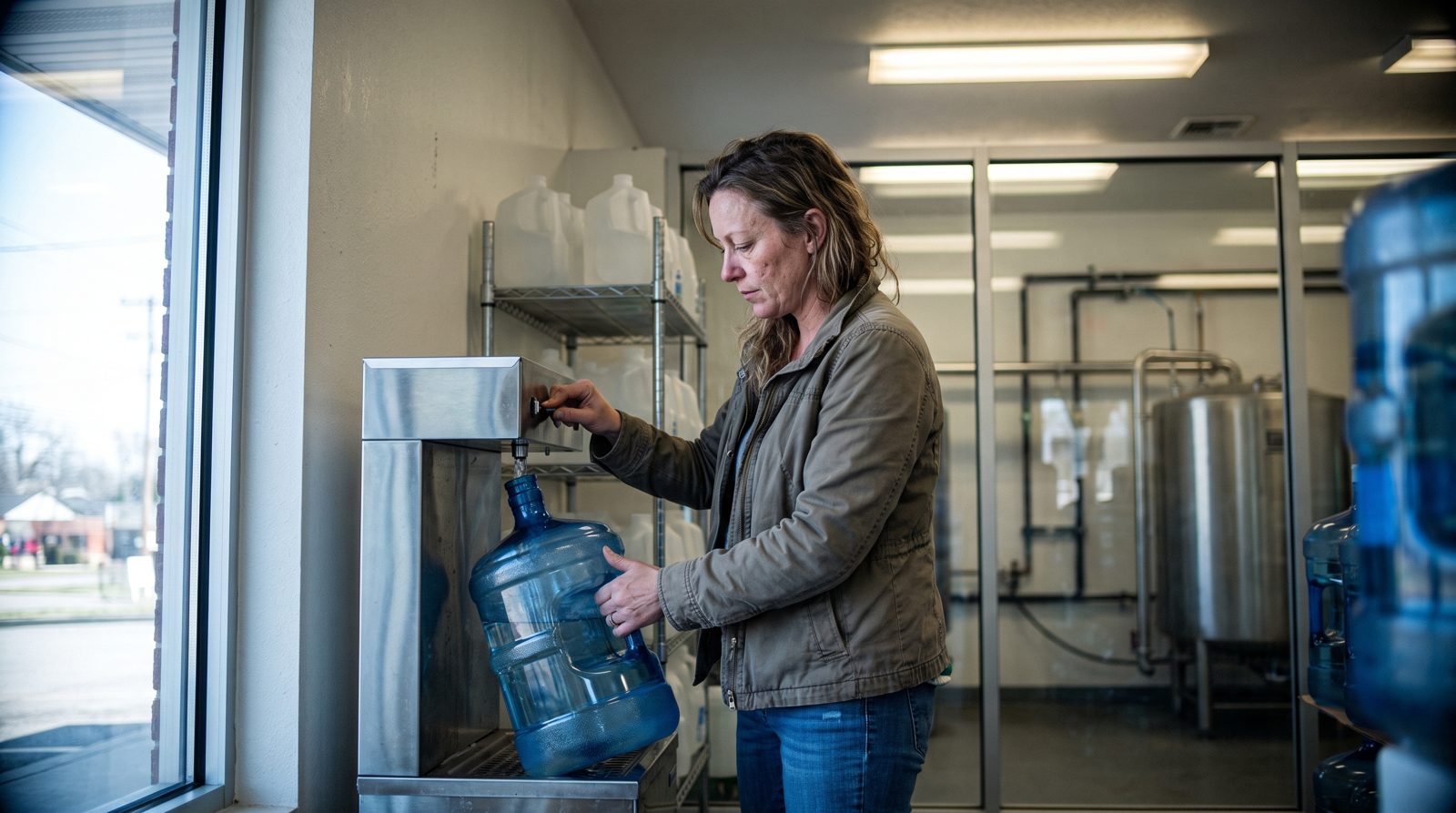

Short answer: a water refill station or water store needs four things: a license or permit from your state or local health department, a treatment system sized to your busiest day, dispensing and storage equipment, and a testing routine. Start with licensing, because the rules differ by state and decide what you can sell, where and with which equipment.
People searching for a water refill station are usually one of two people. One is a customer looking for a place to fill jugs, and the other is a would-be owner trying to work out what the business involves. This guide is for the second person. It covers the licensing question first, then the equipment, then how to size the treatment system so it does not run short on a Saturday. Every outside source is linked at the end.
Check licensing before you buy anything
Water sold into a customer’s own container is regulated as a food product, and the rules are set by the state. California is a useful example because its statute is specific. The California Health and Safety Code says that no person shall own or operate a water-vending machine or a retail water facility except pursuant to a license issued by the department or to a permit issued by a local health department. It defines a retail water facility as any commercial establishment where vended water is sold and placed in customers’ containers, which is exactly how a water store works.
The same article draws a line that matters for your source water. It says vended water does not include water from a public water system that has not undergone additional treatment. Run that municipal water through your own reverse osmosis system and sell it, and it is vended water under that law. Other states draw the lines differently, so contact your state health or agriculture department before you sign a lease or order equipment. A reputable equipment supplier will also know what has been accepted in your area.
The equipment, stage by stage
| Stage | What it does | Where to look |
|---|---|---|
| Pretreatment | Sediment filtration, carbon and sometimes softening, to protect the membranes from what is in your feed water | Sized with the RO system from your water analysis |
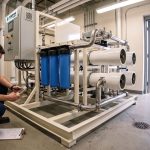
| Reverse osmosis | Removes dissolved solids. The US EPA describes RO as a process that can remove many inorganics, dissolved solids, radionuclides and synthetic organic chemicals | Water store RO systems |
| UV and storage | A storage tank smooths out demand, and UV treatment is commonly added after the membrane for microbial control | Packaged with water store systems |
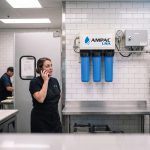
| Dispensing | Where customers fill their containers: refill stations, vending machines or a multi-faucet bottle filling station | Bottle filling stations and water vending machines |
AMPAC USA builds these as packages. The WS1500-M water store RO system is rated at 1,500 GPD, and the AP3000-SM and AP4000-SM are Super Water Store systems. For stores that sell alkaline water there is the AP4500-LX alkaline water store RO system. If you want a machine that customers use without staff, see the WWV-4 window water vending machine. The full range is on the water store equipment page, and our water store application page shows how a complete store is laid out.
Size the system from your busiest day
The mistake new owners make is sizing for an average day. A refill station is busy on weekends and before holidays, and a system that is too small means empty storage tanks and customers who go elsewhere. Work it through in three steps.
- Estimate the containers you expect to fill on a normal day and multiply by the gallons per container. A store filling 150 five-gallon jugs a day needs 750 gallons of product water.
- Estimate your busiest day. If that is double a normal day, you are planning for 1,500 gallons.
- Choose a system whose rated daily output covers that number, then add storage so the tank can cover the rush while the membrane catches up.
Those numbers are an illustration, not a forecast, so replace them with your own. Rated output also changes with feed water temperature and total dissolved solids, which is why a water analysis comes before a model number. Our RO system calculators can help with a first estimate, and an engineer will check it against your water report.
Testing and records
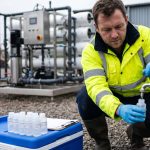
A license usually comes with conditions. Ask the regulator what testing and recordkeeping your permit requires, and set up the routine before you open: test the finished water on the schedule you are given, keep the results, and replace filters and membranes on time. Customers are not shy about asking, and a posted result is one of the most persuasive things a water store can show. If you want the customer’s view of why people choose stores over bottled water, read why water stores are better than bottled or tap water.
Where to start
Send us the three things that decide the design: your expected daily volume, a recent feed water analysis, and the city or state you are opening in. We will recommend a system and the dispensing equipment to go with it through the quote form, or you can call (909) 548-4900. AMPAC USA was founded in 1994 and builds its systems in Woods Cross, Utah.
Frequently asked questions
Do I need a license to sell filtered water?
In many places you do. It depends on your state. California, for example, requires a license or a local health department permit to operate a retail water facility or a water vending machine. Contact your state health department before you buy equipment.
What equipment does a water refill station need?
A pretreatment stage, a reverse osmosis system, a storage tank, UV treatment if your design calls for it, and dispensing equipment such as a refill station or vending machine. The treatment system is sized from your daily volume and your feed water analysis.
How big a reverse osmosis system does a water store need?
Size it for your busiest day, not your average. Multiply the containers you expect to fill by their size to get gallons per day, allow for your peak, and add storage. A water analysis then confirms the system will perform at that rate on your water.
Can I use city water as my source?
Most water stores do, and treat it further with reverse osmosis. Whether the result counts as vended water, and how it is regulated, depends on your state. In California, public system water that has not been further treated is not vended water, but water you treat and sell is.
Bottom line
Start with the license, size the system for your busiest day, and choose dispensing equipment that matches how you want to run the store. This article is general information, not legal advice, so confirm the rules with your state or local health department. For help with the equipment side, contact our team at info@ampac1.com or (909) 548-4900.
Sources
- California Legislature, Health and Safety Code, Division 104, Part 5, Chapter 5, Article 12 (vended water)
- US EPA, Overview of Drinking Water Treatment Technologies, updated March 23, 2026
AMPAC USA engineers custom water purification systems for commercial, industrial, and emergency applications — from 500 GPD to multi-million GPD. Trusted by municipalities, military, and industry worldwide.