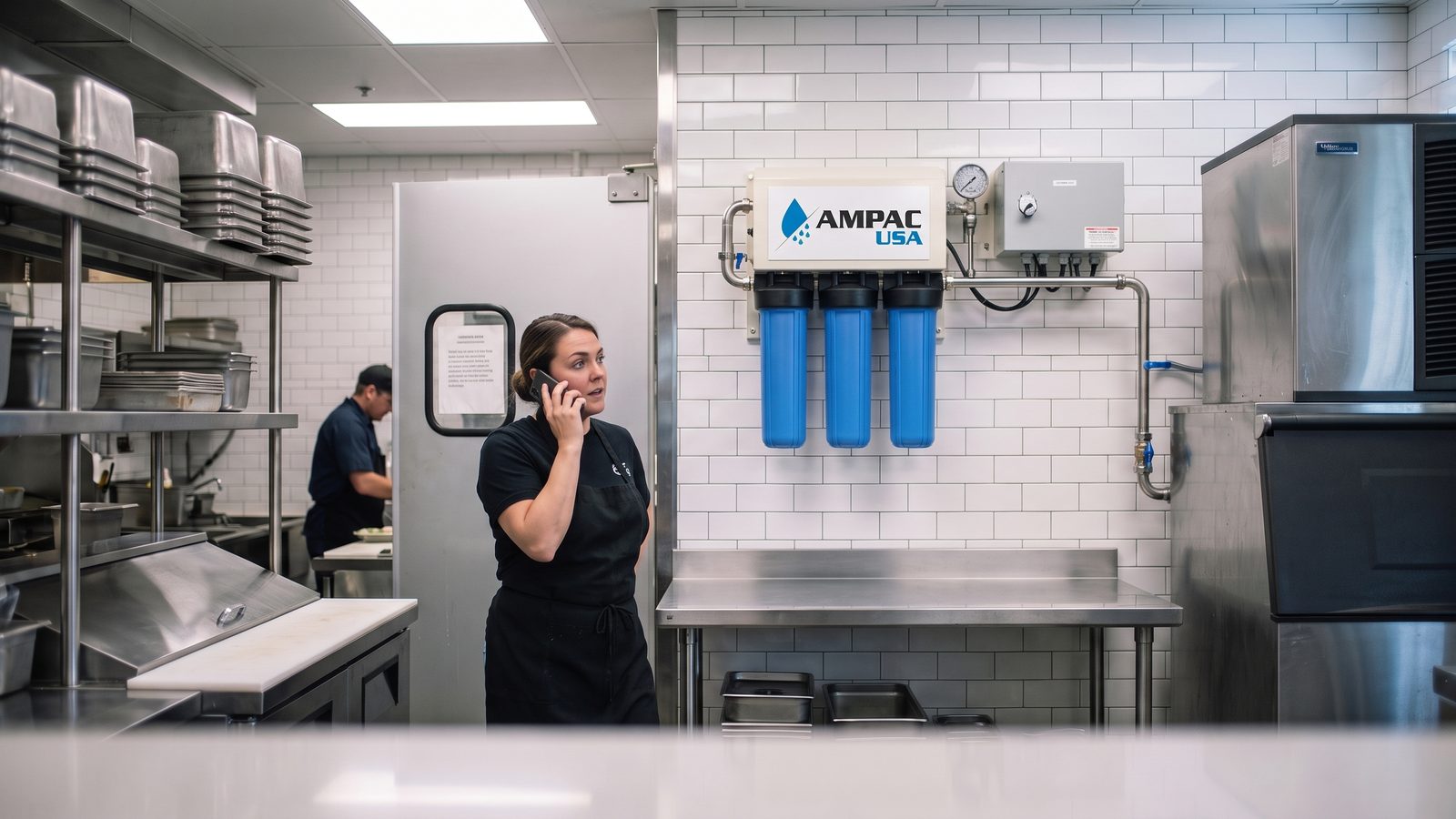

A restaurant group in Houston does not find out about a boil-water advisory from its own water. It finds out from a text alert, a health department bulletin, or a customer asking why the ice tastes different. By the time the notice arrives, the decision about whether the location stays open is already largely out of its hands.
TL;DR: Sixty-six percent of U.S. water utilities now name aging infrastructure their top operational challenge (Black & Veatch, 2026), and most boil-water advisories trace back to distribution-system failures like main breaks (EPA, 2024). For restaurants, clinics, and manufacturers, on-site reverse osmosis turns that outside risk into an internal control, keeping operations running on the facility’s own schedule instead of the utility’s.
That gap between “the municipal system has a problem” and “my business has a problem” is the real story of aging U.S. water infrastructure. It is not really a water-quality story. It is a business-continuity story, and most commercial buyers are still pricing reverse osmosis as if it were the former.
How Bad Is U.S. Water Infrastructure Actually Getting in 2026?
Sixty-six percent of water utility respondents identified aging infrastructure as their top industry challenge in Black & Veatch’s 15th annual water report, released in 2026, with 45% saying available funding won’t be sufficient to meet capital investment needs over the next five to 10 years (Black & Veatch 2026 Water Report). That is not a fringe complaint from a handful of struggling utilities. It is the single most-cited operational concern in an industry survey now in its 15th year.
The dollar figures behind that concern are just as stark. The EPA’s most recent Drinking Water Infrastructure Needs Survey and Assessment put the 20-year national capital improvement need at $625 billion, with distribution and transmission systems – the pipe network itself – accounting for roughly 67% of that total, or about $420.8 billion (EPA DWINSA, 7th Report, 2023). Separately, the American Society of Civil Engineers gave U.S. drinking water infrastructure a C- on its 2025 Infrastructure Report Card, unchanged from 2021, and projected the investment gap would grow from $309 billion in 2024 to $620 billion by 2043 if funding patterns don’t change (ASCE 2025 Infrastructure Report Card).
None of this is abstract for a commercial water user. It means the pipes carrying water to your building are, on average, older, more failure-prone, and less funded for replacement than they were a decade ago – and the utility managing them has told researchers directly that it doesn’t expect that to change soon.
Why Distribution Pipes Specifically Matter
The EPA’s needs breakdown is worth sitting with: distribution and transmission infrastructure is the largest single category of national water spending need, well ahead of treatment plant upgrades. That matters because distribution pipes are also the most common point of failure that triggers a boil-water advisory in the first place, which is the mechanism connecting “aging infrastructure” to “your business has a problem” most directly.
Why Are Boil-Water Advisories a Business-Continuity Risk, Not Just an Inconvenience?
Most boil-water advisories are issued because of water main breaks, distribution system repairs, or pressure-loss events such as power outages, not because contamination was confirmed – they’re precautionary, issued while utilities test for possible E. coli and other pathogens that a loss of pressure could let into the system (EPA, National Occurrence and Causes of Boil Water Advisories, 2024). That precautionary framing doesn’t make the disruption smaller for a business on the receiving end.
The frequency is real and, in the states that track it closely, substantial. Texas alone issued at least 2,457 boil-water notices in 2022 – an average of about seven per day statewide – according to a 2026 peer-reviewed analysis in the journal Water that also found a one-day increase in advisory exposure was associated with roughly a 0.08% increase in a utility’s operating costs, averaging about $1,020 in added cost per utility for each day under advisory (Rus & Han, “The Financial Burden of Boil Water Advisories on Public Water Systems,” Water, 2026). If advisories are costly enough to show up in a utility’s own operating statements, they are not a trivial event for the businesses sitting downstream of that same pipe.
There is also likely more happening than official counts capture. Researchers analyzing national boil-water advisory data have noted that state and national reporting is inconsistent, meaning the true frequency of advisories nationwide is probably higher than aggregated statistics suggest. A business that has never experienced a formal advisory may simply not have been watching for the smaller, locally reported ones.
What Actually Happens Inside a Business When an Advisory Hits?
The practical impact depends heavily on what the business does with water, but the common thread is that none of these operators control the timing.
Restaurants and Food Service
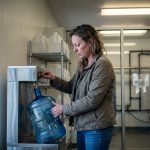
Ice machines, beverage lines, food prep, and handwashing stations all depend on the same tap that just went under advisory. Health departments typically require switching to bottled or pre-boiled water for these uses immediately, which means a scramble for supply, staff retraining on the fly, and, in some cases, a partial or full closure until the advisory lifts.
Healthcare Facilities
Clinics and outpatient facilities that rely on tap water for handwashing, instrument rinsing, or patient care face compliance exposure the moment an advisory is issued, on top of the operational disruption. Water quality failures at the building level are already a documented driver of healthcare-associated infection risk – a separate but related problem this site has covered in detail in how aging infrastructure changes Legionella risk in building water systems.
Manufacturers and Processors
Food, beverage, and industrial manufacturers that use municipal water as a direct process input can face line stoppages, batch holds, or full production shutdowns until water quality is confirmed safe again – a very different cost structure than a restaurant’s ice machine going dark for a day.
How Does On-Site Reverse Osmosis Change the Risk Calculus?
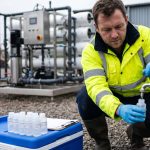
A facility with its own point-of-use reverse osmosis system is not waiting on the same clock as its neighbors. Reverse osmosis membranes reject bacteria, viruses, and dissolved solids at very high rates, and a properly designed system gives a business independent control over water quality at the exact point it enters production, prep, or patient-care areas – rather than depending entirely on what arrives from the municipal main.
That distinction matters for how to think about the investment. On-site RO is not primarily a quality upgrade competing against tap water on taste or hardness. Positioned correctly, it is closer to backup power or a fire suppression system: infrastructure a business installs before it needs it, sized to keep critical operations running when the outside environment fails, not after.
This reframing does not mean a business with on-site treatment can simply ignore an active advisory. Local health authorities issue boil-water guidance for the whole distribution system, including sections of plumbing downstream of any single building’s treatment point, and businesses should still follow their local health department’s specific instructions during an active advisory. What changes is the starting position: a facility with engineered, maintained on-site treatment and adequate storage capacity has real options – continued safe production, a documented water management plan to show inspectors, a shorter effective disruption – where a facility with none has only the utility’s timeline.
A Related, Compounding Risk: Physical Disruptions
Boil-water advisories aren’t the only way aging infrastructure interrupts commercial water supply. Main breaks, storms, and other physical disruptions can cut off flow entirely, not just its safety status – a scenario this site has covered separately in how natural disasters and infrastructure failures interrupt water supply. The business-continuity case for on-site treatment and storage capacity applies to both risk types.
What Should a Business-Continuity Water Plan Actually Include?
Treating on-site RO as insurance rather than a fixture upgrade changes what “the right system” looks like. A few elements matter more here than in a standard quality-driven purchase:
- Storage buffer, not just flow rate. A system sized only for peak daily demand offers no cushion during a disruption. Continuity planning means pairing the RO system with enough treated-water storage to bridge a multi-day event.
- Documented maintenance and service contracts. A system that hasn’t been serviced is a liability at the exact moment a business needs it most. Regular membrane, pre-filter, and disinfection maintenance keeps the system ready, not just installed.
- Redundancy on critical components. Backup power for the system itself, and where budgets allow, membrane or pump redundancy, close the gap between “we have RO” and “we have RO we can count on during a grid or supply disruption.”
- A written water management plan. Health departments and inspectors respond better to a documented plan than an improvised one. Knowing in advance what the facility does when an advisory hits – and being able to show that plan – shortens the compliance conversation considerably.
None of this requires an oversized system. It requires sizing and specifying the system around a disruption scenario, not just a normal Tuesday. AMPAC’s commercial reverse osmosis systems are engineered across a range of capacities so a restaurant group, clinic, or single manufacturing line can size treatment and storage to the actual continuity need rather than a generic default. Buyers evaluating options can start with the practical framing in this site’s commercial water treatment systems buyer’s guide.
Is On-Site RO Worth It If Your Area Rarely Sees Advisories?
This is a fair question, and the honest answer is that it depends on exposure, not geography alone. A single-location business in a small, well-funded utility district with modern pipes carries genuinely less risk than a multi-site operator spread across older municipal systems. But the national data argues against assuming any given system is safe simply because it hasn’t had a widely reported incident yet – aging infrastructure and thin capital budgets are now the norm utilities themselves report, not the exception (Black & Veatch, 2026), and underreporting means the true advisory count nationally is likely higher than official figures show.
For businesses where a shutdown carries real cost – lost service hours, spoiled inventory, canceled procedures, halted production – the calculation is less about whether an advisory will happen this year and more about what the exposure costs if it does. Multi-unit operators, in particular, compound that exposure across every location on a different municipal system; a smaller point-of-use approach at the unit level, closer to the scope covered in AMPAC’s residential and light-commercial reverse osmosis systems, can be the more realistic fit than a single large system when locations are geographically spread out.
Hospitality operators weighing this specifically for hotels and restaurants can see the operational side worked through in more depth in AMPAC’s hotel and restaurant water treatment systems guide, and businesses tracking the regulatory backdrop may also want the context in why Safe Drinking Water Act violations have been rising.
Frequently Asked Questions
Does a business still have to follow a boil-water advisory if it has its own reverse osmosis system?
Yes. Local health departments issue advisories for the entire distribution system, and businesses should follow their specific local guidance during an active advisory regardless of on-site treatment. What on-site RO changes is the facility’s own risk exposure and options – including continued safe operation for treated uses and a documented plan to show inspectors – not the requirement to follow official public health direction.
What actually causes most boil-water advisories in the United States?
Most are triggered by distribution system failures such as water main breaks, pipe repairs, or pressure-loss events like power outages, according to EPA’s 2024 report to Congress on the topic. These are typically issued as a precaution while utilities test the water for possible bacterial contamination, not because contamination has been confirmed.
How often do boil-water advisories actually happen?
Frequency varies significantly by state and utility, but it is higher than most commercial buyers assume. Texas alone recorded at least 2,457 boil-water notices in 2022, averaging about seven per day statewide, and researchers note that inconsistent state and national reporting likely means the true nationwide count is undercounted.
Is on-site commercial reverse osmosis expensive to justify for a single restaurant or clinic location?
Cost depends on required capacity, storage, and site conditions, so there’s no single number that fits every location. The more useful framing is risk-based: businesses should weigh system and storage costs against their actual exposure – how many locations they operate, how vulnerable each municipal system is, and what a multi-day disruption would cost in lost service, inventory, or compliance risk.
Can reverse osmosis alone guarantee a business never experiences a water-related shutdown?
No single technology eliminates every water-continuity risk. Reverse osmosis addresses water quality and treatment independence, but a full continuity plan also needs adequate storage buffer, maintenance contracts, backup power for the system, and a documented water management plan for staff and inspectors to follow.
Sources: Black & Veatch, 2026 Water Report; U.S. EPA, 7th Drinking Water Infrastructure Needs Survey and Assessment (2023); U.S. EPA, National Occurrence and Causes of Boil Water Advisories in the United States (2024); American Society of Civil Engineers, 2025 Infrastructure Report Card; Rus & Han, “The Financial Burden of Boil Water Advisories on Public Water Systems,” Water journal (2026).
AMPAC USA engineers commercial reverse osmosis systems for restaurants, healthcare facilities, and manufacturers who can’t afford to wait on a municipal advisory timeline. Explore sizing and options built around continuous operation, not just water quality.