
Short answer: reverse osmosis (RO) pushes water through a very fine membrane that blocks dissolved solids and many other contaminants. It is one of the most widely used ways to purify drinking water, from a single kitchen tap to seawater desalination plants.
How reverse osmosis works
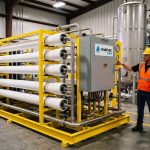
RO systems force water at high pressure through semi-permeable membranes that prevent the passage of various substances, depending on their molecular weight. The water that passes through is called permeate or product water. The water that does not pass is the concentrate, or reject, which keeps the larger substances and goes to drain. EPA describes the process in its overview of drinking water treatment technologies.
What RO removes
EPA lists reverse osmosis as a way to remove many inorganic contaminants, dissolved solids, radionuclides and synthetic organic chemicals. In everyday terms, that covers the salts and minerals behind hard water and high TDS, and many of the dissolved contaminants that homes and businesses worry about. How much a given system removes depends on the membrane, the pressure, the temperature and your feed water, which is why a water test comes first.
What RO does not do on its own
RO is not a disinfection step, and no single technology covers every contaminant. Systems pair the membrane with other stages. A sediment filter protects the membrane, carbon removes chlorine and many organic compounds, and a UV stage is a common addition when microbes are a concern.
The stages in a typical system
- Sediment filter: catches sand, rust and silt so they do not clog the membrane.
- Carbon filter: takes out chlorine, taste and odor compounds before the water reaches the membrane.
- RO membrane: does the main separation of dissolved solids.
- Post-filter or storage: polishes the water and holds it until you need it.
- Optional UV or remineralization: adds disinfection or restores some taste.
Where AMPAC USA systems fit
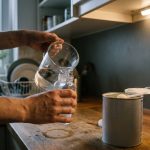
- At home: under-sink systems treat one tap, whole house systems treat the whole house, and home UV systems add a disinfection stage.
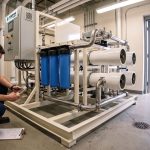
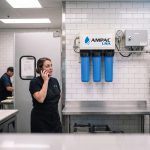
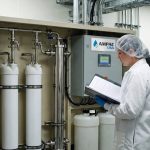
- In business: our commercial RO systems serve restaurants, water stores and light industry, and our industrial RO systems handle process water.
- At sea and on remote sites: seawater desalination watermakers turn seawater into fresh water.
Keeping a system working
A membrane only performs as well as the care it gets. Change filters on the schedule in your manual, and replace the membrane when its output or quality drops. Watching the TDS of the product water is the simplest check.
How to choose
Start with a water test. Then decide how much water you need each day, how many outlets you want to serve and how much space you have. Send us those three things through the quote form, or call (909) 548-4900, and an engineer will recommend a system. You can also contact our team with questions.
Frequently asked questions
What does reverse osmosis remove from water?
EPA lists RO as a way to remove many inorganic contaminants, dissolved solids, radionuclides and synthetic organic chemicals. Results depend on your membrane and your water, so test first.
Does reverse osmosis kill bacteria?
RO is not a disinfection step by itself. Systems that need microbial control add a UV stage after the membrane.
How often should RO filters be replaced?
Follow the schedule in your system manual. Sediment and carbon filters wear out sooner than the membrane, and falling output or rising TDS in the product water is a sign it is time.
Can reverse osmosis make seawater drinkable?
Yes. Seawater reverse osmosis systems use higher pressures and membranes built for salt water, and they are used on ships, islands and coastal sites.
Source
AMPAC USA engineers custom water purification systems for commercial, industrial, and emergency applications — from 500 GPD to multi-million GPD. Trusted by municipalities, military, and industry worldwide.