
Advances In Seawater Desalination is a big deal in modern water treatment. Here at AMPAC USA, we build top-tier systems that give you safe, clean water for your home, business, or industry. Our systems are designed to pull out the most contaminants and keep working reliably for years.
Seawater desalination has really taken off in the last decade. It’s quickly becoming the best way to get drinking water, thanks to new tech. Sure, some folks worry about its environmental impact, but it’s still a main method for big desalination plants and industries.
There are two main ways to do it: traditional distillation or the much more efficient reverse osmosis process. Here’s a look at why this industry holds so much promise for the future:
- The Ras Al Khair desalination plant in Riyadh is huge. It gives us 228 Imperial million gallons of water every single day.
- By 2015, there were 18,426 desalination plants worldwide. That’s a lot!
- Morocco and Casablanca, among many other cities and countries, plan to get their own desalination plants.
- Distillation isn’t used much anymore for desalination. Most plants now run on reverse osmosis.
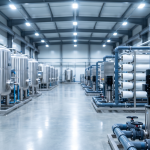
- Bigger, better plants can hold over 50,000 membranes to filter water.
- It’s not just coastal areas. Desalination plants are being built in inland cities too, especially where the water is dangerously brackish.
This means seawater desalination isn’t just for seawater. It can effectively clean many types of impure water on a larger scale. Research suggests that while the process might have some environmental downsides now, it’ll be sustainable in the future. We’re talking big changes in membrane materials, thickness, and how they’re made, which will cut down on energy needs. Plus, better wastewater treatment systems will make sure less polluted water goes back into the sea or other water sources. These changes will take time, but once we’re sure about the research, every desalination plant will use them. This will ensure it stays our best bet for fresh water access.
AMPAC USA leads the way in building water treatment systems, including Reverse Osmosis systems for desalination plants. We’ve been doing this for 30 years, and our products meet international standards.
Frequently Asked Questions
What are the primary methods used in seawater desalination today?
While traditional distillation was historically used, the industry has largely shifted to the more efficient Reverse Osmosis (RO) process. RO systems, like those engineered by AMPAC USA, utilize specialized membranes to filter water, with larger plants capable of holding over 50,000 membranes for superior contaminant removal and long-term reliability.
Is seawater desalination an environmentally sustainable process?
Seawater desalination currently faces some environmental concerns, but significant research is underway to enhance its sustainability. Future advancements in membrane materials, thickness, and production are expected to reduce energy requirements, while efficient wastewater treatment systems will minimize the impact of brine discharge. AMPAC USA is committed to integrating these sustainable practices into our advanced solutions.
How widespread is seawater desalination globally?
The seawater desalination industry has experienced tremendous growth, with the number of plants globally reaching 18,426 by 2015. This expansion continues, with new plants being announced in various cities and countries, demonstrating its increasing adoption as a critical water source.
What is an example of a large-scale seawater desalination plant?
The Ras Al Khair desalination plant in Riyadh stands as a prime example of large-scale operations, providing an impressive 228 Imperial million gallons of water each day. Such facilities underscore the capacity of modern desalination technology to meet significant water demands for municipalities and industries.
Can desalination systems treat water sources other than seawater?
Yes, desalination is not limited to just seawater. It is effectively used for treating inland areas and cities where water quality is at dangerous brackish levels. AMPAC USA’s purification systems are designed to handle a wide range of water impurities, ensuring safe drinking water from various challenging sources.
AMPAC USA engineers custom water purification systems for commercial, industrial, and emergency applications — from 500 GPD to multi-million GPD. Trusted by municipalities, military, and industry worldwide.