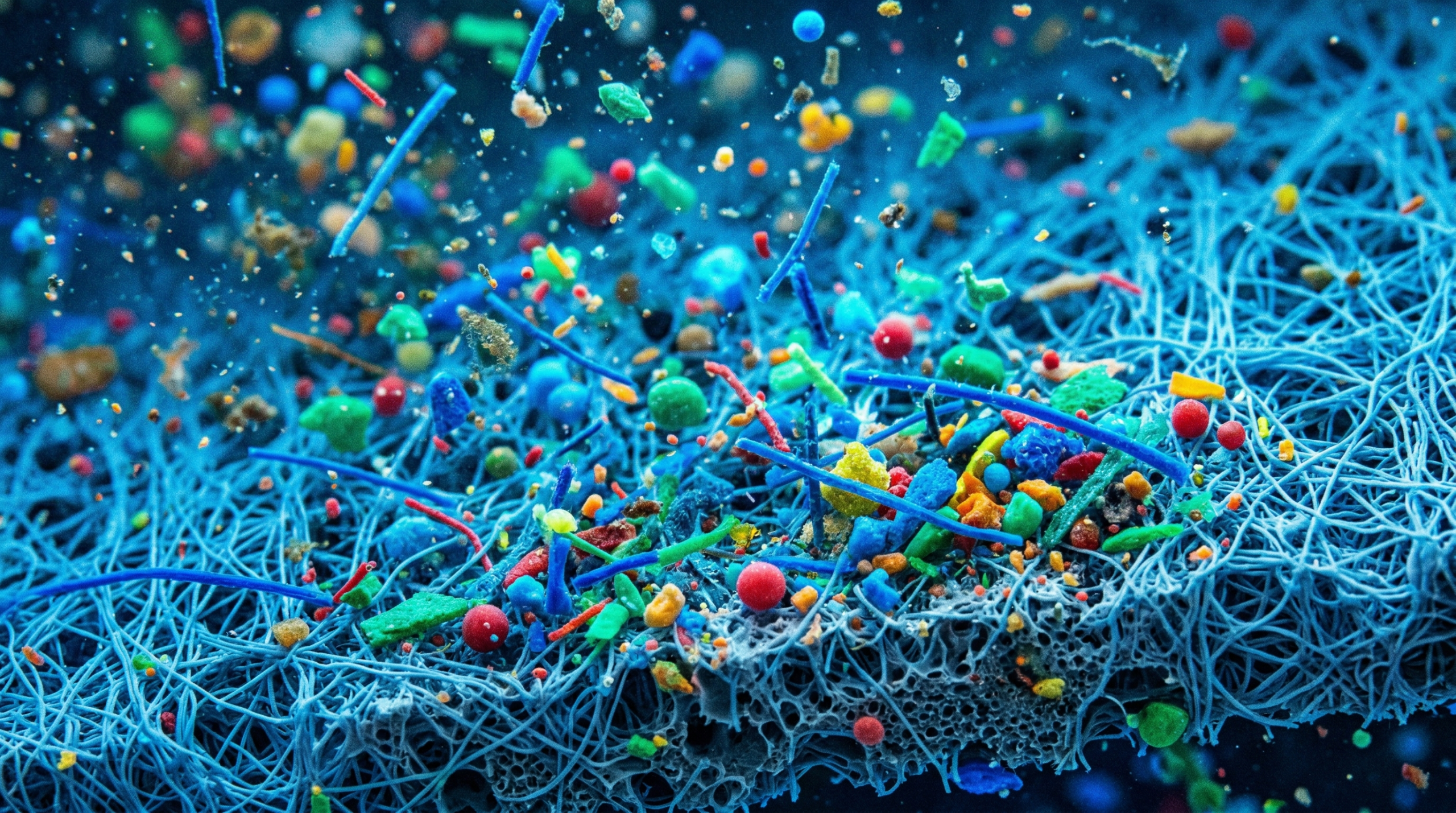

Microplastic contamination in drinking water has become a global health concern. Research from the World Health Organization, the U.S. Geological Survey, and universities worldwide confirms that microplastics are present in virtually all water sources – from municipal tap water and bottled water to groundwater and rainwater. The question is no longer whether microplastics are in your water, but how to remove them effectively.
What Are Microplastics and Nanoplastics?
Microplastics are plastic particles smaller than 5 millimeters in diameter, while nanoplastics are smaller than 1 micrometer (1,000 nanometers). They originate from the breakdown of larger plastic products, synthetic clothing fibers released during washing, tire wear, packaging degradation, and direct industrial discharge.
| Category | Size Range | Common Types | Visibility |
|---|---|---|---|
| Large Microplastics | 1 mm – 5 mm | Nurdles, cosmetic beads, fiber fragments | Visible to naked eye |
| Small Microplastics | 1 micron – 1 mm | Clothing fibers, tire dust, film fragments | Requires microscope |
| Nanoplastics | 1 nm – 1 micron | Degraded fragments, polymer nanoparticles | Requires electron microscope |
Nanoplastics are the greater health concern because their small size allows them to cross biological barriers – penetrating cell membranes, the blood-brain barrier, and the placenta. A landmark 2024 study published in the Proceedings of the National Academy of Sciences found an average of 240,000 nanoplastic particles per liter in bottled water – 10 to 100 times higher than previous estimates using older detection methods.
How Much Microplastic Is in Your Drinking Water?
Multiple studies have quantified microplastic contamination across water sources:
| Water Source | Microplastic Particles per Liter | Study Source |
|---|---|---|
| Bottled Water | 240,000 (including nanoplastics) | Columbia University / PNAS 2024 |
| Tap Water (US average) | 5-15 particles (microplastics only) | USGS 2024 National Study |
| Groundwater | 0.7-15 particles | Multiple European studies |
| Rainwater | Detected globally – no safe location | Stockholm University 2022 |
| Surface Water (rivers/lakes) | 10-1,000+ particles | Varies by location and proximity to urban areas |
Health Risks of Microplastic Exposure
While the WHO’s 2024 assessment notes that the full health impact of microplastic ingestion requires further study, a growing body of research has identified concerning biological effects:
- Inflammation: Microplastics trigger inflammatory responses in the gastrointestinal tract, lungs, and liver (Journal of Hazardous Materials, 2023)
- Endocrine disruption: Plastic additives (phthalates, bisphenol A, flame retardants) leach from particles and interfere with hormonal function
- Oxidative stress: Nanoplastics generate reactive oxygen species at the cellular level, damaging DNA and proteins
- Cardiovascular risk: A 2024 New England Journal of Medicine study found that patients with microplastics in arterial plaque had 4.5x higher risk of heart attack, stroke, or death
- Gut microbiome disruption: Animal studies show microplastics alter gut bacteria composition, affecting immunity and metabolism
- Chemical carrier effect: Microplastics adsorb pesticides, heavy metals, and other pollutants from the environment, concentrating and delivering them into the body
How Reverse Osmosis Removes Microplastics
Reverse osmosis is the most effective available technology for removing both microplastics and nanoplastics from drinking water. The mechanism is straightforward: size exclusion.
A thin-film composite (TFC) RO membrane has an effective pore size of approximately 0.0001 microns (0.1 nanometers). The smallest microplastics are 1 micron – 10,000 times larger than the membrane pores. Even nanoplastics at 100 nanometers are 1,000 times larger than what can pass through. There is simply no physical pathway for plastic particles to penetrate an intact RO membrane.
Water Treatment Methods for Microplastic Removal: Full Comparison
| Treatment Method | Microplastic Removal | Nanoplastic Removal | Pore/Mechanism Size | Cost |
|---|---|---|---|---|
| Reverse Osmosis | >99.9% | >99% | 0.0001 microns | $$ |
| Nanofiltration | 99% | 90-95% | 0.001 microns | $$ |
| Ultrafiltration | 95-99% | 60-80% | 0.01 microns | $$ |
| Carbon Block Filter | 60-80% | 10-30% | 0.5-10 microns | $ |
| Pitcher Filter (Brita-type) | 30-50% | <5% | 20-50 microns | $ |
| UV Disinfection | 0% | 0% | Light only – no filtration | $ |
| Boiling | 0% | 0% | Heat only – no filtration | $ |
Protecting Your Home from Microplastics
Installing a reverse osmosis system is the single most effective step you can take to reduce microplastic exposure from drinking water. Here is what to consider:
- Under-sink RO for drinking and cooking water: AMPAC USA residential RO systems remove >99.9% of microplastics along with lead, PFAS, arsenic, and other contaminants. A point-of-use system costs $150-$600 and treats the water you actually consume.
- Whole-house RO for complete protection: If you want microplastic-free water from every tap – including showers, laundry, and appliances – a whole-house system provides comprehensive treatment. Prices range from $2,000-$8,000 installed.
- Reduce plastic exposure at the source: Use glass or stainless steel water bottles, avoid heating food in plastic containers, choose natural-fiber clothing when possible, and reduce single-use plastic consumption.
- Stop buying bottled water: With 240,000 nanoplastic particles per liter, bottled water is a significant source of microplastic exposure – not a solution to it. RO-purified tap water contains virtually zero microplastics.
Commercial and Industrial Microplastic Removal
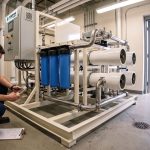
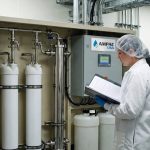
For businesses in food and beverage, pharmaceutical, and healthcare industries, microplastic-free water is becoming a quality and compliance requirement. AMPAC USA commercial RO systems (200-20,000 GPD) and industrial RO systems (10,000+ GPD) provide microplastic removal at production scale.
The food and beverage industry is particularly affected – microplastics in process water end up in food products. As consumer awareness grows and regulations emerge, proactive investment in RO water treatment protects both product quality and brand reputation.
Frequently Asked Questions: Microplastics and Water Treatment
How effective is reverse osmosis at removing microplastics and nanoplastics?
Reverse osmosis systems remove over 99.9% of microplastics and nanoplastics from drinking water. RO membrane pores, at 0.0001 microns, are roughly 10,000 times smaller than the smallest microplastics, making physical passage impossible. A 2024 Nature Nanotechnology study confirmed RO’s capability to remove particles below 100 nanometers.
What is the difference between microplastics and nanoplastics?
Microplastics are plastic particles smaller than 5 millimeters in diameter, while nanoplastics are even smaller, measuring less than 1 micrometer (1,000 nanometers). Nanoplastics are a greater health concern because their minuscule size allows them to cross biological barriers like cell membranes, the blood-brain barrier, and the placenta.
How many nanoplastic particles are typically found in bottled water?
A landmark 2024 study published in the Proceedings of the National Academy of Sciences found an average of 240,000 nanoplastic particles per liter in bottled water. This figure is 10 to 100 times higher than previous estimates, underscoring the pervasive presence of these contaminants.
Where do microplastics and nanoplastics in drinking water originate?
Microplastics and nanoplastics originate from the breakdown of larger plastic products, synthetic clothing fibers released during washing, tire wear, and the degradation of packaging materials. Direct industrial discharge also contributes significantly to their presence in water sources globally.
Why are nanoplastics considered a greater health concern than microplastics?
Nanoplastics are considered a greater health concern due to their extremely small size, which allows them to cross biological barriers that larger microplastics cannot. They can penetrate cell membranes, the blood-brain barrier, and the placenta, potentially leading to more significant and systemic health impacts.
Take Action Against Microplastic Contamination
Microplastics are everywhere – in our water, food, and air. While you cannot control environmental contamination, you can control what is in your drinking water. Reverse osmosis provides the most effective, proven protection against both microplastics and nanoplastics.
Contact AMPAC USA for expert guidance on choosing the right RO system for your home or business. Call (909) 762-8020 or request a free consultation.
Related Articles
- PFAS in Drinking Water: How Reverse Osmosis Removes Forever Chemicals in 2026
- Effective Reverse Osmosis Water Filter for Microplastics in Industrial Applications
- USP Purified Water TDS Requirements and How Pharmaceutical-Grade Reverse Osmosis Systems Meet Them
- Chromium-6 in Drinking Water: Reverse Osmosis Removal Guide | AMPAC USA
Conclusion
The research is fairly consistent: reverse osmosis membranes are small enough to reject the vast majority of microplastic and nanoplastic particles that slip past standard carbon filtration, which is why RO keeps showing up as the recommended solution in the comparisons above. That doesn’t mean every RO system performs identically — membrane quality and system maintenance both affect how consistently those particles get rejected over time. If microplastic exposure is a concern for your home or facility, the protection steps and industrial options covered in this guide are a good starting point. Contact our team at info@ampac1.com or (909) 548-4900 to talk through a reverse osmosis solution for microplastic removal.