
Related Articles
- Effective Reverse Osmosis Water Filter for Microplastics in Industrial Applications
- Boiler Feedwater Reverse Osmosis: Treatment Guide for Industrial Boilers
- Boiler Feed Water Treatment: Why Industrial Facilities Need Reverse Osmosis
- Industrial Reverse Osmosis Systems & Water Treatment Systems
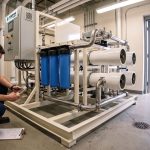
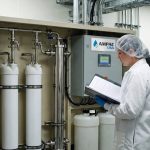
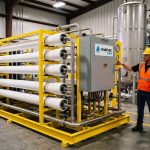
Explore our current industrial reverse osmosis systems, PLC-controlled and custom-engineered per application.
Frequently Asked Questions
What is the primary difference between an industrial and a commercial reverse osmosis system?
Industrial reverse osmosis systems are engineered for continuous 24/7 operation, built to ASME pressure vessel standards, and feature redundant process trains and SCADA control for real-time visibility. Unlike commercial units, they handle production capacities from 10,000 GPD to multi-million GPD and meet stringent water quality requirements for critical applications like pharmaceutical manufacturing.
What pressure ranges do industrial RO systems typically operate at?
Industrial reverse osmosis systems operate at pressures ranging from 150 psi to 1,200 psi, depending on the feed water’s Total Dissolved Solids (TDS) content. Pressure vessels commonly house 8-inch membrane elements and are rated for 150-600 psi for most applications.
How do industrial RO systems achieve ultra-high water purity for critical applications?
High water purity is achieved through multi-pass RO designs, which can produce water quality levels of 1-10 MΩ·cm for sensitive processes. For ultra-pure water requirements, Electrodeionization (EDI) is often paired with RO, eliminating chemical regeneration and consistently delivering 18 MΩ·cm water suitable for industries like pharmaceuticals or semiconductors.
What are the typical water recovery rates for industrial reverse osmosis systems?
Typical industrial reverse osmosis systems achieve water recovery rates ranging from 50% to 85%. The exact recovery percentage is influenced by the feed water quality, system design, and the specific application’s requirements.
What are the core design principles for membrane configuration in industrial RO systems?
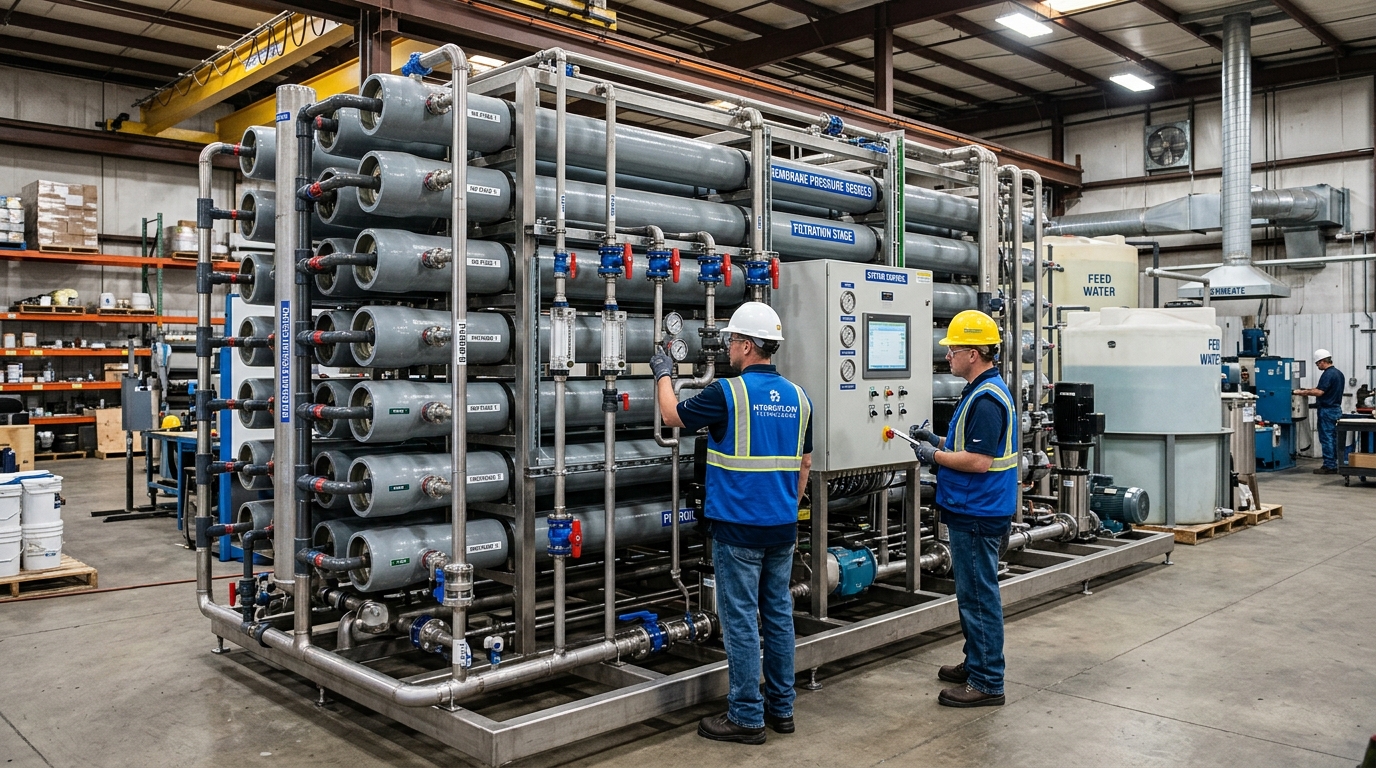
Industrial RO systems utilize spiral-wound thin-film composite (TFC) membranes, typically 8-inch diameter and 40 inches long, housed in robust pressure vessels. These elements are arranged in arrays (pressure vessels in parallel) and stages (arrays in series), often in configurations like a 2:1 array, to optimize performance and water recovery.
AMPAC USA engineers custom water purification systems for commercial, industrial, and emergency applications — from 500 GPD to multi-million GPD. Trusted by municipalities, military, and industry worldwide.