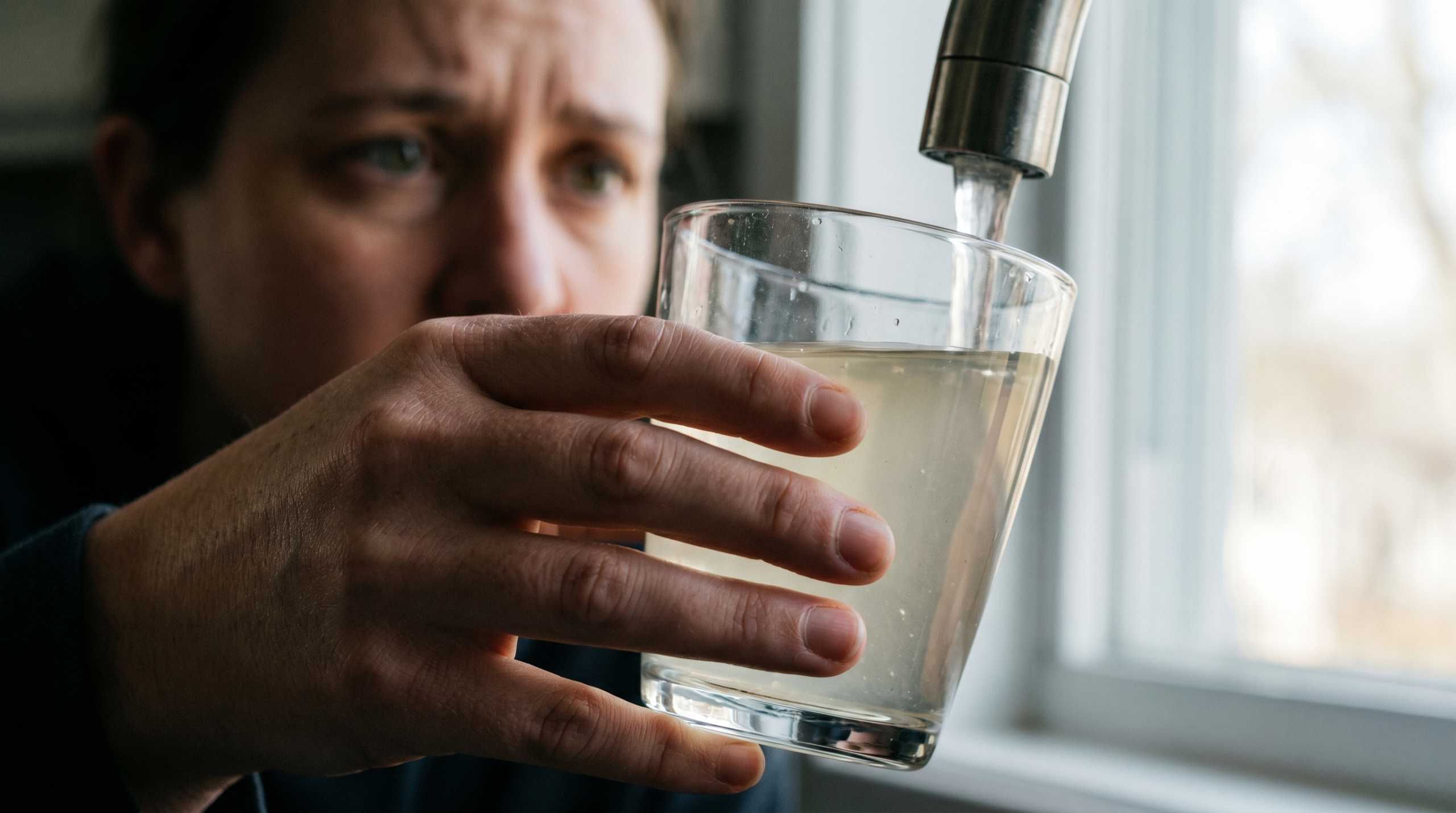

Lead doesn’t belong in drinking water at any concentration. The EPA’s current action level is 15 parts per billion (ppb), but the agency’s own Maximum Contaminant Level Goal (MCLG) for lead is zero — because there is no known safe level of lead exposure for children. Reverse osmosis is one of the most effective residential and commercial technologies for reducing lead in drinking water to below detectable limits.
Where Lead in Drinking Water Comes From
Unlike most water contaminants, lead almost never comes from the source water supply. It enters at the point of use — from lead pipes, lead solder in copper plumbing, and lead-containing brass fixtures within the home or building. Key sources:
- Lead service lines — Pipes running from the water main to the building. An estimated 6–10 million lead service lines remain in the US, concentrated in housing built before 1986. The Biden-era Lead and Copper Rule Improvements require utilities to inventory and replace lead service lines by 2037.
- Lead solder in copper plumbing — Lead solder was banned in US plumbing in 1986, but any home built or replumbed before that date may have solder joints with 50% lead content. Solder leaches most aggressively in the first 5 years after installation, and again as it corrodes with age.
- Brass fixtures and valves — “Lead-free” brass (post-2014 Safe Drinking Water Act amendment) is required to contain less than 0.25% lead. Older brass faucets, valves, and fittings can contain up to 8% lead by weight.
- Premise plumbing in older buildings — Schools, apartment buildings, and commercial properties built before 1986 frequently have lead throughout their internal plumbing. Stagnant water in lead-containing lines accumulates dissolved lead; first-draw samples from the tap show the highest concentrations.
The Flint, Michigan crisis (2014–2016) brought national attention to lead in drinking water, but the problem is not confined to Flint or to cities with aging infrastructure. Testing from 2016–2024 has found lead at or above the EPA action level in school drinking water systems in all 50 states.
Health Effects of Lead Exposure Through Drinking Water
Lead is a neurotoxin with no safe exposure threshold for children. Effects by exposure level:
- Children (primary concern): Even low-level lead exposure permanently reduces IQ and cognitive development. Blood lead levels above 3.5 µg/dL (the CDC reference value) are associated with ADHD, learning disabilities, and behavioral problems. There is no reversing the damage once it occurs. Children under age 6 are most vulnerable because they absorb 40–50% of ingested lead vs. 3–10% for adults.
- Pregnant women: Lead crosses the placenta. Maternal lead exposure during pregnancy is linked to premature birth, low birth weight, and fetal neurodevelopmental harm.
- Adults: Chronic lead exposure increases risk of hypertension, kidney disease, and cardiovascular disease. Adults accumulate lead in bone, where it can be remobilized during pregnancy, lactation, or osteoporosis.
How Reverse Osmosis Removes Lead
Reverse osmosis is classified as a Best Available Technology (BAT) for lead removal by the EPA. RO membranes physically block lead ions (Pb²⁺) through a combination of size exclusion and charge repulsion. Typical performance:
| Lead Concentration (Feed) | RO Rejection Rate | Typical Permeate Concentration |
|---|---|---|
| 15 ppb (EPA action level) | 95–99% | <1 ppb (below detection in most cases) |
| 50 ppb | 95–99% | 0.5–2.5 ppb |
| 100 ppb | 95–99% | 1–5 ppb |
RO effectively removes lead in both common ionic forms (Pb²⁺) and removes particulate lead from corroded pipe debris (larger particles blocked by the pre-filter and membrane). Performance is consistent across typical municipal water pH ranges (6.5–8.5). Unlike activated carbon or KDF media filters, RO removal efficiency for lead does not degrade predictably over a rated filter lifetime — performance is sustained as long as the membrane is intact and operating above minimum pressure.
Lead Treatment Options Compared
| Technology | Lead Removal | Notes |
|---|---|---|
| Reverse osmosis | 95–99% | EPA BAT. Removes lead plus other heavy metals, TDS, nitrates. Point-of-use or whole-house. |
| Activated carbon (NSF 53 certified) | 85–95% (certified models) | Must be NSF/ANSI 53 certified for lead. Carbon block more effective than GAC. Performance degrades over filter life. |
| Distillation | 99%+ | Effective but impractical at scale. Slow, high energy use. |
| Cation exchange softener | Variable (40–70%) | Water softeners remove some lead via ion exchange but are not rated or reliable for lead removal. |
| Coagulation/filtration | Variable (municipal only) | Not available at residential/commercial scale. |
Testing for Lead in Your Water
You cannot detect lead by taste, smell, or appearance. Testing is the only way to know your exposure level. Testing options:
- EPA-certified lab test — Most accurate. Collect a “first draw” sample (water that’s sat in pipes overnight, before flushing) and a “flush” sample after running the tap 30 seconds. Both samples together identify whether lead is leaching from service lines or internal plumbing. Cost: $20–50 from a certified lab.
- Utility testing — Your water utility is required to test for lead and copper every 1–3 years and report results to customers. However, utility testing samples from homes with highest-risk plumbing, not necessarily your home. Request results from your utility directly.
- Home test kits — Not recommended for lead. Most home test strips are not sensitive enough to detect lead at concentrations below 15 ppb and have false-negative rates that make them unsuitable for health decisions.
AMPAC USA RO Systems for Lead Removal
AMPAC USA residential reverse osmosis systems achieve 95–99% lead rejection using FILMTEC™ thin-film composite membranes, consistent with NSF/ANSI 58 performance standards for lead reduction. Systems are available in:
- Under-sink point-of-use (50–100 GPD) — Treats drinking and cooking water at a single faucet. Appropriate for households where lead risk is at the service line or internal plumbing and primary concern is ingestion exposure.
- Whole-house point-of-entry (200–1,000+ GPD) — Treats all water entering the home including shower, bath, and laundry. Addresses dermal and inhalation exposure pathways in addition to ingestion. Recommended when lead service lines are confirmed or suspected.
Have a water test showing elevated lead? Share your results — including lead concentration, pH, and whether you have lead service lines — and we’ll specify the right system. Contact AMPAC USA for a free technical consultation. We respond within one business day.
Related: Arsenic Removal by Reverse Osmosis | PFAS Removal by Reverse Osmosis | Whole House RO Systems
Related Articles
- Chromium-6 in Drinking Water: Reverse Osmosis Removal Guide | AMPAC USA
- Iron in Well Water: Does Reverse Osmosis Remove Iron? | AMPAC USA
- Nitrate Removal by Reverse Osmosis: Well Water Treatment Guide | AMPAC USA
- Arsenic in Drinking Water: How Reverse Osmosis Removes It
Frequently Asked Questions
Does reverse osmosis remove lead from drinking water?
Yes, RO is classified as a Best Available Technology by the EPA for lead removal, achieving 95-99 percent rejection. Feed water at the EPA action level of 15 ppb typically produces permeate below 1 ppb, below detection in most cases.
Where does lead in drinking water usually come from?
Almost never the source water supply itself. Lead enters at the point of use, from lead service lines, lead solder in copper plumbing (banned in 1986), and lead-containing brass fixtures within the building.
Why is there no safe level of lead exposure for children?
Even low-level lead exposure permanently reduces IQ and cognitive development in children, who absorb 40-50 percent of ingested lead versus 3-10 percent for adults. The EPA’s own Maximum Contaminant Level Goal for lead is zero, though the current enforceable action level is 15 ppb.
Are home lead test kits reliable?
No. Most home test strips are not sensitive enough to detect lead at concentrations below 15 ppb and have false-negative rates that make them unsuitable for health decisions. An EPA-certified lab test with a first-draw and flush sample is the accurate approach.