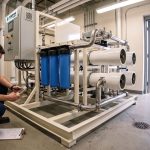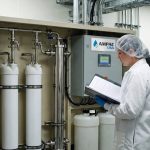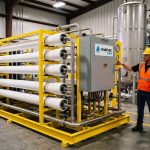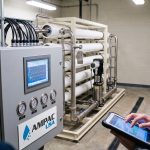

Despite the years that have passed with Seawater Desalination gaining popularity, it is still not an alternative to traditional freshwater procuring methods. It seems rather unfair that mankind stands in front of a very big payload of water but cannot use it for their benefit. It is like a forbidden treasure to be more valuable than possibly even gold in the future. Millions and millions of gallons of water stand at our feet and even whilst having a perfectly working method to turn it to our advantage, why are we still struggling for water?
“Water water everywhere but not a drop to drink!”
The answer lies in the answer for why should it not be used. Seawater Desalination, although a well equipped and effective solution for that matter, has several disadvantages owing to the economic and environmental conditions of the world. The only thing stopping us from grabbing our soon to be a dream is the fact that it is not feasible for so many.
Seawater Desalination
This is the process of desalting water using thermal distillation or membrane separation. Thermal distillation is a traditional method of boiling the salt water and condensing the vapors this collected into another vessel. The condensed solution is close to the freshwater animals and humans can survive on. A recent and better alternative is membrane separation the process of which is called reverse osmosis. Salt water is pressurized through a semi-permeable membrane that filters out the salt and other contaminants to give pure, healthy and safe freshwater. By far, this method is proven to be the best method for water purification. This process is implemented at a larger scale in Desalination plants that produce water for millions each day.
Sounds good! Why don’t we use it then?
The major disadvantages associated with the procedure include the lack of economic resources. Till now, we haven’t been able to point out the figure in dollars for the amount even to the nearest thousands. The money requirement is dependent on several factors.
- The salt content of the input ocean water. Prices can rise from $1 to $2 in order to eliminate the undesirable salt from the water.
- The number of people who will need the supply of freshwater structured down to each day.
- The capacity of the Desalination plant which is based on the demand. Also, it decides the number of equipment required to do the job.
Usually, the figure ranges between millions of dollars. This is surprising to many as this seems a one-time investment at first glance for a lifetime of profit. But even after investing money in building such a plant, the maintenance cost of the complete plant in itself is higher than many other industries. The huge membranes require utmost care and will need all-around surveillance. Also, the energy required for the operation is much high, reverse osmosis requires a whole lot of it which can be achieved by oil, something the world is currently fighting over.
The countries that have the financial backing to do so have already started using this process. Israel, for example, is rich in Oil resources and poor in freshwater. They have used their strength to their advantage and hold one of the world’s largest Desalination plant that not only provides drinking water for people but also for agriculture purposes. A country on the brink of dying out from its worst drought in 100 years today is flourishing like no other. Other countries like Saudi Arabia, Australia, the USA, some countries in Europe have already begun assembling such plants with lesser capacities. It looks like a feasible solution to many but poor countries is the worst affected by depleting resources and no economic platform to rely on. Desalination for them is probably the last resort and water management is their first priority.
Environmental responsibility
One major concern associated with this process is its environmental impact. Proper research and impact assessment are yet to be done on how much this process affects the environment both marine and terrestrial. When a Desalination plant takes in water to purify, it does so in millions of gallons. With it accompany several marine species including small fishes, plankton and more. These animals die at the point of entry when the water is pre-treated before reverse osmosis and thereby can potentially disturb the food chain. Not only this but the remnants of Reverse osmosis,
basically the salt from the saltwater which remains back is highly concentrated. Known as brine in industrial terms, this residue when released back into the oceans can disturb the salt and freshwater balance. When disposed on land, can turn fertile locations into barren lands. Environmental impact of Desalination seems to be heavy enough for many countries to not adopt.
This process is indeed very useful in providing for millions of people at once. By 2007, there were a total of 13,000 such plants around the globe. By now the number has risen to above 18,000. The impact of the process on the economy and environment are definitely something to deeply think
About. However, with increasing water scarcity and deaths, how long can we resist using Seawater Desalination to quench our thirst?
Author’s Bio:
Ampac USA is a leading manufacturer of advanced reverse osmosis water treatment systems. For over 30 years the company has been providing its customers and clients around the world solutions to their water treatment problems. With years of an impressive track record, Ampac strives to develop solutions to make reverse osmosis systems, advanced for improved quality and cost efficiency.
Frequently Asked Questions
Why isn’t desalinated seawater a common source of drinking water?
Despite its effectiveness, seawater desalination faces significant economic and environmental hurdles that limit its widespread adoption. The high capital investment required for plant construction, coupled with substantial operational costs and energy demands, makes it unfeasible for many regions. While technically viable, the financial burden often outweighs the benefits compared to traditional freshwater sources.
How does seawater desalination technology work?
Seawater desalination primarily uses two methods: thermal distillation and membrane separation. Thermal distillation involves boiling saltwater and condensing the pure vapor. The more modern and efficient method, Reverse Osmosis (RO), uses high pressure to force saltwater through semi-permeable membranes, filtering out salts and contaminants to produce clean freshwater.
What are the primary economic challenges of seawater desalination?
The main economic challenge is the immense cost, often ranging in millions of dollars for plant construction. Operational expenses are also high, with costs potentially rising from $1 to $2 per unit to remove salt. These costs are influenced by factors such as the input water’s salt content, the required plant capacity, and the number of people needing a daily supply.
Which method is considered most effective for desalinating seawater?
Membrane separation, specifically Reverse Osmosis (RO), is widely proven to be the most effective method for seawater desalination. This process efficiently filters out salts and other contaminants by pressurizing water through a semi-permeable membrane, yielding pure, healthy, and safe freshwater. AMPAC USA engineers have extensive field experience implementing such advanced RO systems globally.
What factors determine the cost of a seawater desalination plant?
The cost of a desalination plant is determined by several critical factors. These include the initial salt content of the ocean water, the daily freshwater demand, the overall capacity of the plant, and the quantity and type of equipment required. These variables contribute to the significant capital investment, which typically runs into millions of dollars.
Related Articles
- Heat Composites: A Possible Solution For Efficient Seawater Desalination
- Future Of Membrane-Based Seawater Desalination
- The Extensive Applications Of Seawater Desalination Systems – AMPAC USA
- Seawater Desalination Has Made Life Easier – AMPAC USA
Conclusion
This post explored how reverse osmosis technology delivers high-purity water across a wide range of residential, commercial, and industrial applications. For businesses and organizations requiring reliable RO purification, AMPAC USA engineers custom systems tailored to your specific water quality requirements and flow demands. Contact our team at info@ampac1.com or (909) 548-4900 to discuss your water treatment needs.
AMPAC USA engineers custom water purification systems for commercial, industrial, and emergency applications — from 500 GPD to multi-million GPD. Trusted by municipalities, military, and industry worldwide.