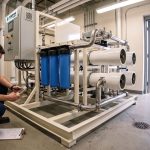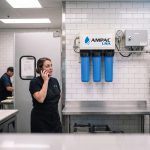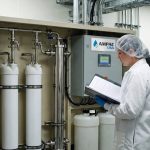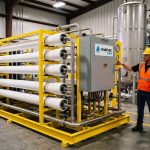


Most reverse osmosis water treatment plants sit by the ocean or other water sources. Many industries, like food processing, do too. Agriculture alone uses over half our freshwater, since vegetables, fruits, and grains need water to grow. But here’s a big concern for at least 33 percent of consumers: is the food they eat safe? There’s always that worry about diseases like E. Coli, which can cause serious health problems. Because of this, food processing industries are super careful and really dread an outbreak. As a safety measure, almost every food processing industry uses systems built on the idea of Reverse Osmosis. How does RO help in Food Processing? Osmosis is a natural process. Water or liquid flows through a semi-permeable membrane when you put two solutions with different concentrations on either side. The liquid moves from the lower concentration side to the higher one, trying to balance out the salt in each. Reverse Osmosis came from this idea. It pushes water to the lower concentration side. This special membrane acts like a filter, stopping harmful chemicals, organic stuff, sediments, and other junk from getting through. What you get is fresh, clean water, totally free of contaminants. Today, we use reverse osmosis filters in almost every home and industry. Food processing is super important because it deals with everyone’s health. So, this water purification method is a must for many tasks. How does the food processing industry use RO?? In food processing, water is everywhere, in every corner of the factory. Think about something simple, like canning diced tomatoes.
- Raw tomatoes get a good wash.
- They go through a dicing machine, which has to be perfectly clean, kept that way with water.
- Then, the tomatoes are poached in boiling water.
- Finally, the product is pressure canned in a water bath.
Application of Reverse Osmosis in Food Industry
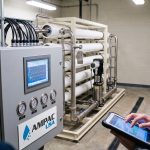
Reverse osmosis in the food industry covers so many different food products and processes. In food industry settings, reverse osmosis RO technology treats process water, concentrates fruit juice, purifies ingredients, and removes contaminants – all without heat, which could hurt product quality. High pressure pumps push water through semi-permeable membranes, removing minerals, bacteria, and dissolved solids to create super pure water.
AMPAC USA offers custom reverse osmosis solutions for the food industry, including process water systems, ingredient water purification, and fruit juice concentration units. Our RO systems meet food-grade standards and ensure consistent product quality by managing TDS and microbial content in all process water streams. Contact AMPAC USA for a custom food industry reverse osmosis system design.
Related: AMPAC USA builds FDA-compliant RO systems for the food and beverage industry. See our water bottling RO systems and commercial reverse osmosis systems sized for food processing operations.
Related: AMPAC USA builds FDA-compliant RO systems for the food and beverage industry. See our water bottling RO systems and commercial reverse osmosis systems sized for food processing operations.
Related Articles
- Reverse Osmosis Is An Aid To The Oil And Gas Industry
- Reverse Osmosis Systems For Hospitality Industry
- Role of Industrial Reverse Osmosis Water in Food Processing
- Whole House Reverse Osmosis System for Commercial & Industrial Water Treatment
Frequently Asked Questions
Why is reverse osmosis crucial for water purification in the food processing industry?
Reverse osmosis (RO) is crucial because it ensures food safety by removing contaminants like E. Coli and other impurities, which are a major concern for 33% of consumers. It prevents outbreaks and maintains product quality by eliminating harmful chemicals, organic materials, and sediments that municipal water might contain. This results in fresh, contaminant-free water essential for all stages of food production.
What specific impurities does reverse osmosis remove from water used in food processing?
Reverse osmosis systems utilize a semi-permeable membrane to effectively filter out a wide range of impurities from water. These include harmful chemicals, organic materials, sediments, and other dissolved solids that can compromise food safety and taste. This process ensures the water is free of contaminants like bacteria and viruses, which are critical for preventing foodborne illnesses.
How does RO water benefit food products compared to treated municipal water?
RO water significantly improves food product quality by eliminating mineralization and chlorine often present in municipal tap water. Mineralization can impart an undesirable ‘funny taste’ to products, while chlorine can also affect flavor profiles. Using RO water ensures a neutral, pure base, preserving the intended taste and integrity of the food ingredients and final products.
In what stages of food processing is reverse osmosis water typically used?
Reverse osmosis water is integral to numerous stages within food processing facilities. It’s used for thoroughly washing raw ingredients like vegetables and fruits, ensuring machinery and dicing equipment are absolutely clean, and in critical processes such as poaching, boiling, and pressure canning. This comprehensive application ensures hygiene and product quality from start to finish.
How do commercial RO systems from AMPAC USA meet the stringent demands of the food industry?
AMPAC USA designs and manufactures commercial/industrial RO systems with over 30 years of field experience, including installations in demanding food & beverage plants across 150+ countries. Our engineers leverage direct expertise to create robust systems that consistently deliver contaminant-free water, preventing issues like E. Coli outbreaks and ensuring compliance with food safety standards. This practical knowledge guarantees reliable performance for critical food processing applications.
Does incoming feed water quality matter for food-processing RO applications?
Yes — feed water quality determines how much pre-treatment a food processing line needs before water ever reaches the reverse osmosis membrane. Well water high in iron or hardness, or municipal water with variable chlorine dosing, both require additional pre-filtration stages to protect the membrane and keep permeate quality consistent, which matters more in food production than almost any other application since inconsistent water directly affects product quality and shelf life.
AMPAC USA engineers custom water purification systems for commercial, industrial, and emergency applications — from 500 GPD to multi-million GPD. Trusted by municipalities, military, and industry worldwide.