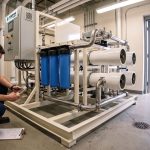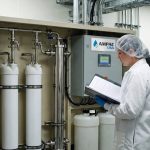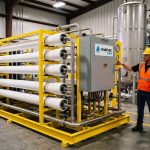

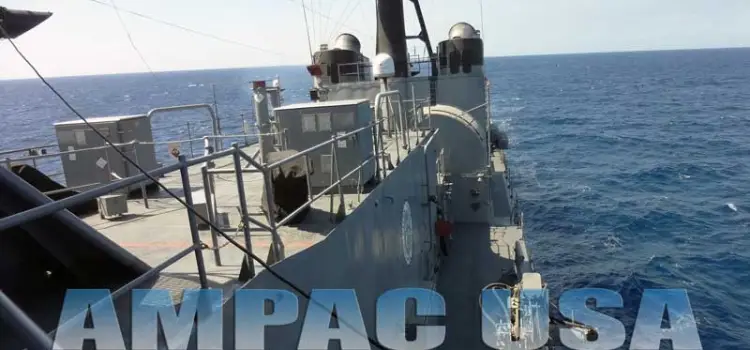

AMPAC USA just installed a seawater desalination watermaker on a brand-new Philippine Navy frigate. Now, the ship can make its own fresh drinking water from the sea, keeping the crew going strong during patrols along the western coast of the Philippine Islands. This system means the vessel is water-independent. It doesn’t need to rush back to port for more water, so the ship can stay out at sea much longer.
- Platform: Newly acquired Philippine Navy frigate – patrolling the western Philippine Islands
- System: AMPAC USA seawater desalination watermaker
- Function: Makes enough drinking water from seawater for the whole crew during missions
- Coverage: Western coast of the Philippine Islands, South China Sea patrol zone
- AMPAC USA: Naval watermaker experts since 1994, with systems in service worldwide
The Philippine Navy Needed to Be Water Independent
The Philippine Islands sit in a really important spot in the western Pacific. Their maritime area covers the South China Sea, the Sulu Sea, and the Philippine Sea. The Philippine Navy has to patrol and protect some of the most hotly debated waters in the world. To do that well, their ships need to stay out for long stretches without having to depend on shore for basics like fresh water. That’s a real logistical weak spot.
Imagine a frigate operating in the western Philippine Sea. It has huge distances to cover between its patrol zones and any port. If a ship has to go back to base every few days just for water, it can’t really maintain a continuous presence in distant areas. It can’t react quickly to new situations or run long, independent missions. How long a ship can last on fresh water is just as vital for naval operations as fuel, ammo, or food for the crew.
So, when the Philippine Navy got these new frigates, it was a perfect chance to fix this dependency. They could build in onboard seawater desalination right from the start, instead of trying to add systems to older ships later. AMPAC USA got the job to supply the seawater desalination watermaker for this new vessel. We hooked it up with the ship’s existing seawater intake, power, and freshwater storage.
What It’s Like: Patrolling the West Philippine Sea
The western coast of the Philippine Islands borders the South China Sea. This is a maritime region that’s incredibly important both strategically and economically. About a third of all global maritime trade, roughly $3.37 trillion annually according to the UN, passes through the South China Sea. It’s also where territorial disputes are always simmering, so the Philippine Navy needs to keep a strong, consistent patrol presence across a massive stretch of ocean.
Out in these waters, a Philippine Navy frigate with its own water generation can:
- Stay on patrol without having to stop for water resupply.
- Operate effectively for as long as its fuel and other supplies last.
- Run long surveillance, fisheries protection, and search-and-rescue missions without worrying about running out of water.
- Help out in humanitarian emergencies in remote island communities that don’t have shore water.
- Supply fresh water to other ships or small detachments in forward areas.
Being water-independent is especially critical for an island nation. The nearest port might be many hours away at high speed from the patrol zone, and running back for emergency water deliveries costs a lot in fuel.
The AMPAC USA Seawater Desalination System: How It Works
The AMPAC USA watermaker we installed on the Philippine Navy frigate is a seawater desalination system built specifically for this kind of work. It uses reverse osmosis technology, which is the international standard for naval watermakers. The system takes raw seawater, with its roughly 35,000 ppm of dissolved solids, and turns it into clean, fresh water. This water meets WHO drinking water quality standards and the Philippine military’s own requirements.
Seawater Intake and Pre-Treatment
Raw seawater comes in from the ship’s sea chest, located below the waterline, where it’s always available at sea pressure. First, a screen takes out big debris. Then, multi-stage filters reduce suspended solids, cloudiness, and biological material. We automatically add anti-scalant chemicals to stop carbonate and sulfate minerals from building up on the high-pressure membranes. This is a crucial step, especially with the high mineral content in tropical Pacific seawater.
High-Pressure Reverse Osmosis Stage
The pre-treated seawater gets pressurized to 800-1,200 psi (55-83 bar) by a marine-grade high-pressure pump. This pump is built with duplex stainless steel and titanium alloy parts, designed to run continuously in corrosive seawater. At this pressure, water molecules are pushed through spiral-wound thin-film composite (TFC) reverse osmosis membranes. These membranes reject 99.4-99.6% of all dissolved salts, giving us a stream of fresh water. The concentrated, salty leftover water is discharged overboard through its own outlet.
Post-Treatment and Distribution
Water made by RO has very few dissolved solids and is slightly acidic. A post-treatment stage adds minerals, raising the pH and adding a bit of calcium and bicarbonate. This makes the water taste better, following WHO guidelines, and stops it from corroding the ship’s freshwater pipes. Finally, ultraviolet (UV) disinfection kills any pathogens that might have slipped past the membrane stage, making the water microbiologically safe. The finished drinking water then goes into the ship’s freshwater storage tanks, ready for the crew’s quarters, galley, and bathrooms.
Production Capacity
We size the system to make enough drinking water from the sea to meet the crew’s needs during long missions. This means the ship doesn’t have to carry huge amounts of pre-loaded fresh water, freeing up space for fuel, food, and other vital mission supplies. We match the specific production capacity to the ship’s crew size and how it operates.
Naval Watermaker Design: Military Needs vs. Commercial Standards
Naval watermakers have to be far more reliable and tough than those for commercial boats or recreational use. If a watermaker breaks down on a patrol vessel at sea, it’s a huge problem, potentially mission-critical. Without onboard water production, the ship has to stop its mission and head back to port. Does that sound like a good situation?
Vibration and Shock Resistance
Naval vessels deal with hull vibration from their engines, wave impacts, and sometimes even firing weapons. All this puts repeated stress and shock on the equipment installed. AMPAC USA’s naval systems are built with vibration-isolated mounts, flexible piping for pressure vessels, and structural designs that meet military shock and vibration specs.
Corrosion Protection
The marine environment is incredibly corrosive. Salt spray, high humidity, and direct seawater contact in the early stages and high-pressure parts mean every component touching water must be made from corrosion-resistant materials. We use 316L stainless steel for low-pressure parts, duplex stainless steel for high-pressure pump heads and fittings, titanium for the toughest components, and fiberglass-reinforced polymer (FRP) for pressure vessels and distribution headers.
Operational Simplicity
Ship’s engineering crew, not water treatment specialists, operate and maintain watermakers on patrol vessels. AMPAC USA designs its naval systems with easy-to-use controls, clear gauges, and diagnostic screens. This lets the ship’s engineer spot and fix common problems without needing special training. Crucial consumables, like filter cartridges and membranes, are standard commercial sizes, so they’re available globally in any port.
Automated Operation
The system has automated controls for starting up, normal running, shutting down, and cleaning. During normal operations at sea, the watermaker runs on its own. It makes water for the storage tank until the tank is full, then it cycles down. No one needs to constantly watch it. Automatic flush cycles keep the membranes in good shape during long shutdowns when the ship is in port.
AMPAC USA’s Track Record in the Pacific and Asia
AMPAC USA has provided seawater desalination watermakers to naval clients all over the Asia-Pacific region. That includes the Philippine Navy, the South Korean Navy, and other regional naval forces. We understand the specific operational needs, environmental conditions, and logistical challenges of Pacific naval operations. This knowledge shapes how we design every system we deliver to the region.
Operating in the South China Sea and western Pacific brings its own set of watermaker challenges, different from other naval areas:
- High water temperature: Tropical seawater at 28-32°C requires membranes optimized for high-temperature operation, as warmer water increases osmotic pressure and changes membrane performance characteristics.
- Biological fouling: Tropical waters support dense populations of biofouling organisms. The pre-treatment system must include robust biofouling control through UV, chlorination, or other means appropriate for membrane compatibility.
- Monsoon sea states: During typhoon season, vessels may experience significant rolling and pitching. AMPAC USA designs systems to maintain stable operation through sea states up to Sea State 5 (significant wave height 2.5-4 meters).
- Remote logistics: Philippine naval vessels may operate far from ports with specialized water treatment service capabilities. Spare parts logistics and the use of globally available standard components are critical design considerations.
Seawater Desalination Technology Comparison for Naval Applications
| Technology | Energy (kWh/m³) | Best Naval Application | Notes |
|---|---|---|---|
| SWRO with ERD | 2-4 kWh/m³ | Patrol vessels, frigates, corvettes | Best efficiency; compact; standard for modern naval vessels |
| SWRO without ERD | 5-8 kWh/m³ | Smaller patrol craft, emergency use | Simpler; lower capital cost; higher energy use |
| Multi-Stage Flash (MSF) | 10-15 kWh/m³ | Large surface combatants with waste heat | Robust; tolerates poor feed water; impractical for small vessels |
| Vapor Compression (VC) | 8-12 kWh/m³ | Medium vessels; biofouling-prone waters | No membranes to foul; tolerates variable feed water quality |
Beyond the Philippine Navy: AMPAC USA Marine and Coastal Water Solutions
AMPAC USA’s naval installations represent one segment of a broader portfolio of marine and coastal water treatment applications. The same technology that keeps naval crew members hydrated during extended at-sea patrols is deployed across commercial and civilian maritime contexts:
Commercial shipping: Container vessels, bulk carriers, and tankers that spend weeks at sea rely on onboard watermakers to supply crew freshwater needs, reducing the port time and cost of loading water in port.
Cruise and passenger vessels: Passenger ships carry hundreds or thousands of people who expect hotel-quality water service throughout their voyage. Large cruise ship watermakers produce tens of thousands of gallons per day to supply passenger staterooms, restaurants, and recreational facilities.
Island and coastal community water supply: For communities on small islands or in coastal areas where groundwater is brackish or contaminated, shore-based seawater desalination provides the only viable source of potable water. AMPAC USA supplies containerized and modular desalination plants for these applications, with capacities from a few thousand GPD for small communities to millions of GPD for larger populations.
Offshore oil and gas: Fixed and floating offshore platforms operate in remote locations where supply vessels cannot always deliver fresh water reliably. Onboard desalination provides the operational independence that platform safety and productivity demand.
Explore all of AMPAC USA’s seawater desalination capabilities, review our full range of water treatment systems, or learn about related applications including brackish water treatment and industrial water treatment. To discuss a naval, maritime, or coastal water supply project, contact our engineering team. Learn more about AMPAC USA’s history on our about page or explore more project case studies.
Frequently Asked Questions: Naval and Marine Seawater Desalination Watermakers
What kind of water purification system did AMPAC USA install on the Philippine Navy frigate?
AMPAC USA installed a specialized seawater desalination watermaker aboard the newly acquired Philippine Navy frigate. This system is designed to convert seawater directly into fresh drinking water, ensuring the entire crew has a continuous supply during extended patrols. It provides the vessel with crucial water independence, eliminating the need to return to port for resupply.
Why is water independence crucial for naval vessels like the Philippine Navy frigate?
Water independence is critical for extending a naval vessel’s operational endurance at sea, especially in strategically contested waters like the South China Sea. By producing its own fresh water, the frigate eliminates the logistical vulnerability of shore dependency, allowing it to maintain continuous presence in distant patrol zones and respond rapidly to developing situations without interruption.
In which operational areas will the Philippine Navy frigate utilize its new AMPAC USA desalination system?
The newly equipped Philippine Navy frigate will primarily operate along the western coast of the Philippine Islands, including the strategically vital South China Sea patrol zone. The AMPAC USA seawater desalination system ensures the crew has a continuous supply of fresh drinking water throughout these extended missions, enhancing the ship’s ability to maintain presence.
What is AMPAC USA’s expertise in providing watermakers for naval applications?
AMPAC USA has been a naval watermaker specialist since 1994, with over 30 years of experience designing and manufacturing robust systems for military and commercial marine applications. The company has installed systems internationally, including on offshore oil rigs and military bases, demonstrating deep field experience.
How does an onboard seawater desalination system enhance a navy ship’s operational capability?
An onboard seawater desalination system significantly enhances a navy ship’s operational capability by providing continuous fresh water, a fundamental necessity for crew and operations. This reduces logistical vulnerability, extends the ship’s time on station, and allows for greater independence and flexibility in distant patrol areas, comparable to the importance of fuel or ammunition.
Related Articles
- AMPAC USA Portable Seawater Desalination Solution for Boats
- AMPAC USA Seawater Desalination Watermakers for Marine Industry
- Ampac USA Sea Water Desalination Watermakers for the South-Korean Navy
- Seawater Desalination Has Made Life Easier – AMPAC USA
Conclusion
This frigate installation is a good example of what onboard desalination actually buys a navy — not just fresh water, but the ability to stay on station in contested waters like the South China Sea without burning fuel and mission time on resupply runs. The system’s 800-1,200 psi RO stage and 99.4-99.6% salt rejection rate are the same core specs we use across our naval work in the Asia-Pacific, from the Philippines to South Korea, just tuned for each ship’s crew size and mission profile. If your fleet or vessel needs the same kind of water independence, explore our seawater desalination systems or contact our engineering team at info@ampac1.com or (909) 548-4900.
AMPAC USA engineers custom water purification systems for commercial, industrial, and emergency applications — from 500 GPD to multi-million GPD. Trusted by municipalities, military, and industry worldwide.