
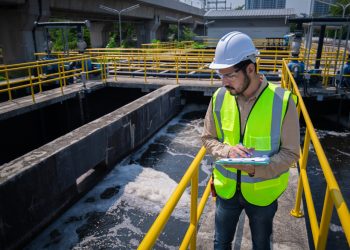

Water recycling and reuse isn’t a new concept. Cities have been treating and releasing wastewater back to rivers for over a century. What’s changed is the scale, the technology, and the urgency. As global freshwater stress intensifies — roughly 2.3 billion people now live in water-stressed countries — recycling and reusing water has moved from a niche practice to a central pillar of sustainable water management.
Here’s what water recycling actually means, why it matters environmentally, and how it connects to the broader challenge of securing clean water for the future.
What Is Water Recycling and Reuse?
Water recycling refers to treating wastewater — from municipal, industrial, or agricultural sources — to a standard suitable for a specific end use. That end use could be:
- Non-potable reuse: Landscape irrigation, agricultural irrigation, industrial cooling, toilet flushing, fire suppression
- Indirect potable reuse (IPR): Treated recycled water introduced to a natural water body (groundwater basin or reservoir) before it’s extracted and treated again for drinking
- Direct potable reuse (DPR): Treated recycled water introduced directly into the potable water supply, bypassing the environmental buffer
The treatment required varies by application. Non-potable reuse needs biological treatment and disinfection. Potable reuse requires the full suite: biological treatment, reverse osmosis (to remove dissolved solids, pharmaceuticals, and trace organics), advanced oxidation, and UV disinfection. Multiple independent barriers are the standard approach.
Environmental Benefits of Water Recycling
1. Reducing Freshwater Withdrawals
The most direct environmental benefit: recycling water reduces how much fresh water is pulled from lakes, rivers, and aquifers. Globally, agriculture accounts for about 70% of freshwater withdrawals. In regions where agricultural water is replaced with treated recycled water, this directly reduces extraction pressure on natural water bodies that support aquatic ecosystems.
California’s Orange County Water District — one of the most advanced potable reuse systems in the world — replenishes over 100 million gallons per day into the basin that supplies drinking water to 2.5 million people. This has measurably reduced reliance on imported surface water and stabilized groundwater levels in a region prone to subsidence.
2. Reducing Wastewater Discharge Impacts
Untreated or partially treated wastewater discharged to rivers and coastal waters carries nutrients (nitrogen, phosphorus), pathogens, heavy metals, and emerging contaminants. Even conventionally treated wastewater effluent can contain pharmaceuticals, microplastics, and trace organics that affect aquatic organisms. By treating wastewater for reuse rather than discharging it, systems remove these constituents rather than releasing them to natural waters.
3. Energy Comparison: Recycled vs. Imported Water
Counterintuitively, recycled water can be more energy-efficient than the alternatives in water-scarce regions. Moving water over long distances — pumping from distant reservoirs or over mountain ranges — is energy-intensive. Treating local wastewater for reuse is often the lower-energy option when compared to large-scale water importation. In Southern California, treating recycled water locally requires roughly 0.5–1.5 kWh per 1,000 gallons; importing water from Northern California via the State Water Project uses 2–3 kWh per 1,000 gallons.
4. Groundwater Recharge
In aquifers under stress from over-extraction, managed aquifer recharge (MAR) using treated recycled water is a proven strategy to reverse groundwater decline. Phoenix, Arizona; Long Beach, California; and many systems across Australia use this approach. Beyond securing water supply, stable aquifer levels reduce land subsidence — a permanent, irreversible process that damages infrastructure in over-extracted basins.
Potable Water Reuse: The Science and the Public Perception Gap
Direct and indirect potable reuse — using treated wastewater to augment drinking water supplies — has a well-documented public acceptance challenge despite having strong safety credentials. The “toilet-to-tap” framing that opponents use ignores both the treatment process and the reality that essentially all water has been through some natural use cycle.
The treatment process for advanced water recycling produces water that meets or exceeds EPA and WHO drinking water standards across all regulated parameters. Reverse osmosis, used in every advanced potable reuse system, removes 97–99.5% of dissolved solids including pharmaceuticals, endocrine-disrupting compounds, and emerging contaminants that conventional treatment doesn’t fully address. UV/advanced oxidation then targets any remaining trace organics.
The National Water Research Institute and WateReuse Research Foundation have published extensive safety data supporting the approach. Singapore’s NEWater — recycled water blended into the reservoir supply — has been in use since 2003 with no adverse public health outcomes.
Municipal Water Recycling in Practice
U.S. municipal recycled water programs have expanded significantly in recent years, driven by drought pressure in the West and a gradual shift in regulatory frameworks:
- California now permits direct potable reuse (regulations finalized 2023)
- Texas, Arizona, and Florida have large-scale non-potable reuse programs
- Virginia and other eastern states are developing potable reuse frameworks as drought stress increases
Reverse Osmosis: The Core of Modern Water Recycling
RO membranes are the technological centerpiece of advanced water recycling. No other technology achieves the same breadth of contaminant removal — dissolved salts, pharmaceuticals, heavy metals, microplastics, and PFAS — in a single pass. This is why every potable reuse system globally uses RO as the primary treatment step.
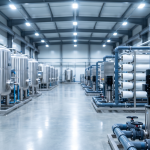
At the industrial and commercial scale, AMPAC USA’s commercial and industrial RO systems are deployed in water recycling and reuse applications worldwide — from food and beverage reclaim to municipal indirect potable reuse projects.
Related: Learn how AMPAC USA grey water treatment systems close the loop on water reuse in commercial and industrial settings. For high-volume applications, see our commercial reverse osmosis systems starting at 3,000 GPD.
Related Articles
- Top Benefits of Choosing AMPAC USA for High Purity Water Systems
- PFAS Contamination Near Military Bases and Airports: Water Treatment Guide
- EPA PFAS Water Regulations 2024-2026: What Commercial Facilities Must Know
- Water Treatment for Food and Beverage Manufacturing: RO Systems and FDA Compliance
Frequently Asked Questions
What is the fundamental process of water recycling?
Water recycling involves treating wastewater from sources like domestic, industrial, and commercial activities to a safe level for reuse. This multi-stage process typically includes preliminary, primary, secondary, and advanced treatments, followed by disinfection, tailored to the intended reuse application. AMPAC USA engineers design systems that meticulously purify water for diverse industrial and municipal needs, ensuring optimal resource utilization.
What are the main types of water recycling?
The primary types of water recycling include Greywater recycling, from sinks and showers for irrigation; Blackwater recycling, treating toilet and kitchen waste for non-potable uses; and Processed Water recycling, which reuses water from industrial operations. Each type requires specific treatment protocols to ensure safety and suitability for its intended application. AMPAC USA specializes in engineering robust systems for all these categories, ensuring optimal water reuse.
How does water recycling contribute to environmental protection?
Water recycling significantly reduces the discharge of pollutants into natural water bodies, protecting delicate ecosystems and biodiversity. By converting wastewater into a valuable resource, it minimizes overall water wastage and alleviates pressure on finite freshwater supplies. This practice is crucial for maintaining ecological balance and fostering sustainable development globally.
What are the key stages in wastewater treatment for recycling?
Wastewater treatment for recycling typically progresses through several stages: preliminary treatment removes large solids, primary treatment settles suspended solids, and secondary treatment uses biological processes to remove organic matter. Advanced treatment further purifies water to remove specific contaminants, followed by disinfection to eliminate pathogens, ensuring the water is safe for its intended reuse. AMPAC USA’s industrial RO systems are often critical components in these advanced treatment phases.
Can recycled water be used for drinking?
While advanced treatment technologies can purify wastewater to potable standards, recycled water is most commonly used for non-potable purposes such as landscape irrigation, industrial processes, and toilet flushing. The suitability for drinking depends on stringent treatment protocols and regulatory approvals, which vary by region. AMPAC USA designs high-purity water systems capable of meeting the most demanding industrial and municipal reuse standards, including those approaching potable quality.
AMPAC USA engineers custom water purification systems for commercial, industrial, and emergency applications — from 500 GPD to multi-million GPD. Trusted by municipalities, military, and industry worldwide.