
Why Global Water Security Matters More Than Ever in 2026
Water security isn’t an abstract policy concern — it’s an engineering and infrastructure problem. Right now, 2.2 billion people lack access to safely managed drinking water, according to WHO’s 2024 progress report. That figure hasn’t improved in three years. Meanwhile, the stresses that drive shortages — climate volatility, aquifer depletion, aging infrastructure, and emerging contaminants — have intensified across every inhabited region.
The 2025 inflection point that researchers warned about has arrived. The International Desalination Association (IDA) projected that 1.8 billion people would face absolute water scarcity conditions by 2025. That projection is now recorded history. Addressing what comes next requires clear-eyed assessment of where the failures are and which technologies can realistically close the gap.
TL;DR: 2.2 billion people lack safe drinking water (WHO, 2024), the 2025 scarcity threshold has passed, and 2026 marks a regulatory inflection point — EPA’s PFAS MCLs are in force, water reuse rules are expanding, and microplastics entered federal contaminant consideration. Advanced RO and industrial water reuse systems are the practical response.
What Does Water Security Actually Mean?
Water security means reliable access to sufficient, safe water for human health, food production, and economic activity — plus the infrastructure resilience to maintain that access when conditions change. The UN defines water security across four dimensions: availability, quality, access, and governance. Each dimension can fail independently. A city can sit on an aquifer and still distribute water contaminated with PFAS. A farming region can receive average rainfall and still face seasonal shortages if storage infrastructure can’t buffer drought years.
Availability addresses whether enough water physically exists — including groundwater, surface flow, and precipitation. Quality addresses whether that water meets health standards for its intended use. Access addresses whether distribution infrastructure reaches the people who need it. Governance addresses whether pricing, rights, and institutions are structured to allocate water efficiently and equitably. Industrial water users face all four simultaneously.
According to UN-Water’s 2023 summary report, 3.6 billion people face inadequate access for at least one month annually — a number projected to exceed 5 billion by 2050 under current trajectories. (UN-Water, 2023). That scale of exposure makes water security one of the defining infrastructure challenges of the next two decades.
How Is Climate Change Reshaping Water Availability?
The IPCC’s Sixth Assessment Report documented that climate change is altering the water cycle faster than most regional infrastructure was designed to accommodate. (IPCC AR6, 2022). Droughts that previously occurred once per decade now recur every three to four years in many semi-arid regions. Snowpack — a critical seasonal reservoir in western North America, the Hindu Kush, and the Alps — is declining in depth and melting earlier, shifting runoff timing away from peak agricultural demand.
Aquifer depletion is accelerating in some of the world’s most productive agricultural zones. The US Southwest’s Colorado River basin has operated in deficit for years; Lake Mead reached its lowest recorded level in 2022 at roughly 1,040 feet elevation, triggering federal Tier 2 shortage declarations. India’s Indus aquifer system is being drawn down at rates three to four times natural recharge, according to satellite gravity data from NASA’s GRACE-FO mission. The MENA region holds less than one percent of global freshwater while supporting over six percent of world population.
Industrial facilities in stressed regions are beginning to treat water supply as a continuity risk, not just a utility cost. That shift in perspective is driving investment in on-site water reuse, advanced treatment, and emergency backup capacity that would have been considered over-engineered ten years ago.
What Changed Regulatorily in 2025 and 2026?
The US EPA finalized the first-ever enforceable maximum contaminant levels (MCLs) for PFAS compounds in April 2024, setting limits of 4 parts per trillion (ppt) for PFOA and PFOS individually. (EPA PFAS Final Rule, 2024). Public water systems had until 2027 to achieve compliance, meaning treatment upgrades are actively underway across the country — creating measurable demand for advanced filtration and membrane systems capable of removing PFAS to sub-4 ppt levels.
Simultaneously, EPA’s Contaminant Candidate List 6 (CCL6), published in 2022 and informing current regulatory work, includes microplastics as a contaminant under active regulatory consideration. No enforceable MCL exists yet for microplastics, but utilities with long-range capital plans are already evaluating treatment trains that can address both microplastics and PFAS in a single process step.
Water reuse regulations are also expanding. California’s Direct Potable Reuse framework took effect in 2023, and several other western states have followed with reuse permitting pathways. At the federal level, EPA’s WaterSense program and the Water Security Act of 2021 have accelerated federal cost-sharing for reuse infrastructure. For industrial users, permitted reuse means treated process water can re-enter production or cooling cycles, reducing freshwater draw significantly.
Regional Hotspots: Where Stress Is Sharpest
Sub-Saharan Africa remains the region with the largest absolute gap between water need and supply infrastructure. According to WHO/UNICEF Joint Monitoring Programme data, roughly 400 million people on the continent lack a basic drinking water service. (WHO/UNICEF JMP, 2023). Groundwater exists in many areas but lacks the borehole, pump, and distribution infrastructure to reach users reliably.
South Asia faces a different geometry: large populations served by monsoon-dependent surface systems, supplemented by aquifers being depleted faster than they recharge. Bangladesh, India, and Pakistan collectively account for a substantial share of the global population lacking safely managed water. Arsenic contamination in alluvial aquifers complicates groundwater as a fallback source.
The Western United States is in the most visible acute phase among developed-nation systems. Multi-decade drought, over-allocated river rights, and growing urban demand are colliding simultaneously. Phoenix, Las Vegas, and communities throughout California’s Central Valley are all under active water management constraints that five years ago would have been considered worst-case scenarios.
The Middle East and North Africa region contains eight of the world’s fifteen most water-stressed countries, per World Resources Institute’s Aqueduct data. (WRI Aqueduct, 2023). Seawater desalination has become a structural component of municipal supply in Saudi Arabia, the UAE, Israel, and Kuwait — not a supplemental source.
Technology Solutions: What’s Working in 2026
Advanced reverse osmosis membrane technology has improved energy efficiency substantially over the past decade. Current seawater RO systems operate at specific energy consumption as low as 2.5–3.0 kWh per cubic meter — roughly half the energy draw of systems deployed in the 1990s, according to IDA’s 2023 desalination inventory report. (IDA, 2023). That efficiency gain makes desalination economically viable for industrial and municipal users who would not have considered it ten years ago.
Point-of-use treatment addresses quality failures in distribution systems without requiring full infrastructure replacement. High-rejection RO systems at the building or facility level can reliably remove PFAS, nitrates, arsenic, and heavy metals to below detection thresholds — decoupling product water quality from the upstream system’s performance.
Industrial water reuse closes the loop on process water rather than discharging and re-drawing. A manufacturing facility that treats and recycles its cooling tower blowdown, boiler feedwater, and process rinse streams can reduce freshwater intake by 60–80 percent in well-designed systems. That figure isn’t theoretical — it’s the performance range documented in installed industrial reuse projects.
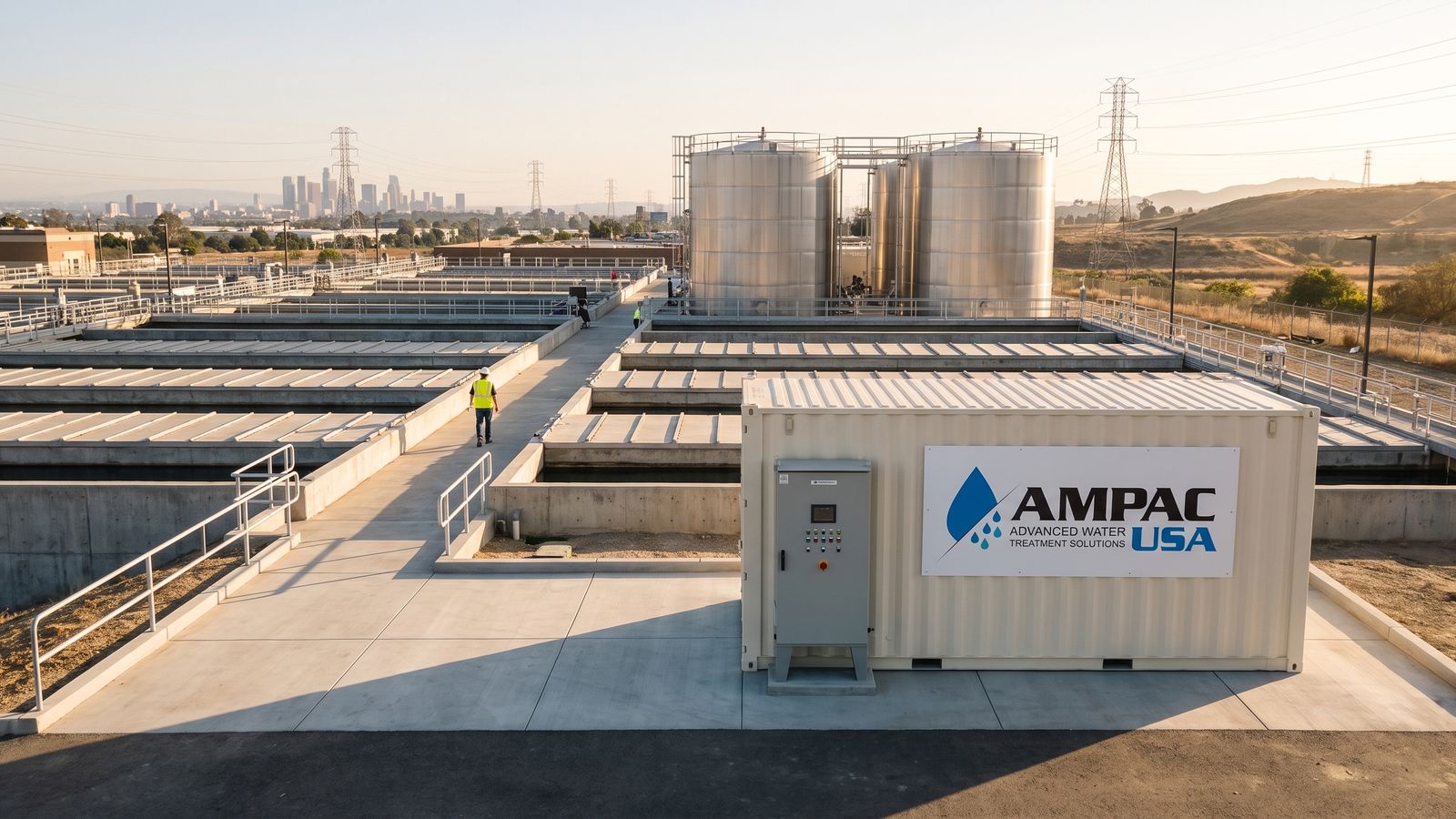
Deployable, containerized treatment systems fill the gap between the slow pace of permanent infrastructure construction and the immediate nature of supply emergencies. After Hurricane Maria, post-wildfire contamination events in California, and drought-driven municipal failures, the operational value of treatment capacity that can be transported, installed, and running within 72 hours has become undeniable.
Frequently Asked Questions
What is water security and why is it a critical global concern?
Water security is the capacity of a population to safeguard sustainable access to adequate quantities of acceptable quality water to sustain livelihoods, human well-being, and socio-economic development while preserving natural ecosystems. It is a critical global concern because over two billion individuals currently lack access to safe drinking water, leading to potential crises like deadly diseases, famines, economic downturns, and the displacement of up to 700 million people by 2030.
How many people worldwide currently lack access to safe drinking water?
Globally, over two billion individuals currently lack access to safe drinking water services, and approximately 703 million people are without basic water access. The United Nations forecasts that by 2025, 1.8 billion people will reside in areas with absolute water scarcity, underscoring the urgent need for robust water purification and management solutions.
What are the projected impacts of water scarcity by 2030?
By 2030, nearly half the global population is projected to face high water stress, with water shortages expected to displace between 24 million and 700 million people. These conditions exacerbate risks of deadly diseases, famines, economic downturns, and increased conflicts, highlighting the strategic importance of sustainable water management.
How does climate change threaten global water security?
Climate change is undeniably one of the greatest threats to global water security, primarily by exacerbating droughts and altering precipitation patterns. This leads to increased water stress in many regions, making sustainable access to water an elusive goal for a growing number of communities worldwide and intensifying existing water crises.
Beyond health, what are the broader societal risks of unchecked water scarcity?
Unchecked water scarcity can lead to severe societal disruptions, including economic downturns, increased conflicts, and even terrorism, tearing apart community fabrics. The UN warns that the global water crisis is fueling more conflicts, particularly in vulnerable regions like sub-Saharan Africa where only 22-34% of the population in some countries has safe water access.
AMPAC USA’s Role in Water Security Infrastructure
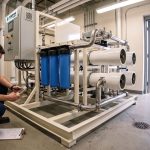
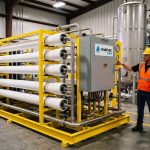
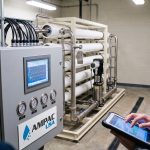
AMPAC USA designs and manufactures reverse osmosis systems for industrial water reuse, seawater desalination, and emergency deployable treatment applications. Our systems operate in municipal, industrial, military, and humanitarian contexts across more than 100 countries. The operational range spans compact point-of-use units to large-scale seawater RO plants producing millions of gallons per day.
Emergency deployable systems — containerized, trailer-mounted, or modular skid configurations — are designed to be operational within days of deployment, not months. That capability addresses the gap between permanent infrastructure timelines and the immediate reality of contamination events, drought declarations, and post-disaster water supply failures.
For facilities in water-stressed regions facing both tightening regulatory requirements and supply constraints, integrated treatment — combining RO, advanced filtration, and reuse loops — is the practical path to long-term water security at the facility level.
Contact our engineering team to discuss system specifications, capacity requirements, or emergency response capabilities: info@ampac1.com | (909) 548-4900
Related Articles
- Global Water Crisis Fueling more conflicts, UN Report Warns
- Water Stress: A Global Problem That’s Getting Worse
- PFAS Contamination Near Military Bases and Airports: Water Treatment Guide
- EPA PFAS Water Regulations 2024-2026: What Commercial Facilities Must Know
AMPAC USA engineers custom water purification systems for commercial, industrial, and emergency applications — from 500 GPD to multi-million GPD. Trusted by municipalities, military, and industry worldwide.