

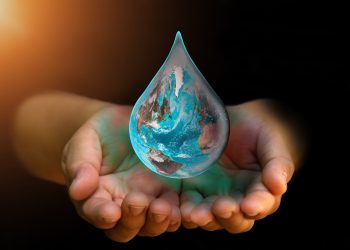

Climate change is a huge problem, and right now, water scarcity is one of the biggest challenges we face. Water, which pretty much keeps our ecosystems and societies running, is under serious pressure. Why? Growing economies and more people. Think about it: 2.2 billion people don’t have clean drinking water, and a staggering 3.5 billion lack safe sanitation. We need to fix this, and fast.
Understanding the Scale of the Crisis
Water scarcity isn’t just about not having enough to drink. It goes way deeper than that. The United Nations World Water Development Report 2024 points out that it affects global stability, human rights, and even how societies are structured. Girls and women are often hit hardest, especially in rural areas. They’re the ones who typically collect water, a job that can take hours out of their day. This often means they miss school, making gender inequalities even worse.
Read: Seawater Desalination: Tapping into Seawater’s Potential for Drinkable Water
Geopolitical Tensions and Human Rights
When water is scarce, it’s not just an environmental issue; it can actually cause conflict. Regions without enough water often see more tension between countries as they fight over who gets what. Plus, not having clean water really hurts human rights. It hits vulnerable people the hardest and pushes girls and women further to the margins of society.
The Role of Climate Change
Climate change just makes the water crisis worse. It brings more droughts and floods, and they’re more severe. This crazy weather means we get super wet periods and then super dry ones, which strains our already limited water sources. It’s clear that global warming and water scarcity are connected, and we need solutions that address both.
Read: Top 10 Reasons Why Purified Water Should Be Your Drink of Choice
Economic Implications and the Path Forward
Water scarcity has huge economic costs, and poorer countries struggle the most to adapt. The UN report estimates it would take about $114 billion a year to give 140 low to middle-income countries safe drinking water, sanitation, and hygiene. But that investment would pay off big time, helping boost global prosperity and peace. Isn’t that worth it?
International Cooperation: A Crucial Step
Over 60 percent of all freshwater resources are shared by two or more countries. So, countries need to work together to manage water sustainably. While 153 countries share water, only 24 have signed agreements covering all their shared water. We need to strengthen these agreements and get more countries to join conventions like the UN Water Convention, which helps manage water resources responsibly. It’s essential if we want to tackle the global water crisis.
Conclusion: Water for Prosperity and Peace
The UN World Water Development Report 2024, called “Water for Prosperity and Peace,” really highlights how important water is for global stability and prosperity. We’re looking at a future with less water and more climate change challenges. That means we absolutely need complete, integrated solutions. If we cooperate internationally, manage water smartly, and put serious money into water infrastructure, we can get to the root of water scarcity and build a fairer, more peaceful world.
References:
https://www.aljazeera.com/news/2024/3/22/increasing-water-scarcity-fuelling-more-global-conflicts-un-report-warns
https://www.unwater.org/publications/un-world-water-development-report-2024
https://unesdoc.unesco.org/ark:/48223/pf0000388948
Frequently Asked Questions
What are the primary drivers of the global water crisis?
The global water crisis is primarily driven by the twin pressures of growing economies and expanding populations, which place unprecedented stress on water resources. Climate change further exacerbates this by increasing the frequency and severity of droughts and floods, leading to more erratic water availability as highlighted in the UN World Water Development Report 2024.
How many people worldwide lack access to clean drinking water and sanitation?
Globally, an alarming 2.2 billion individuals are deprived of clean drinking water, while 3.5 billion people lack access to safely managed sanitation facilities. This widespread scarcity underscores the critical need for robust water purification and management solutions to ensure basic human rights and public health.
How does water scarcity contribute to global conflicts and geopolitical instability?
Water scarcity acts as a significant catalyst for conflict and instability, particularly in regions where states must grapple with allocating this increasingly scarce resource. This strain often leads to heightened geopolitical tensions and severely undermines human rights, disproportionately affecting vulnerable populations and marginalizing women and girls.
What specific impact does climate change have on water resources?
Climate change profoundly impacts water resources by increasing the frequency and severity of extreme weather events, such as droughts and floods. This erratic climate behavior leads to more pronounced wet and dry periods, further straining already scarce water supplies and necessitating resilient water management strategies.
What types of solutions are critical for addressing the global water crisis?
Addressing the global water crisis requires integrated solutions, including advanced water purification and desalination technologies. Companies like AMPAC USA, with over 30 years of experience designing and manufacturing commercial and industrial reverse osmosis systems, provide vital infrastructure for municipalities, military bases, and industrial plants across 150+ countries, ensuring access to purified water even in challenging environments.
AMPAC USA engineers custom water purification systems for commercial, industrial, and emergency applications — from 500 GPD to multi-million GPD. Trusted by municipalities, military, and industry worldwide.