


Not all RO membranes are interchangeable. The membrane is the core of an RO system, and selecting the right one for your feed water chemistry and output requirements determines both performance and cost of ownership. This guide covers the major RO membrane types, what differentiates them, and how to match membrane selection to application.
How RO Membranes Are Classified
RO membranes are classified along three primary axes:
- Application type: Brackish water (BW) vs. seawater (SW) — determined by feed water TDS and required operating pressure
- Performance profile: Standard rejection vs. high rejection vs. low-energy vs. fouling-resistant
- Element size: 2.5-inch, 4-inch, or 8-inch diameter, in standard lengths of 21, 40, or 60 inches
The vast majority of commercial and industrial RO installations use 8-inch × 40-inch spiral-wound elements. Residential and light commercial systems use 4-inch × 40-inch elements. 2.5-inch elements appear in compact systems and some pilot or test applications.
Brackish Water vs. Seawater Membranes
This is the most fundamental membrane classification. The distinction is not just about salt rejection — it’s about the membrane chemistry, required operating pressure, and the applications each type serves.
| Property | Brackish Water (BW) | Seawater (SW) |
|---|---|---|
| Feed TDS range | 100–10,000 ppm | 10,000–50,000 ppm |
| Typical NaCl rejection | 99.0–99.7% | 99.4–99.8% |
| Operating pressure | 100–400 PSI | 800–1,200 PSI |
| Applications | Municipal, well, process, industrial | Coastal desalination, offshore, island water supply |
| Can be used for low-TDS freshwater? | Yes — standard choice | Not recommended — over-engineered, unnecessary energy cost |
| Example FILMTEC™ elements | BW30, BW30HR, BW30FR, LE-440 | SW30, SW30HR, SW30XHR |
Seawater membranes operate at much higher pressures and are not interchangeable with brackish water membranes for freshwater applications. Using a seawater membrane on low-TDS municipal water wastes energy and produces lower flow at standard commercial operating pressures.
Standard Commercial Brackish Water Membranes
FILMTEC™ BW30 — The Workhorse
The BW30 series is the most widely used commercial RO membrane globally. 99.5% NaCl rejection (nominal), rated to 600 PSI, operating temperature range 32–113°F (0–45°C). An 8-inch × 40-inch BW30-400 element produces 400 GPD (permeate flow) at standard test conditions with feed TDS below 2,000 ppm. Used in AMPAC USA commercial systems from 500 GPD to 20,000+ GPD.
The BW30 is the correct starting point for most commercial applications: municipal feed water, moderate well water (after appropriate pre-treatment), food and beverage, hospitality, car wash, and general industrial process water.
FILMTEC™ BW30HR — High Rejection
The HR designation indicates a higher-rejection active layer: 99.7% NaCl rejection vs. 99.5% for standard BW30. The practical difference at 500 ppm TDS feed is small in absolute terms (1.5 ppm vs. 2.5 ppm permeate TDS), but it becomes significant at higher feed TDS or when permeate TDS targets are strict:
- Feed water above 1,500 ppm TDS — the extra rejection margin keeps permeate TDS within acceptable range where standard BW30 may not
- Pharmaceutical or lab water systems where permeate TDS feeds a polishing stage (EDI, mixed-bed DI) — lower TDS in reduces load on the polishing system
- Double-pass RO second stage — high rejection on the second pass produces very low-TDS intermediate water
The BW30HR typically costs 10–20% more than a standard BW30 element of equivalent size.
Low-Energy Membranes (FILMTEC™ LE Series)
Low-energy membranes achieve comparable rejection to standard BW30 at lower operating pressures, reducing pump energy consumption. A FILMTEC™ LE-440i element produces 440 GPD at 150 PSI vs. the BW30-400’s 400 GPD at 225 PSI — the LE element produces more water at lower pressure.
Low-energy membranes make sense when: energy cost is a significant operating concern, feed water pressure is limited, or the system design prioritizes energy efficiency over maximum pressure capability. Trade-off: lower maximum operating pressure means less headroom to compensate for membrane fouling as elements age.
FILMTEC™ BW30FR — Fouling Resistant
FR elements have a modified polyamide surface with lower surface roughness and charge, reducing the adhesion of colloidal particles, organic compounds, and biofilm to the membrane surface. Same rejection as standard BW30 (99.5%) but longer service life in challenging feed waters:
- Surface water (river, lake, reservoir) with natural organic matter
- Secondary municipal effluent reuse
- Industrial wastewater reclaim
- Food and beverage process water with organic loading
BW30FR elements typically cost more than standard BW30 but extend replacement intervals in applications where standard membranes foul rapidly. In clean municipal water applications, the FR membrane offers no benefit over standard BW30.
Seawater Membrane Variants
| Element | NaCl Rejection | Target Application |
|---|---|---|
| FILMTEC™ SW30-4040 | 99.4% | Small seawater systems, 4-inch diameter |
| FILMTEC™ SW30-8040 | 99.4% | Standard seawater production, 8-inch diameter |
| FILMTEC™ SW30HR-8040 | 99.65% | High-rejection seawater — where single-pass permeate TDS must be minimized |
| FILMTEC™ SW30XHR-8040 | 99.75% | Extreme high rejection — single-pass permeate meets WHO drinking water limits from open-ocean feed |
Membrane Element Sizes: What the Numbers Mean
Membrane element part numbers encode their size and production rate. For a FILMTEC™ BW30-400:
- BW30 — product family (Brackish Water, TFC polyamide)
- 400 — permeate flow in GPD at standard test conditions (77°F, 225 PSI, 2,000 ppm NaCl feed, 15% recovery)
Common 8-inch commercial element production rates:
| Element | Diameter | Length | Rated GPD | Active Area (ft²) |
|---|---|---|---|---|
| BW30-400 | 8″ | 40″ | 400 | 400 |
| BW30-440 | 8″ | 40″ | 440 | 440 |
| BW30-365 | 8″ | 40″ | 365 | 365 |
| LE-440i | 8″ | 40″ | 440 | 440 |
| BW30HR-440 | 8″ | 40″ | 440 | 440 |
Spiral-Wound Construction: Why It’s Universal
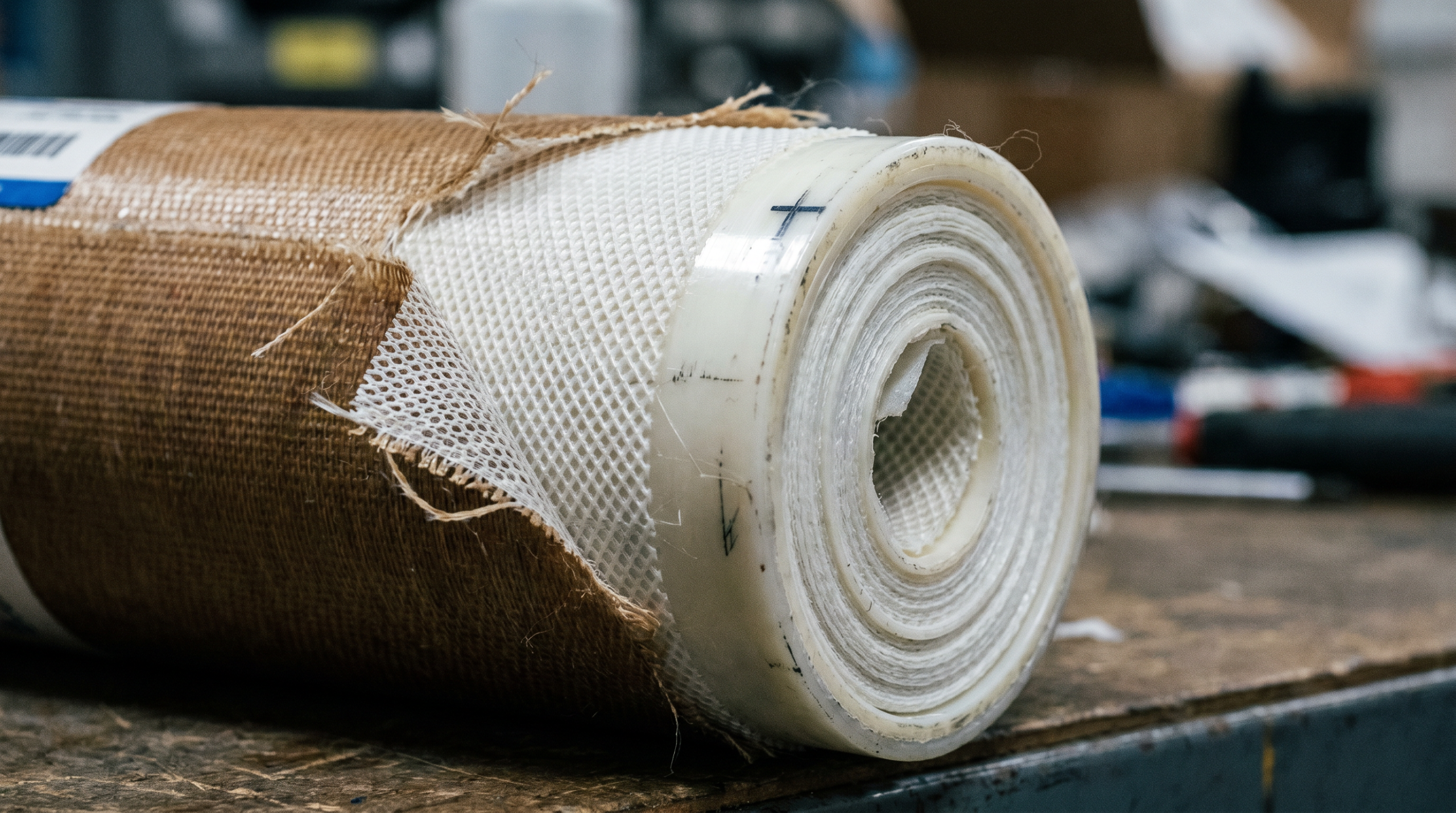
All commercial RO membranes use spiral-wound construction. A flat membrane envelope (two membrane sheets with a permeate spacer between them, sealed on three edges) is wound around a perforated central permeate collection tube, with feed spacer material between successive membrane layers. The result is a compact cylindrical element that packs large active membrane area into a small volume:
- An 8-inch × 40-inch element contains approximately 400 ft² of active membrane area
- Feed water enters the ends of the element, flows axially through the feed channels
- Permeate passes through the membrane, spirals inward along the permeate spacer, and collects in the central tube
- Concentrate exits the opposite end
Multiple spiral-wound elements are loaded in series inside a single pressure vessel (typically 2–8 elements per vessel in commercial systems). The elements are connected end-to-end with interstage connectors and anti-telescoping devices that maintain element position under operating pressure.
Hollow Fiber vs. Spiral Wound: Why Spiral Won
Hollow fiber RO membranes (bundles of hair-thin membrane tubes) were used commercially in early RO systems. They’ve been largely displaced by spiral-wound elements for most applications because spiral-wound elements tolerate feed-side particulates better, are easier to replace, allow element-by-element inspection, and the economics of spiral-wound manufacturing have driven costs down. Hollow fiber membranes persist in some ultrafiltration pre-treatment stages, but in RO, spiral-wound is the standard.
Selecting the Right Membrane for Your Application
| Application | Recommended Membrane | Reason |
|---|---|---|
| Municipal water, standard commercial | FILMTEC™ BW30 | Proven performance, lowest cost per GPD, parts availability |
| High-TDS feed (1,500 ppm) or strict permeate TDS target | FILMTEC™ BW30HR | Higher rejection margin needed |
| Energy-constrained installations or low-pressure feed | FILMTEC™ LE series | Achieves target output at lower operating pressure |
| Surface water, wastewater reuse, organic fouling risk | FILMTEC™ BW30FR | FR surface resists fouling, extends replacement interval |
| Pharmaceutical, laboratory, semiconductor UPW (first-pass) | FILMTEC™ BW30HR | Higher rejection reduces EDI/DI polishing load |
| Seawater desalination | FILMTEC™ SW30 or SW30HR | Designed for high operating pressures and seawater TDS |
| Food & beverage (NSF-required) | FILMTEC™ BW30 (NSF/ANSI 58 certified) | NSF certification required for food contact water |
AMPAC USA systems use FILMTEC™ membranes manufactured by DuPont under ISO 9001 quality management. For critical or high-purity applications, FILMTEC™ elements include traceable manufacturing documentation and established validation packages. Replacement elements for AMPAC USA systems are available directly from AMPAC USA with guaranteed compatibility.
Need membrane selection guidance for your application? Contact AMPAC USA with your feed water TDS, target permeate quality, and daily flow requirement — we’ll specify the right membrane and size the system for your operating conditions.
Related: How Reverse Osmosis Works | RO Recovery Rate Explained | RO Rejection Rate: What It Means and How to Measure It
Related Articles
- RO System Calculators: TDS Rejection, Flow Rate & Membrane Life | AMPAC USA
- AMPAC USA Commercial RO System Specifications: APRO300 to APRO6000 | AMPAC USA
- RO Recovery Rate Explained: What It Is, What Limits It, and How to Optimize | AMPAC USA
- How to Choose a Commercial RO System: Complete Buyer's Guide | AMPAC USA
Frequently Asked Questions
What’s the difference between brackish water and seawater RO membranes?
Brackish water (BW) membranes handle feed TDS of 100-10,000 ppm at 100-400 PSI, while seawater (SW) membranes handle 10,000-50,000 ppm at 800-1,200 PSI. They are not interchangeable; using a seawater membrane on low-TDS water wastes energy and produces lower flow.
What is the most commonly used commercial RO membrane?
The FILMTEC BW30 series, with 99.5 percent nominal NaCl rejection, rated to 600 PSI. It’s the standard starting point for municipal feed water, food and beverage, hospitality, car wash, and general industrial applications.
When should I use a high-rejection (HR) membrane instead of standard?
When feed water TDS is above 1,500 ppm, when permeate feeds a polishing stage like EDI or mixed-bed DI, or on the second stage of a double-pass RO system. HR membranes typically cost 10-20 percent more than standard membranes.
What is a fouling-resistant (FR) membrane and when is it worth the extra cost?
FR membranes have a modified surface that reduces adhesion of colloidal particles, organics, and biofilm. They’re worth the added cost for surface water with natural organic matter, wastewater reuse, or industrial reclaim; in clean municipal water, FR offers no benefit over standard membranes.