
Water quality is a production variable in cannabis cultivation. Source water TDS, mineral content, pH, and the presence of chlorine and chloramines directly affect nutrient uptake efficiency, pH stability in the root zone, terpene expression, and crop consistency batch over batch. Commercial cannabis cultivators and licensed hemp operations that treat water seriously consistently achieve better yields and more predictable product profiles. Reverse osmosis is the standard water treatment approach across professional cannabis and hydroponics operations precisely because it gives growers full control over water chemistry from the ground up.
Why Cannabis Cultivators Use Reverse Osmosis
Cannabis grown hydroponically or in coco/soilless media is highly sensitive to water chemistry. Unlike soil cultivation where the growing medium buffers some variation, hydroponic systems deliver nutrients directly to roots — meaning the mineral content of source water is part of the nutrient formula, whether intentionally or not.
The core problem with untreated municipal or well water for cannabis cultivation:
- Calcium and magnesium from source water compete with nutrient formula — Hard water with 200–400 ppm TDS as calcium carbonate means growers are already adding significant calcium before opening the first bottle of nutrient solution. Calcium and magnesium ratios go out of spec. Magnesium deficiency symptoms appear even when Mg is in the formula because the Ca:Mg ratio is wrong.
- Chlorine and chloramines suppress beneficial microbial activity — Municipal water contains chlorine (0.5–2 ppm) or chloramines that kill the beneficial bacteria and mycorrhizal fungi critical to living soil and some soilless media systems. Chloramines don’t off-gas like chlorine — they require active removal.
- Variable source TDS makes recipe consistency impossible — Seasonal variation in municipal water TDS (50–300 ppm is a realistic range in some markets) means the same nutrient formula produces different results in January versus July. Growers troubleshoot nutrient problems that are actually source water problems.
- Sodium from water softeners damages cannabis — Some growers pre-treat with a water softener to remove hardness, then add nutrients. This is counterproductive — sodium from salt-regenerated softeners is phytotoxic to cannabis at elevated concentrations and disrupts potassium uptake.
RO strips source water to near-zero mineral content (5–30 ppm TDS), eliminating all of these variables. Growers start with a blank slate — known chemistry — and build the exact nutrient profile the strain and growth stage requires. EC (electrical conductivity) measurements from the target nutrient solution reflect only what was intentionally added.
RO Water for Hydroponics: Target Parameters
Starting water quality targets for professional hydroponic cannabis production:
| Parameter | Target (RO Feed Water) | Why It Matters |
|---|---|---|
| TDS | <30 ppm | Low baseline TDS = full control over nutrient formula. Leaves EC headroom for nutrient dosing. |
| EC | <0.05 mS/cm | Near-zero conductivity confirms mineral salts are removed. Starting EC directly affects target nutrient solution EC. |
| Chlorine / Chloramines | 0 ppm | Essential for living soil, mycorrhizal, and beneficial bacteria applications. RO removes both. |
| Hardness | <5 ppm as CaCO₃ | Eliminates calcium and magnesium interference with nutrient ratios. |
| pH | 5.5–7.0 (adjust after nutrient addition) | RO water is slightly acidic (CO₂ dissolution). Adjust to target pH after mixing nutrient solution. |
Sizing an RO System for Cannabis Cultivation
Water demand in cannabis cultivation depends on canopy size, system type (flood and drain, drip, NFT, DWC), and evapotranspiration rate. General sizing by cultivation scale:
| Cultivation Scale | Canopy / Plants | Est. Daily Water Need | Recommended RO System |
|---|---|---|---|
| Small craft / home cultivation | Up to 100 sq ft / ~25 plants | 25–75 GPD | 100 GPD system + 50-gal storage tank |
| Craft commercial (Tier 1–2) | 100–500 sq ft / 25–150 plants | 75–300 GPD | 500 GPD system + 200-gal storage |
| Mid-size licensed cultivator | 500–2,000 sq ft | 300–1,200 GPD | 1,000–2,200 GPD system |
| Large commercial cultivator | 2,000–10,000 sq ft | 1,200–6,000 GPD | 2,200–6,000 GPD system; multi-unit for larger ops |
| Industrial greenhouse / vertical farm | 10,000+ sq ft | 6,000+ GPD | Custom multi-membrane industrial system |
Note: These estimates assume 2–4 gallons of water per plant per day in peak flowering, with recirculating hydroponic systems reducing consumption by 20–50% vs. drain-to-waste. Add a storage tank sized for minimum 12–24 hours of production demand to decouple RO production rate from peak irrigation demand.
Hemp and Outdoor Cultivation Applications
Licensed hemp cultivators using drip irrigation from well water frequently encounter the same mineral interference problems as indoor growers, plus additional concerns:
- Iron in well water — Iron above 0.05 ppm clogs drip emitters and causes root zone issues. A pre-filter + RO system removes iron along with hardness and TDS.
- Nitrates in agricultural groundwater — Farms in the Corn Belt or livestock regions often draw irrigation water with 10–40 ppm nitrate, which interferes with nitrogen management in hemp production. RO removes 85–95% of nitrate.
- Irrigation water for seedling propagation — Seedlings and clones are particularly sensitive to high-TDS water. Even outdoor operations benefit from RO water at the propagation stage.
Pre-Treatment Requirements
Cannabis cultivation RO systems typically require:
- 5-micron sediment pre-filter — Removes particulate that can foul the RO membrane. Required for all source water types.
- Carbon block pre-filter (municipal water) — Removes chlorine and chloramines before the RO membrane. Essential — even 0.1 ppm continuous chlorine exposure shortens membrane life significantly. Chloramines require catalytic carbon (not standard activated carbon) for complete removal.
- Iron filter (well water with Fe 0.05 ppm) — Iron fouls RO membranes rapidly. Address iron upstream before the RO stage.
- Water softener (well water with hardness 10 GPG) — Very hard well water benefits from softener pre-treatment to extend RO membrane life. Note: softener rejects sodium — account for elevated Na in the permeate when designing nutrient formula. Alternatively, size membranes for direct hard water treatment and replace on a scheduled cycle.
AMPAC USA RO Systems for Cannabis and Hydroponics
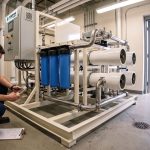
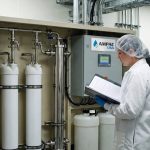
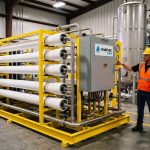
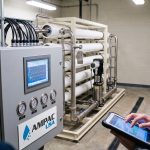
AMPAC USA commercial RO systems from 500–6,000 GPD are used in licensed cannabis cultivation, vertical farming, and commercial greenhouse operations. All systems are manufactured in the United States with FILMTEC™ thin-film composite membranes, powder-coated welded aluminum frames, and stainless steel pressure vessels.
Systems ship factory-assembled and pressure-tested with commissioning documentation. TDS meter and EC verification procedure included. Our technical team has experience specifying systems for cultivation operations — if you have a source water test, we can calculate the exact permeate TDS and EC you’ll achieve before you purchase.
Planning a cultivation facility water system? Contact our team with your canopy size, system type, and source water TDS (or a full water test). We’ll spec the right RO system and storage configuration. Commercial quotes within one business day.
Related: Commercial RO System Sizing Guide | RO Water Quality: TDS, pH, and Conductivity Guide | Commercial RO Systems
Related Articles
- AMPAC USA Commercial RO System Specifications: APRO300 to APRO6000 | AMPAC USA
- RO Recovery Rate Explained: What It Is, What Limits It, and How to Optimize | AMPAC USA
- RO Membrane Types: BW30, SW30, High-Rejection & Fouling-Resistant | AMPAC USA
- RO System Calculators: TDS Rejection, Flow Rate & Membrane Life | AMPAC USA
Frequently Asked Questions
Why do hydroponic cannabis growers need RO water specifically?
Hydroponic systems deliver nutrients directly to roots, so any minerals in source water become part of the nutrient formula whether intended or not. RO strips source water to near-zero TDS (5-30 ppm), giving growers a known baseline to build the exact nutrient profile a strain requires.
What TDS and EC targets should RO water hit for hydroponic cannabis?
Under 30 ppm TDS and under 0.05 mS/cm EC, with zero chlorine/chloramines and hardness under 5 ppm as CaCO3, so nutrient dosing reflects only what is intentionally added.
Why is a water softener alone not recommended before cannabis nutrient dosing?
Sodium from salt-regenerated softeners is phytotoxic to cannabis at elevated concentrations and disrupts potassium uptake, so growers pre-treating hard water should pair a softener with RO rather than rely on softening alone.
How is an RO system sized for a cannabis cultivation facility?
Based on canopy size and daily water need, roughly 2-4 gallons per plant per day at peak flowering. A small craft grow of about 25 plants needs a 100 GPD system, while a large commercial cultivator with 1,200-6,000 GPD demand needs a 2,200-6,000 GPD system or multiple units.