
Desalination is the crux of freshwater producing plants but the process of reverse osmosis that acts as the crucial part of such plants has far more applications than just producing drinking water. Many industries such as the Oil and Gas Industry itself uses water for several reasons. Water is used in onshore as well as offshore production zones of the industry. Water during such endeavors is naturally taken from the seas due to abundance. However, the water is salty and therefore it’s applications are reduced by ten folds.
When it comes to water, the industry requires technologies that are advanced and have engineering and design proficiencies. They also must have project management expertise to control costs, minimize risks, ensure safety, maximize performance, lower water consumption and meet all the safety and environment regulations. Here is how reverse osmosis comes to the rescue.
ONSHORE:
Despite the method used for extracting oil, water is always a by-product that comes with it. Usually before the big oil companies discharged it back to the wells as it is the single largest waste stream in the industry. It is also said to increase recovery.
But today, many companies understand the need of treating and reusing the water before discharging it. This treatment is known as produced water treatment and requires a hefty process like reverse osmosis to be treated. RO procedure ensures that the water thereby produced is without any oil and major pollutants and can be safely released back into the wells. This procedure is more because of the stricter environmental guidelines but today are followed by every company.
OFFSHORE:
Just as onshore oil production required RO for water production treatment, so does offshore. However, the number of applications for RO in this kind of oil production is far more.
- Water is required to be treated before being sent off and discharged into the oceans. Before this was scarcely an issue but with several environmental concerns, strict regulations require the water to be treated for the brine.
- Wastewater treatment is another most important task at hand for offshore oil production companies. Because the sewage and waste material produced by the employee base in a period of months is huge, it is important to cut down carbon footprint and allow water within safety standards to be discharged in the oceans.
- The huge labor base at the oil rigs requires drinking water for consumption. RO sees to it that the desalinating machines use Seawater to produce freshwater fit for consumption.
- Water is also extensively used for cleaning and washing purposes. Water is majorly also required for cleaning the heavy equipment of any sludge or remnant contaminants. RO water is helpful in cleaning up of machines for smooth operation.
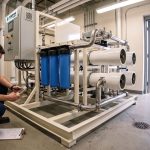
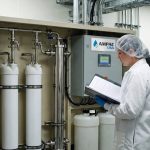
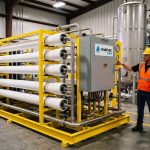
Heavy duty machines that operate on reverse osmosis like Ampac USA’s Off-Shore Sea Water Desalination Watermaker SW20K-Class1-Div2 are a support to the Oil and Gas Industry that help them carry out their operations smoothly while meeting environmental standards at the same time. Seawater Desalination Watermaker Land Based 6,000 GPD/ 22,710 LPD | SW6000-LX and many other machines from Ampac USA are used extensively by Oil and Gas companies for water production in their onshore and offshore rigs.
About Author:
Ampac USA is a manufacturer of water treatment systems used around the globe for quality drinking water. The company has an experience of over 40 years, uses the latest technology to provide a standard, reliable product and works with experts to give the best possible service.
Related Articles
- Reverse Osmosis Is The Answer! – Recycling The Wastewater From Oil And Gas Industry
- Application of Reverse Osmosis in Food Industry: RO for Food Processing
- Reverse Osmosis Systems For Hospitality Industry
- Whole House Reverse Osmosis System for Commercial & Industrial Water Treatment
Conclusion
This post explored how reverse osmosis technology delivers high-purity water across a wide range of residential, commercial, and industrial applications. For businesses and organizations requiring reliable RO purification, AMPAC USA engineers custom systems tailored to your specific water quality requirements and flow demands. Contact our team at info@ampac1.com or (909) 548-4900 to discuss your water treatment needs.
Industrial RO Applications in Oil and Gas Operations
The oil and gas industry is one of the largest industrial users of reverse osmosis water treatment, with applications spanning upstream exploration and production, midstream processing, and downstream refining. Each application has specific water quality requirements that drive the design of RO systems used in the sector.
Steam generation for heavy oil recovery (SAGD — Steam Assisted Gravity Drainage, and CSS — Cyclic Steam Stimulation) demands extremely high-purity water. Boiler feed water for high-pressure steam generation must have TDS below 50-100 ppm and hardness effectively zero to prevent boiler scale formation that reduces heat transfer efficiency and risks tube failure. RO systems delivering water to these specifications protect major capital assets and ensure continuous steam production. Similarly, enhanced oil recovery (EOR) by waterflooding requires injection water specifically formulated to avoid reservoir plugging — RO removes the scaling ions and suspended solids that cause formation damage.
Onshore and offshore production sites often exist in remote locations where municipal water supply is unavailable. Potable water supply for crews requires treatment of available water sources (wells, rivers, seawater) to drinking water standards. AMPAC USA containerized systems provide complete potable water treatment for remote oil and gas field camps, processing salinity levels from slightly brackish groundwater to full seawater depending on available source water. Dual-purpose systems produce both high-purity process water and potable water from a single integrated treatment train, optimizing equipment investment and operating costs for remote sites.
Frequently Asked Questions
What are the critical applications of reverse osmosis in the oil and gas industry?
Reverse osmosis is indispensable for several critical applications, including producing ultra-low TDS boiler feed water for steam generation and preparing specific quality injection water for enhanced oil recovery. It also supplies potable drinking water for site personnel and is increasingly used for recycling produced water to reduce freshwater consumption and disposal costs.
How does reverse osmosis treat produced water in the oil and gas industry?
RO treats produced water, the largest waste stream in the industry, by effectively removing oil and major pollutants. This process ensures the water meets stringent environmental guidelines, allowing for safe discharge back into wells or reuse, thereby minimizing environmental impact and supporting sustainable operations.
What role does RO play in enhanced oil recovery (EOR)?
In enhanced oil recovery, RO is crucial for preparing high-quality injection water. This water must meet specific purity standards to ensure compatibility with the reservoir, preventing scaling, corrosion, or formation damage that could impede oil extraction and reduce recovery efficiency.
What water quality standards does reverse osmosis help the oil and gas industry meet?
Reverse osmosis enables the oil and gas industry to meet rigorous water quality standards, such as achieving ultra-low Total Dissolved Solids (TDS) for boiler feed water and removing contaminants from produced water prior to discharge. This compliance is essential for adhering to environmental regulations and ensuring operational integrity.
Why is reverse osmosis particularly vital for offshore oil and gas production?
Offshore operations rely heavily on RO due to the abundance of seawater and the necessity for extensive water treatment. RO is critical for producing potable water, treating wastewater before ocean discharge, and managing brine to meet strict environmental regulations, which are often more complex in marine environments.
AMPAC USA engineers custom water purification systems for commercial, industrial, and emergency applications — from 500 GPD to multi-million GPD. Trusted by municipalities, military, and industry worldwide.