
Global Desalination Industry 2026: Market Analysis, Technology Trends & Regional Outlook
Roughly 2.2 billion people lack access to safe drinking water, according to the World Health Organization – and that number climbs every year as aquifer depletion accelerates. Desalination has moved from a last-resort technology to a core piece of water infrastructure planning on every continent. The global market hit an estimated $21.3 billion in 2025 and is tracking a 9.1% compound annual growth rate through 2032, driven by municipal demand, industrial expansion, and a sharp drop in membrane costs over the past decade. (INTERNAL-LINK: reverse osmosis technology overview)
This analysis covers current market size, the technology mix powering 2026 capacity, regional demand drivers, and the trends reshaping system design right now.
TL;DR: The global desalination market is worth roughly $21.3 billion in 2025 and growing at 9.1% annually. Seawater reverse osmosis accounts for more than 60% of all installed capacity. The Middle East still leads total volume, but Asia-Pacific is the fastest-growing region. Key 2026 trends: solar-powered SWRO, zero-liquid-discharge integration, and AI-driven process optimization. (IDA World Congress Report, 2025)
How Large Is the Global Desalination Market in 2026?
The global desalination market reached approximately $21.3 billion in market value during 2025, with projections putting 2026 figures near $23.2 billion as capacity installations accelerate across water-stressed regions (Grand View Research, 2025). That 9.1% CAGR marks a sustained acceleration compared to the 7-8% rates recorded between 2018 and 2022.
Total installed capacity crossed the 100 million cubic meters per day threshold in 2024, a milestone the International Desalination Association tracked for years. For context, that’s enough to supply roughly 700 million people with basic daily water needs. The pipeline of projects under construction or permitted as of early 2026 suggests global capacity will reach 115-120 million m³/day before 2030.
What’s pushing the market? Three things: population growth in arid zones, groundwater depletion in agricultural regions that previously relied on wells, and falling membrane prices. Seawater RO membrane costs have dropped more than 80% since 2000, making small-to-mid-scale plants economically viable in places they simply weren’t before.
[INTERNAL-LINK: custom SWRO systems for municipalities → /products/seawater-reverse-osmosis/]
Which Technologies Dominate the Desalination Landscape?
Seawater reverse osmosis (SWRO) commands more than 60% of global installed capacity, and that share keeps growing (WaterWorld, 2025). SWRO’s dominance comes down to energy efficiency: modern high-pressure pumps with energy recovery devices now operate at 2.5-3.5 kWh per cubic meter – a fraction of the 10-16 kWh thermal methods require.
Thermal Methods: Still Relevant in the Gulf
Multi-stage flash (MSF) and multi-effect distillation (MED) retain a strong presence in the Arabian Gulf, where excess heat from power generation makes their energy penalty acceptable. Saudi Arabia, Kuwait, and the UAE still run large MSF fleets built before SWRO matured. That said, new thermal capacity is rare. Most Gulf utilities now specify SWRO for projects breaking ground in 2025 and beyond.
Emerging Technologies: FO and Electrodialysis
Forward osmosis (FO) remains commercially limited, but it’s finding a niche in treating high-fouling feeds – produced water, landfill leachate, concentrated brines – where RO membranes foul rapidly. Electrodialysis (ED) and electrodialysis reversal (EDR) are growing in brackish water applications across the American Southwest and parts of Europe, where feed salinity is low enough that ED’s selective ion transport offers energy savings over conventional RO.
[INTERNAL-LINK: brackish water RO systems → /products/brackish-water-ro/]
Regional Outlook: Where Is Growth Happening?
Geography matters a lot in desalination. The Middle East and North Africa region still holds the largest share of total installed capacity, but the fastest construction activity is now happening in Asia-Pacific – particularly India, China, and Australia. Each region brings a different set of drivers and constraints.
Middle East and North Africa
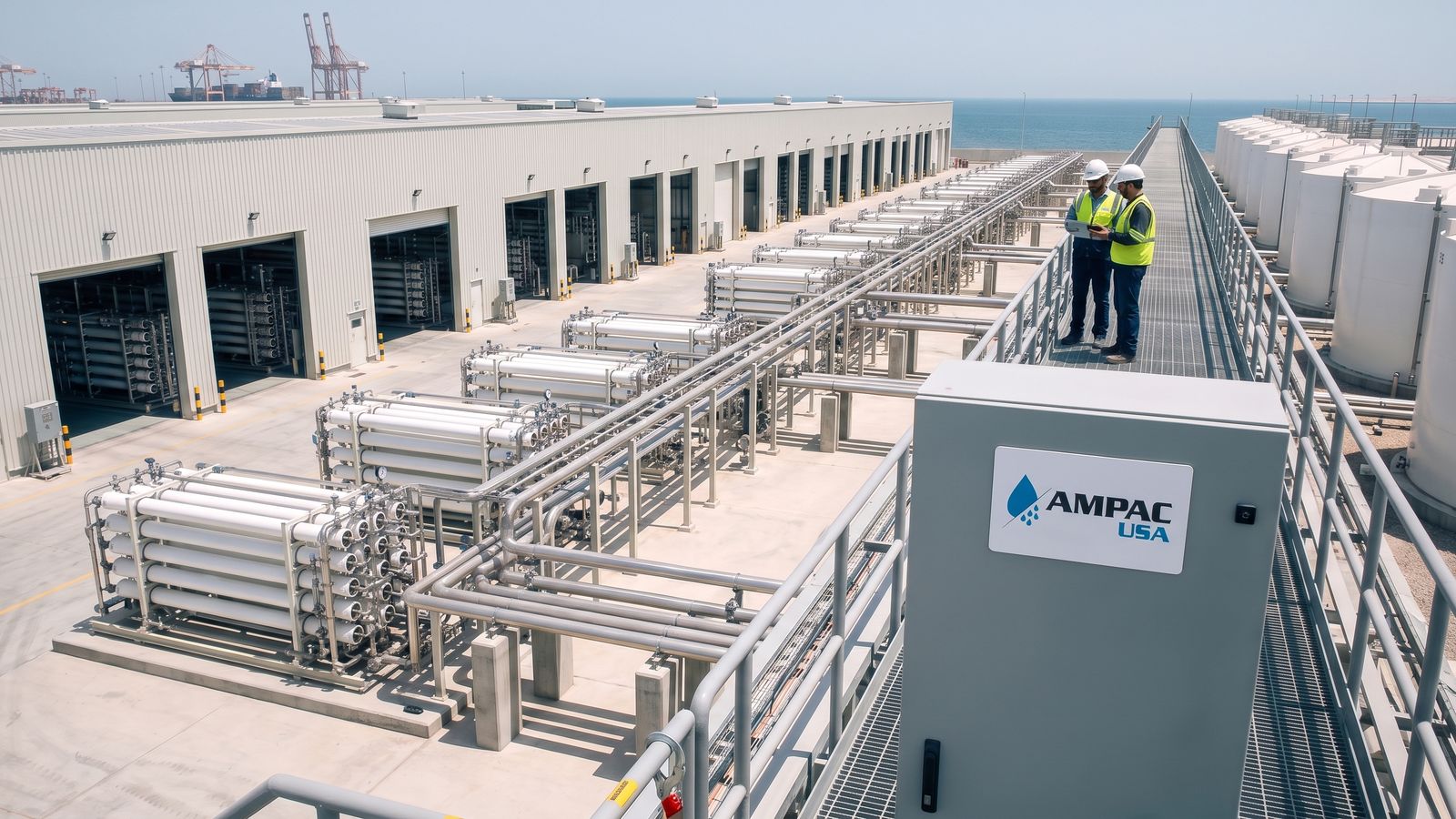
MENA accounts for roughly 48% of global desalination capacity. Saudi Arabia alone operates more than 27 major desalination plants, and its National Water Company continues to add capacity as population and industrial demand grow. The UAE’s newest megaproject at Taweelah, rated at 909,000 m³/day, became the world’s largest SWRO plant when it reached full production in 2023.
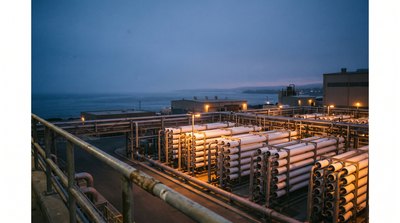
The regional focus is now shifting from raw capacity expansion to cost reduction and decarbonization. Several Gulf projects in the 2026-2030 pipeline integrate co-located solar or wind generation specifically to cut the carbon footprint of high-energy desalination operations.
Asia-Pacific: The Fastest-Growing Region
India’s National Water Mission and China’s continued coastal industrial growth are adding desalination capacity at a pace no other region matches. India added approximately 580,000 m³/day of new capacity between 2021 and 2025, with Tamil Nadu and Gujarat leading state-level procurement. That number is expected to double by 2030.
Australia’s existing metro plants in Perth, Sydney, and Melbourne continue to contribute meaningfully, and drought conditions in 2025 triggered new feasibility studies in South Australia and Queensland.
North America: Water Reuse as the Growth Driver
The U.S. market is unusual in that municipal water reuse – treating recycled water to potable standards – is growing faster than seawater desalination. The EPA’s 2023 Clean Water Act reuse framework accelerated project permitting, and California’s drought management plans now include inland desalination of brackish aquifers as a formal supply source (U.S. EPA Water Reuse Action Plan, 2023).
Offshore and island communities represent a distinct American market segment. Remote platforms, island municipalities from Hawaii to the Virgin Islands, and military installations rely on compact, containerized SWRO systems where grid water supply is simply not an option.
Europe: Decarbonizing Existing Capacity
Spain, Cyprus, Malta, and Israel operate significant desalination infrastructure. The European priority in 2025-2026 is not new capacity but greening what already runs. EU funding programs are backing solar-coupled retrofits and pilot projects for brine valorization – recovering lithium, magnesium, and other minerals from concentrate waste streams.
[INTERNAL-LINK: industrial desalination systems for offshore → /applications/offshore-marine/]
What Are the Key Technology Trends Shaping 2026 Projects?
Several converging trends are changing how desalination plants get designed, built, and operated. They’re not theoretical. They’re showing up in project specifications and bid documents right now.
Solar-Powered SWRO
Co-locating photovoltaic arrays with SWRO plants is now financially straightforward in sun-rich regions. The Saudi Water Authority awarded its first fully solar-powered desalination contract in 2024. Levelized cost of water from solar SWRO in optimal conditions now approaches $0.35-0.45 per cubic meter, competing directly with conventional grid-powered plants in countries with high electricity prices.
Zero-Liquid Discharge Integration
Zero-liquid discharge (ZLD) systems eliminate brine discharge entirely by evaporating concentrate and recovering the solids. Uptake was slow for years because of high capital costs, but regulatory pressure on coastal brine discharge – particularly in the EU and parts of the U.S. – is making ZLD the path of least resistance for new inland plants. Systems combining RO with evaporation ponds, membrane distillation, or crystallizers are appearing in more specifications.
Brine Valorization
Brine is no longer just a waste problem. At scale, concentrate streams carry recoverable concentrations of lithium, sodium, magnesium, and bromine. Several pilot programs in Israel and the EU are testing mineral extraction alongside desalination, with the goal of converting a cost center into a partial revenue stream. Commercial-scale brine valorization is probably five years out, but the engineering groundwork is being laid now.
AI-Driven Process Optimization
Machine learning models trained on sensor data from operating plants can predict membrane fouling 48-72 hours in advance, allowing operators to adjust feed conditioning before flux drops. Early deployments in Israel and Singapore report 10-15% reductions in chemical cleaning frequency and measurable improvements in membrane service life. This isn’t a minor operational tweak – cleaning chemicals and membrane replacement are two of the largest recurring cost items in SWRO operation.
[INTERNAL-LINK: AMPAC USA high-recovery RO systems → /products/high-recovery-ro/]
How Does AMPAC USA Fit Into This Market?
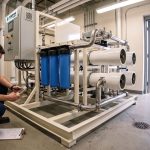
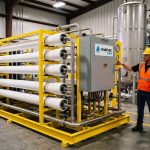
AMPAC USA designs and manufactures SWRO and brackish water RO systems from its Woods Cross, UT facility, covering the 1,800 GPD to 100,000+ GPD range. The company serves municipalities, offshore platforms, island communities, military installations, and industrial clients who need reliable water production where supply infrastructure is limited or nonexistent.
Custom engineering is the core offering. (Which, honestly, is the harder part of most water projects.) Feed water salinity, temperature, hardness, and contaminant profile vary significantly between a Pacific island community and a Gulf Coast industrial facility – systems that work in one setting can fail or underperform in another. AMPAC engineers size pressure vessels, membrane arrays, energy recovery devices, and pre-treatment sequences to the actual feed conditions, not a generic template.
Containerized and skid-mounted configurations serve clients who need rapid deployment: disaster relief, temporary industrial processing, remote construction camps. Systems can be designed for unattended or minimally supervised operation where regular technical staffing isn’t practical.
[INTERNAL-LINK: AMPAC USA full product range → /products/]
Frequently Asked Questions
What is the projected growth of the global desalination market?
The global desalination industry is projected to reach a staggering $36.98 billion by 2032. This significant growth is driven by increasing global water scarcity and continuous technological advancements across various applications, highlighting the industry’s crucial role in providing fresh water solutions.
What are the primary technologies used in desalination?
Reverse Osmosis (RO) remains the dominant technology, utilizing semi-permeable membranes to remove salts and impurities, with ongoing innovations in membrane efficiency. Thermal methods like Multi-Stage Flash (MSF) and Multi-Effect Distillation (MED) are also prevalent, particularly in regions with abundant energy resources, often integrated into hybrid systems. Emerging technologies such as Electrodialysis (ED) and Forward Osmosis (FO) offer lower energy requirements for specific applications, including brackish water desalination.
How does Reverse Osmosis (RO) contribute to desalination efficiency?
Reverse Osmosis (RO) significantly contributes to desalination efficiency by forcing water through semi-permeable membranes, effectively removing salt and other impurities. Advances in membrane technology, including high-rejection membranes and energy recovery devices, have substantially reduced energy consumption and operational costs. AMPAC USA engineers leverage these innovations to design highly efficient commercial and industrial RO systems.
What are the main applications for desalinated water?
Desalinated water is primarily used for municipal water supply, providing potable water to swelling urban populations, especially in arid regions like the Middle East and North Africa. It also serves critical industrial uses in sectors such as chemicals, petroleum, and power generation, ensuring a stable and high-quality water supply for operational continuity and regulatory compliance. AMPAC USA has extensive experience tailoring solutions for these diverse applications, from offshore oil rigs to military bases.
What are some emerging desalination technologies?
Emerging desalination technologies include Electrodialysis (ED) and Forward Osmosis (FO), both gaining traction due to their lower energy requirements compared to traditional methods. ED uses electrical potential to drive ion transport through membranes, while FO employs osmotic pressure differences. These methods are becoming increasingly viable for specific applications, such as brackish water desalination, offering innovative solutions for water purification.
Choosing the Right Partner for Desalination Projects in 2026
The desalination industry is not slowing down. With global capacity pushing past 100 million m³/day and a pipeline of new projects across four continents, the engineering decisions made in 2026 will determine water security for millions of people over the next 20-30 years of plant life. The technology mix is shifting – solar integration, ZLD, AI optimization – but the fundamentals stay the same: correct pre-treatment, right-sized pressure and recovery, membranes matched to the feed.
If you’re specifying a new SWRO system or evaluating an upgrade to existing capacity, the starting point is always feed water data. AMPAC USA’s engineering team can review your water analysis, recommend a system configuration, and provide budgetary pricing with no commitment required.
Reach out directly: info@ampac1.com or call (909) 548-4900. U.S.-based engineering support, systems built and tested before they ship.
[INTERNAL-LINK: request a quote → /quote/]
Related Articles
- The Future of Water Treatment: Trends in Solar-Powered Desalination Technology
- Seawater Desalination Systems: Turning the Tide on Global Water Scarcity
- Seawater Desalination System Cost Guide 2026: From Portable to Industrial Scale
- How to Choose the Right Seawater Desalination System: Complete Buyer's Guide 2026
AMPAC USA engineers custom water purification systems for commercial, industrial, and emergency applications — from 500 GPD to multi-million GPD. Trusted by municipalities, military, and industry worldwide.