

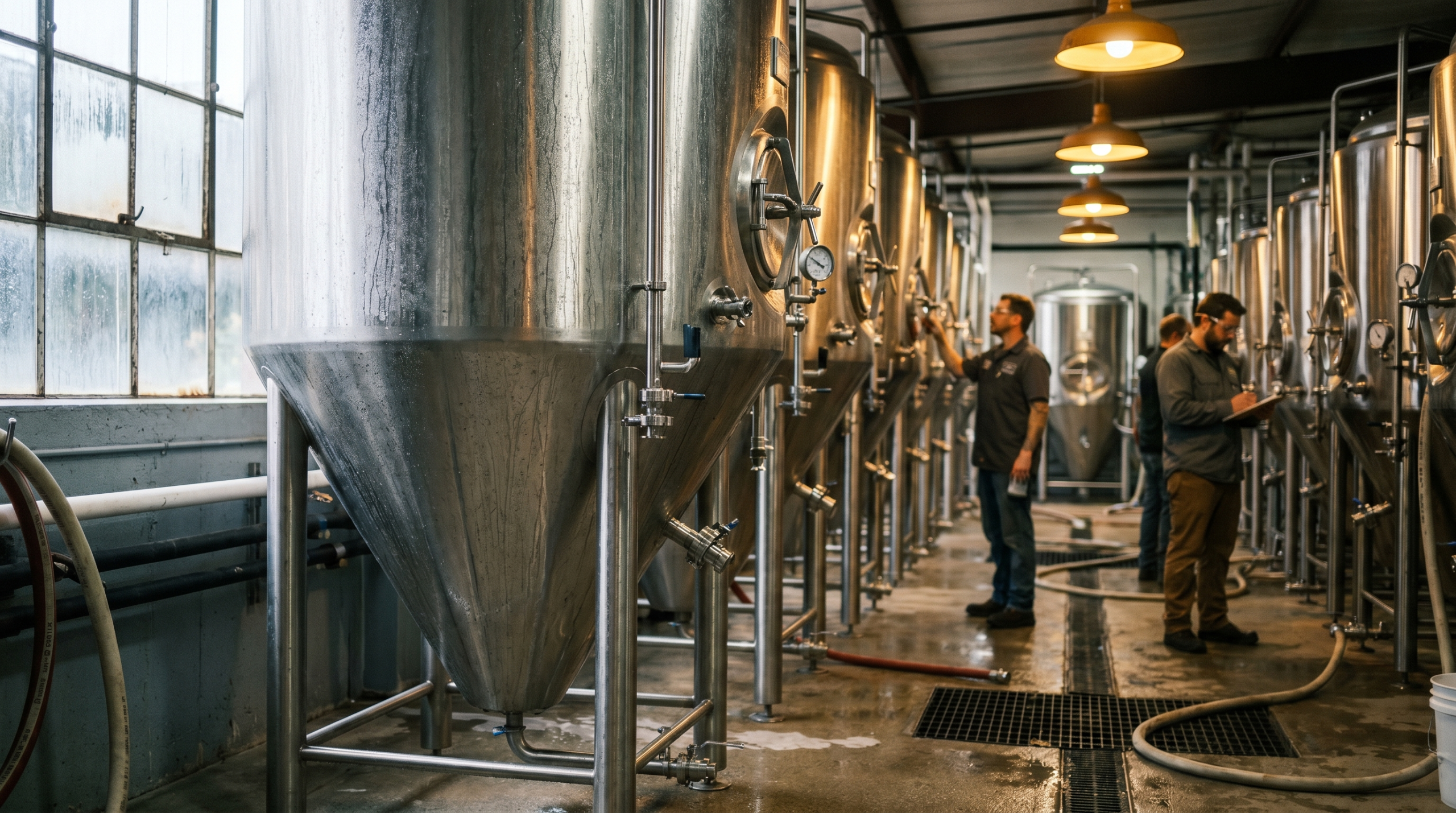

Beer is mostly water — 90-95% of it, by volume. That means water chemistry dictates everything: every flavor compound, every hop character, every fermentation result. Craft brewers who seriously treat their water chemistry consistently produce better, more consistent beer. Honestly, for small-to-mid-size craft breweries and distilleries, a commercial reverse osmosis (RO) system is the most practical, precise tool for absolute control over source water quality.
Why Craft Breweries Use Reverse Osmosis
Brewing water chemistry matters down to the molecule. Calcium content impacts enzyme activity in the mash and yeast health during fermentation. The sulfate-to-chloride ratio shapes whether a beer tastes dry and bitter, or full and soft. Alkalinity determines mash pH, controlling enzyme efficiency and wort color. Starting with variable, high-mineral tap water makes hitting precise target water profiles incredibly difficult — often impossible — with just mineral additions.
RO strips source water down to near-zero mineral content (typically 5-30 ppm TDS). This gives brewers a blank slate. From that pure RO water, you build your target profile precisely, adding brewing salts like calcium chloride, gypsum (calcium sulfate), magnesium sulfate, and sodium bicarbonate in exact, calculated amounts. The result? Repeatable batch-to-batch water chemistry, immune to seasonal variations in municipal supply.
That’s why nearly every craft brewery above 3-barrel production, serious about recipe consistency, runs RO water. It’s not about removing “bad” things. It’s about starting with zero, so you can build exactly what the recipe demands.
Distillery Applications
Distilleries use RO water for proofing — diluting spirits from barrel strength to bottling proof — plus process and cooling water. Proofing with mineral-heavy water impacts mouthfeel and can cause haze, a visible quality defect. Honestly, RO water at 0-10 ppm TDS is the standard for high-quality spirits. The TTB specifies “pure water” for proofing, and RO water definitely qualifies. It’s the industry standard for craft spirits producers.
Sizing an RO System for a Brewery or Distillery
Sizing an RO system for a brewery hinges on batch volume and the ratio of RO water to total water used. Most craft brewers we’ve seen use RO for 50-100% of mash and sparge water. Strike and cleaning water might be non-RO, depending on the brewery’s specific setup.
| Brewery Scale | Batch Size | Brew Days/Week | Est. Daily RO Need | Recommended System |
|---|---|---|---|---|
| Nano / homebrewer-scale | 1–3 BBL | 2–3 | 100–300 GPD | 500 GPD system + storage |
| Small craft | 3–7 BBL | 3–5 | 300–800 GPD | 1,000–1,500 GPD system |
| Mid-size craft | 7–15 BBL | 5–7 | 800–2,500 GPD | 2,200–3,000 GPD system |
| Regional craft | 15–30 BBL | Daily | 2,500–6,000 GPD | 4,400–6,000 GPD system |
| Production craft / contract | 30+ BBL | Daily | 6,000+ GPD | Custom multi-membrane |
Note: 1 BBL = 31 US gallons of finished beer. Total water use per barrel of finished beer (including cleaning, cooling, process water) averages 3–7 barrels of water. RO water typically serves mash and sparge only, not all process water.
Water Chemistry for Common Beer Styles
With RO water as your blank slate, brewers build to these general target profiles:
| Beer Style | Target Ca (ppm) | Target SO₄ (ppm) | Target Cl (ppm) | Target Alkalinity |
|---|---|---|---|---|
| Pale Ale / IPA | 75–150 | 100–250 | 50–100 | Low (0–50) |
| Lager / Pilsner | 50–100 | 30–80 | 50–100 | Very Low (0–30) |
| Stout / Porter | 75–150 | 50–100 | 75–150 | Moderate (50–150) |
| Hefeweizen | 50–100 | 30–60 | 50–100 | Low-moderate |
| Sour / Berliner | 50–100 | 30–80 | 50–100 | Very Low (0–20) |
Honestly, hitting these targets reliably from high-TDS tap water by mineral addition alone is often impossible. The baseline mineral content is too variable and high. RO water makes these precise profiles achievable with simple, calculated mineral additions on every brew day.
Pre-Treatment Requirements for Brewery RO Systems
Pre-treatment is non-negotiable. For municipal water, a carbon block pre-filter is essential before the RO membrane. Why? Chlorine and chloramines degrade thin-film composite membranes rapidly — even 0.1 ppm continuous exposure shortens membrane life significantly. Municipal water also needs checking for iron; above 0.05 ppm, it fouls membranes.
Well water? You must test for iron, hardness, hydrogen sulfide, and bacterial contamination before specifying RO. Iron above 0.1 ppm means an iron filter. Hardness over 10 GPG benefits from a water softener pre-stage, extending membrane life. Bacterial contamination requires UV disinfection, either before or after RO.
AMPAC USA Brewery and Distillery RO Systems
AMPAC USA commercial RO systems, from 500–6,000 GPD, are designed for craft brewing and distillery production. We proudly manufacture all systems in the United States, using FILMTEC™ DOW thin-film composite membranes, powder-coated welded aluminum frames, and stainless steel pressure vessels rated for commercial duty cycles. Built tough, built to last.
Each system ships factory-assembled and pressure-tested. Startup commissioning documentation, TDS verification, and technical support are included. Furthermore, we stock replacement membranes, pre-filters, and o-rings for all AMPAC USA systems — no sourcing delays when maintenance is due. Downtime costs money; we prevent that.
Planning a brewery or distillery RO installation? Contact our team. Share your batch size, brew frequency, and source water TDS. We’ll specify the right system and storage tank. Commercial quotes turnaround in one business day.
References
- Alcohol and Tobacco Tax and Trade Bureau (TTB). “27 CFR §5.23 – Standards of identity.” Electronic Code of Federal Regulations, U.S. Government Publishing Office, https://www.ecfr.gov/current/title-27/chapter-I/subchapter-A/part-5/subpart-C/section-5.23
Related: Commercial RO System Sizing Guide | RO Water Quality: TDS, pH, and Conductivity Guide
Related Articles
- Reverse Osmosis Systems for Hotels: Water Quality, ROI, and Sizing Guide
- American Made Reverse Osmosis Systems: Why US Manufacturing Matters
- Reverse Osmosis Systems for Car Washes: Spot-Free Rinse Sizing Guide
- Effective Reverse Osmosis Water Filter for Microplastics in Industrial Applications
See our commercial reverse osmosis systems built for consistent mineral control in brewing and distilling.
Frequently Asked Questions
Why do craft breweries use reverse osmosis water?
Water chemistry directly affects enzyme activity, yeast health, and flavor compounds, since beer is 90-95 percent water by volume. RO strips source water to near-zero mineral content (5-30 ppm TDS), giving brewers a blank slate to build precise, repeatable water profiles with calculated mineral additions.
What TDS should RO water be for spirit proofing in a distillery?
0-10 ppm TDS is the standard for high-quality spirits. Mineral-heavy water used for proofing can cause haze, a visible quality defect, while RO water meets the TTB’s pure water standard for proofing.
How is an RO system sized for a craft brewery?
Based on batch size and brew frequency. A small craft brewery (3-7 BBL, 3-5 brew days per week) typically needs 300-800 GPD, sized with a 1,000-1,500 GPD system, while a regional craft brewery (15-30 BBL, daily) needs a 4,400-6,000 GPD system.
Does RO water need pre-treatment for brewery use?
Yes. Municipal water needs a carbon block pre-filter to remove chlorine and chloramines, which degrade RO membranes rapidly. Well water needs testing for iron, hardness, hydrogen sulfide, and bacterial contamination before specifying pre-treatment.
